Tuchel’s England: Embracing Chaos While Seeking Control
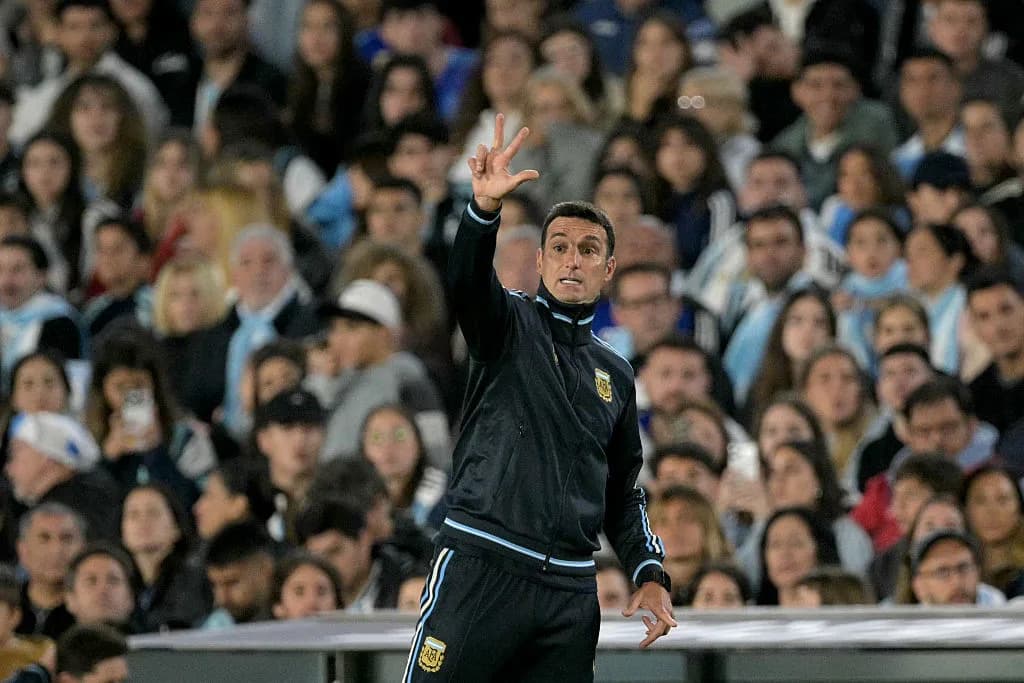
Thomas Tuchel flew out of the United States in July with one thought gnawing away at him: control. England had finished third at the World Cup, their best return since 1966, but the manner of their exit to Argentina in the semi-final left a bruise that hasn’t quite faded.
England led that night, Anthony Gordon striking first, yet the game slipped away. Tuchel blamed his team’s failure to tighten their grip once they were in front. Control lost, chance of history gone.
Two months on, the language has shifted.
Between Control and the Crowd’s Chaos
Tuchel’s reflections have been shaped by the wildest of reference points: that 6-4 bronze-medal thriller against France. From a coach’s perspective, it was a tactical car crash. From the stands and sofas, it was unforgettable.
“Football without any control is sometimes hard to digest for a coach,” Tuchel admitted, before acknowledging how supporters had adored the spectacle. That reaction has forced him to question his own instincts. Maybe, he suggested, he needs to compromise. Accept a little more chaos. See what it unlocks.
This isn’t a manager losing his way. It sounds more like one trying to weaponise unpredictability.
The best international sides don’t live at one tempo. They switch rhythms, change shapes, flip games with a sudden surge or a spell of suffocating possession. Tuchel wants England to live in that space: able to slow a match to a crawl or tear it open in a blur.
Yet one look at his latest squad tells its own story. For all the talk of embracing disorder, the names scream something else.
Squad List Says “Control”
Back come Trent Alexander-Arnold and Cole Palmer, two of the most technically refined players in the English game. They bring structure, angles, passing lines. They bring control.
Alex Scott is in. So is Lewis Hall. Both are calm, clever operators in possession, comfortable receiving the ball in tight spaces, capable of dictating tempo rather than being swallowed by it.
This is not the selection of a manager ready to throw the handbrake into the Thames and race off into the night. It’s a manager trying to raise the technical ceiling while selectively sprinkling in the unknown.
That’s where Rio Ngumoha enters the frame.
The 18-year-old Liverpool winger has lit up the early part of the season under Andoni Iraola, twisting full-backs inside out on both flanks. His first senior call-up injects something Tuchel cannot manufacture on a tactics board: raw unpredictability.
Tuchel also revealed that Fulham attacker Josh King is close to a first call-up of his own. Another signpost. He wants more edge, more spark, more forwards who can turn a tight Nations League tie with a single moment.
He just isn’t about to abandon his principles to get it.
“A Little Bit More Like Spain” – But Still England
Asked whether England could play with the relentless pace of a Premier League side but with more control, Tuchel didn’t hesitate. That, he said, is the wish.
For 10 minutes, “a little bit more like Spain”. Periods where England can put their foot on the ball, pass, breathe, dictate. Not a full identity transplant, just controlled segments within the chaos.
He pointed back to the World Cup for his blueprint: more minutes like the second half against Croatia, more like the first half against France. Those were the stretches when England looked most in tune with their own strengths – aggressive, front-foot, emotionally plugged into their supporters, but still coherent.
Tuchel knows what the Premier League represents: intensity over efficiency, drama over minimalism. “We are maybe not the most economical team to play football,” he said, linking that to the nature of English football itself. In England, you “max out every single match” or you fall away. That relentlessness is part of the country’s footballing DNA.
So he stands in an ambiguous place. Craving control, seduced by chaos, and trying to blend the two into something that feels authentically English yet tactically modern.
No Doubts Over His Core
If Tuchel is wrestling with ideas, he is not wrestling with personnel.
He brushed aside suggestions that recalling Palmer and Alexander-Arnold was some kind of admission that he misjudged his World Cup squad. In his view, the core was right then and would have remained largely intact now, had injuries not bitten so deep.
Reece James, Dan Burn, Dean Henderson, John Stones, Jordan Henderson, Djed Spence – all missing, all players Tuchel credits with helping build the “brotherhood” and mentality that carried England to the last four in the US. That spirit, he insists, is non-negotiable.
So this camp is framed in his mind as an opportunity. Others must step into that void, take on responsibility, reinforce the culture that has been created rather than reshape it.
Tactically, he is not planning a revolution. “My mindset at the moment is not to change too much within the formations,” he said. The shifts he is chasing are more nuanced: tempo, risk, attitude, the ability to ride a game’s chaos rather than be swept away by it.
Spain, Czechs, Croatia – The Next Test
The theory meets reality quickly.
England host world champions Spain at Wembley on Saturday, 26 September, a fixture that will test every aspect of Tuchel’s evolving philosophy. Spain can strangle games with possession or hit with sudden precision. They are, in many ways, the model for the controlled passages Tuchel wants his side to master.
Then comes a demanding away double-header: the Czech Republic on Tuesday, 29 September, and Croatia on Saturday, 3 October, before the Czechs return to England on Tuesday, 6 October. Four Nations League games, four different emotional and tactical challenges.
By the end of that run, we will know more. Can England really flick between Premier League chaos and international control? Can Tuchel’s blend of structure and risk turn a promising World Cup side into a ruthless tournament machine?
Or will the chaos, once invited in, refuse to leave?