The Thames Derby at 100: A Rivalry Renewed
The 100th competitive meeting between Millwall and West Ham was never just another early kick-off. Fourteen years since they last faced each other in anger, the Docklands derby returned on Saturday to a very different London, yet with many of the same old nerves humming beneath the surface.
Separated by a river and joined by history, these clubs were born out of the same hard world. Millwall began life on the Isle of Dogs, West Ham from Thames Ironworks around Canning Town. Before Millwall crossed the Thames to New Cross in 1910, both lived within a couple of miles of each other, shoulder to shoulder in the smoke and clang of the docks.
Back then Millwall were the Dockers, West Ham the Irons, nicknames forged in the shipyards and warehouses. Men queued each morning not knowing if they’d get a day’s work. Graft, risk, bruised hands, no guarantees. Out of that came a sense of toughness and loyalty that both clubs still cling to when they talk about who they are and who they represent.
The stories around this rivalry are as old and as murky as the river that divides them. One of the most enduring claims that it all truly began during the General Strike of 1926 – with West Ham dockers supposedly backing the strike while Millwall’s refused. It is a neat tale, but historians David Sullivan and Brian Belton have long pushed back. Belton argues the strike held firm in the Millwall docks, while only a few broke ranks around Canning Town. The evidence points one way, the myth another. The myth won. A century on, that version still gets told as if it were gospel.
The first footballing collisions came in the 1890s, when Millwall Athletic met Thames Ironworks. Belton warns against drawing a straight line from Ironworks to West Ham, noting that the company team folded before the new club was formed in 1900. Sullivan and Belton also question the idea of some unbroken, ancient “Dockers Derby”. The real heat, they argue, arrived much later.
The 1970s changed everything. The testimonial for Harry Cripps in 1972 – a player loved on both sides – descended into serious disorder. Four years later, a Millwall supporter died after falling from a train, with some believing West Ham fans were involved. When the clubs finally met competitively again in 1978, after years apart, violence travelled with them. The rivalry’s reputation hardened.
It happened as the world that created both clubs was collapsing. London’s docks were closing. Traditional industries were shedding tens of thousands of jobs. Communities that had once lived by the tide and the whistle were suddenly living with unemployment and decay. Drawing a straight line from that loss to football violence would be crude, but the timelines overlap. As old sources of identity and pride disappeared, football became one of the few places where territory, masculinity and belonging could still be loudly staked out.
Through the 1980s, 90s and into the early 2000s, the derby’s notoriety grew in bursts. The ugliest flashpoint came at Upton Park in 2009, when a League Cup tie was scarred by fighting outside, a stabbing and pitch invasions. Their Championship meetings in 2011-12 were far calmer, then the rivalry slipped back into cold storage until this season.
Cinema did its part. Films such as ID and Green Street helped cement the image of both Millwall and West Ham as bywords for football violence. The Dockers Derby became shorthand for something feral and uncontrollable, even for those who had never been near either ground.
Saturday, though, felt different. There was plenty of online chest-beating, the usual traded barbs, but the mood beforehand suggested the day would largely pass without serious trouble. And it mostly did.
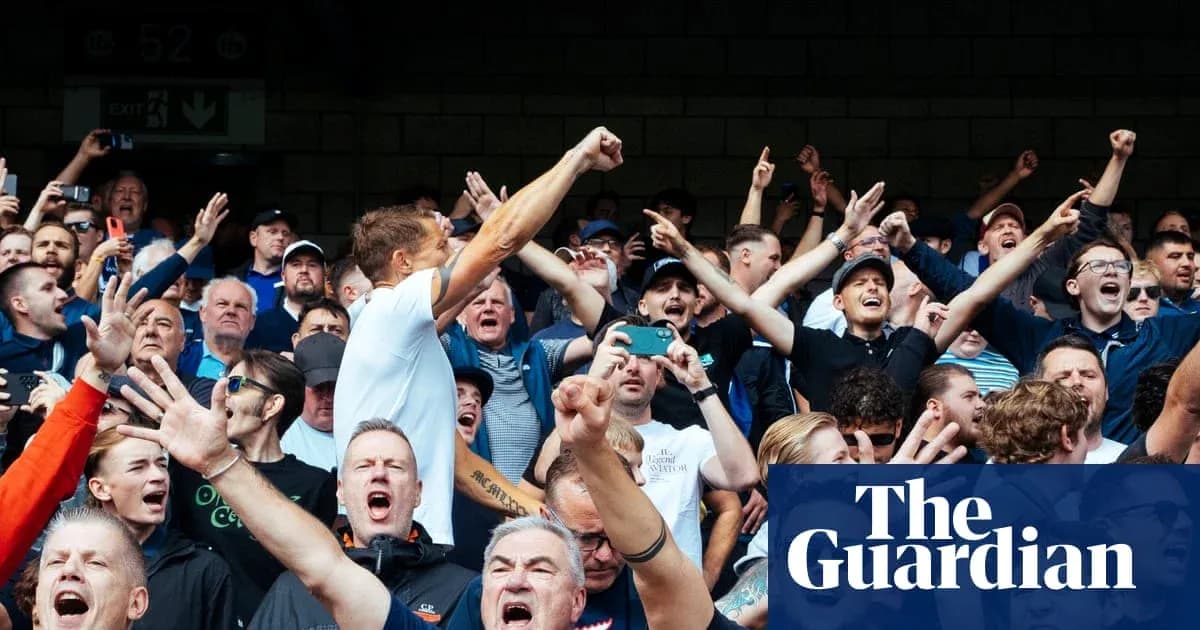
Suspicion of journalists, and especially photographers, runs deep among both sets of supporters. Warnings to “be careful” came from both sides. There were a few sharp words thrown during the day, but they came from a minority. What stood out far more was the sense of community: families in club colours, old friends meeting at the turnstiles, strangers sharing stories. Tough edges, yes, but also warmth.
The fixture returned under tight control. ITV cameras. A 12.30pm kick-off to cut down drinking time. Around 400 police officers on duty. West Ham were given just 1,774 tickets in a crowd of about 20,000, and most of their fans chose not to wear colours. They were funnelled via London Bridge to South Bermondsey, then escorted straight to the away end.
On the pitch, the script refused to follow the form book. West Ham arrived top of the table, fresh from a 6-0 demolition of Wrexham. Millwall, patched up and dealing with injuries, tore into them. The Lions dominated long spells of the first half and deservedly went in at the break two goals to the good. The Den roared like the old days.
The league leaders eventually woke up. West Ham worked their way back, pinned Millwall deeper and deeper, and with 10 minutes to go they finally dragged themselves level. Each goal through the afternoon detonated around the ground, a reminder that this rivalry doesn’t need much to ignite. The equaliser felt different, though. For a moment, the noise edged towards something more dangerous, and extra police were called into the area.
Then came the moment that could have rewritten the day. In the 89th minute, Kyrell Lisbie burst clear, the game opening in front of him. Mohamadou Kanté hauled him down and saw red on the spot. Millwall wanted a winner; West Ham were left clinging on. The chance was gone, and with it the possibility of a famous late triumph. It finished 2-2, a result both sides could argue about all the way home – two points dropped, or one salvaged?
Outside, a few brief clashes flickered between Millwall supporters and police, but they faded quickly. Within minutes, the scene had shifted. Young fans waited patiently for autographs. Groups stood around dissecting the match, talking about the goals, the red card, what it all meant for the table.
To anyone looking in from the outside, the similarities between Millwall and West Ham can feel more striking than the differences. Many fans have relatives or close friends on the other side. Both clubs still lean heavily on the language of working-class London: toughness, loyalty, authenticity. Yet when they meet, the animosity is real among sections of both followings. Perhaps that’s the heart of it – two clubs fighting to embody the same place, the same culture, the same story, each trying to claim they are the truest version.
They have now faced each other across three different centuries. The docks that gave this derby its soul have all but vanished. The clubs have moved further apart, and competitive meetings are rare. But the argument over what each of them stands for, and which one speaks most honestly for that lost world by the river, refuses to die.