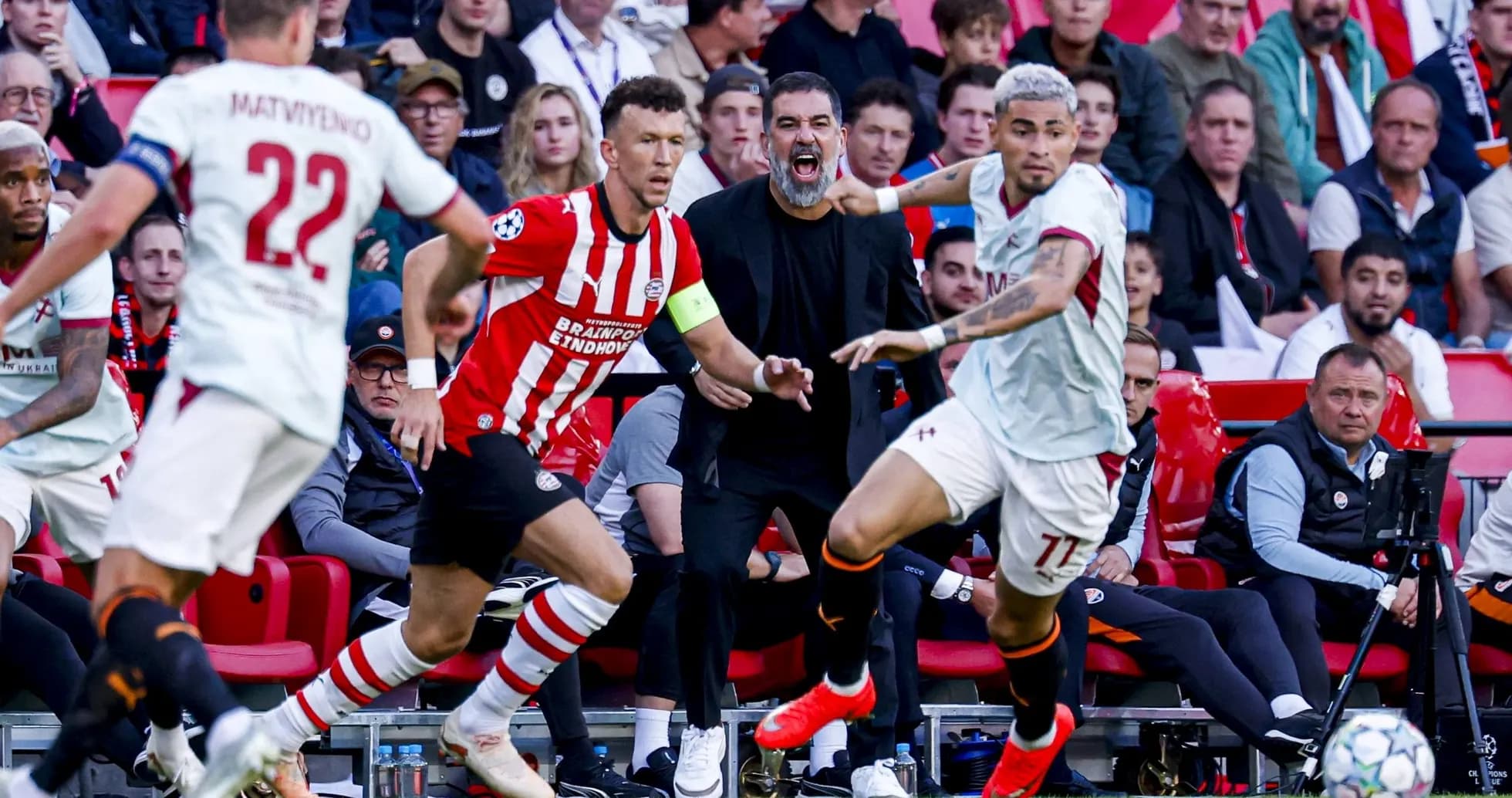
Shakhtar Donetsk's Statement Draw Against PSV Eindhoven
Shakhtar Donetsk walked out of the Philips Stadion with more than just a point. They left a mark.
Up against PSV Eindhoven, the Dutch champions and one of Europe’s most ferocious pressing sides, Arda Turan’s young team absorbed wave after wave of pressure and still found the personality to play. A 1-1 draw to open their UEFA Champions League campaign felt like a small result on paper, but on the pitch it looked like a statement of intent.
Mendoza’s moment of quality
The game tilted Shakhtar’s way right on the stroke of half-time. Deep into stoppage time, with PSV trying to squeeze them into mistakes, Venezuelan midfielder Gleiker Mendoza found exactly the pocket Turan had talked about all week.
He drifted into the half-space, took his chance and wrapped a stunning curling finish beyond the keeper. On his Champions League debut, in one of Europe’s loudest grounds, Mendoza produced the kind of goal that silences a stadium and supercharges a dressing room.
Afterwards, he pointed straight back to the training ground. Turan, he said, had drilled into his players the need to attack those half-spaces between PSV’s defensive lines. The goal came straight from the game plan, executed with the kind of calm you don’t usually associate with a debutant.
“I can’t put my emotions into words,” Mendoza admitted, still processing the night. The message from his coach, though, was clear: keep playing at this pace, keep taking points, and nights like this will not be an exception.
Dest hits back, PSV turn the screw
The lead did not last long. Early in the second half, Sergiño Dest dragged PSV level, and the Philips Stadion roared back into life. From there, the pattern was brutal for Shakhtar: red shirts swarming, pressing one-on-one all over the pitch, hunting for the winner.
Shakhtar bent but did not break. They survived long spells pinned in their own half, cleared their box under intense pressure and still tried, whenever they could, to play their way out rather than simply launch the ball away.
Turan later revealed that this was no accident. He had warned his players that trying to mimic PSV’s intensity would be a trap.
“I told them: if we play like PSV, we will not win,” he said. The message was to stay themselves, to trust their own football, even against an opponent that thrives on forcing panic. The key, he explained, lay in small details: diagonal movements to escape markers, body positioning to ride the press and slip beyond PSV’s first line of engagement.
Those tweaks did not just help create Mendoza’s opener; they gave Shakhtar just enough composure to survive the storm.
Turan, Isaque and the weight of real life
For Turan, this was not only a tactical victory. It was an emotional one.
He spoke with particular pride about 19-year-old midfielder Isaque, who made his Champions League debut on this night. The story he shared cut through the usual clichés of European away days.
Turan recalled a photograph on his phone: a hotel lobby, a bombing raid, a young player asleep under a blanket. The man placing that blanket over him was not just a coach, but a protector. That teenager was Isaque.
When Turan tells him he must be ready for the fight, it is not just about duels in midfield. It is about a team that has lived through real fear, real disruption, and still walks into arenas like the Philips Stadion ready to compete with Europe’s elite.
He made it clear that these experiences have forged a resilience that no training session can replicate. On nights like this, that steel shows.
A point with weight
By the final whistle, PSV had thrown everything at Shakhtar. Crosses rained in, shots flashed wide, the Dutch champions pressed high until the last seconds. Shakhtar held firm and carried a vital away point back into a season already defined by challenges far beyond football.
Turan praised his players’ tactical discipline and bravery, and it was hard to argue. They had followed the plan, trusted their identity and refused to be dragged into a game they could not win.
One point, yes. But in a group where margins are thin and pressure is constant, it felt like something more: proof that Shakhtar can take the hits, think clearly under fire and still land blows of their own.
The Champions League will ask even harder questions in the weeks ahead. On this evidence, Shakhtar look ready to answer them.