Sergio Conceição's Candid Milan Reflections and Warning for Amorim
Sergio Conceição does not sugar-coat his Milan story. Nor does he spare a warning for the man now stepping into the same storm.
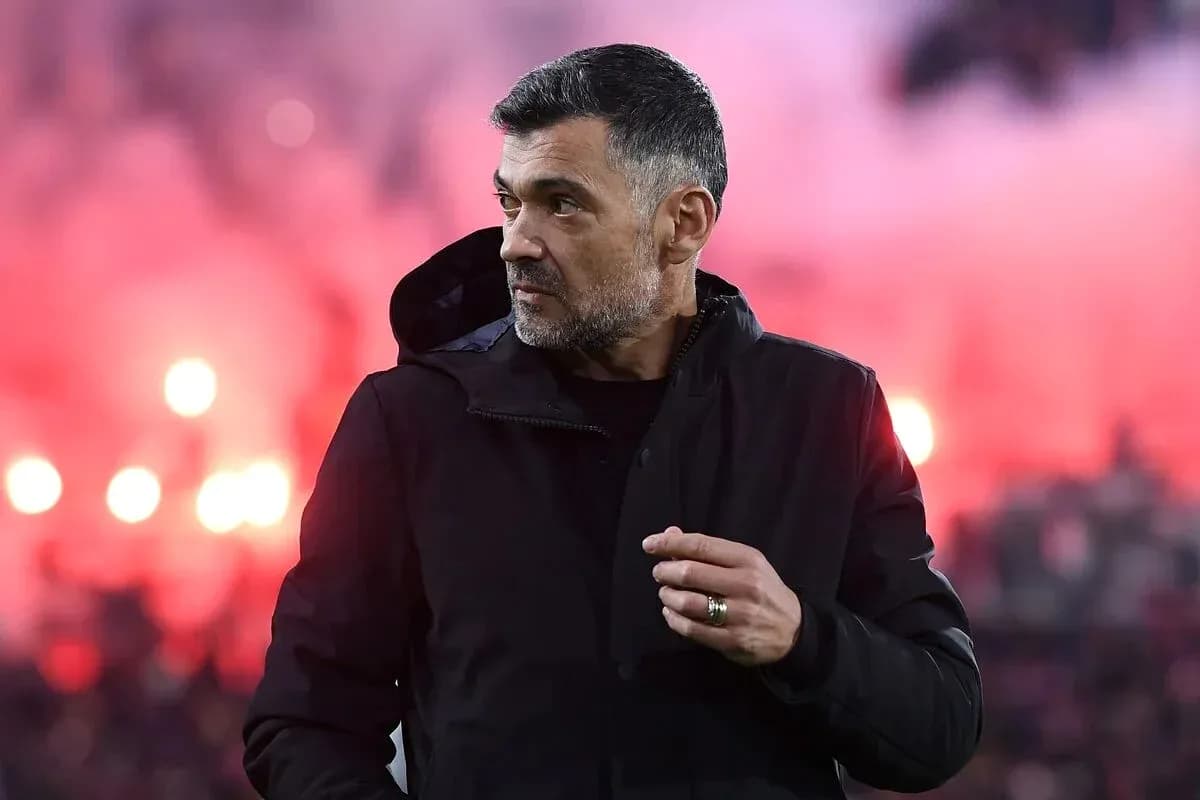
Sitting in a DAZN studio on Champions League duty, the former Porto and Milan coach looked back on his brief spell at San Siro and delivered a blunt message to Rubem Amorim: this job eats expectations for breakfast.
“It won’t be easy at all”
“I send him a big hug and wish him good luck on this new journey, which won't be easy at all, especially because of the atmosphere at the club,” Conceição said of his compatriot. “There's a lot of pressure, people think they should be winning the league and Champions League every year.”
That line cuts to the heart of Milan’s recent chaos. Coaches come and go, the demands never move.
Conceição arrived midway through the 2024-25 season, a mid-season gamble meant to jolt Milan back into contention. At first, it worked. Within his first two games he had a trophy in his hands, lifting the Supercoppa Italiana. His Milan also marched to the Coppa Italia final, only to fall short in Rome against Bologna, the coach walking past the trophy that had just slipped away.
The league told a harsher truth. Milan limped to eighth in Serie A, out of every European competition for 2025-26. For a club that measures itself against its seven European Cups, that is more than a disappointment; it is a humiliation.
“I was in Milan for six months and things went … I wouldn't say well, but we managed to win a Super Cup and got to the final of the Coppa Italia,” he reflected. It is as close to a shrug as you’ll hear from him: a recognition that the job was only half-done, but not the unmitigated failure some painted it to be.
“The coach is not the problem”
Milan moved on quickly. Conceição was replaced by Massimiliano Allegri for 2025-26, a return to a proven Serie A winner, a safe pair of hands. No European football, no midweek distractions, a squad that had spent long stretches of the season in second place: on paper, it looked like a platform for a reset.
Instead, it became another indictment of the club’s direction. Allegri’s Milan finished fifth. Respectable for many clubs, but not for one that had cleared its schedule to attack the league.
The response from the hierarchy was brutal and sweeping. Allegri, sporting director Igli Tare, technical director Geoffrey Moncada and CEO Giorgio Furlani were all dismissed the day after the season ended. One campaign, one clear-out.
For Conceição, that sequence confirms what he has felt all along.
“Amorim mentioned recently that Milan have won two league titles in 20 years and that is true. One of their two most recent trophies was mine,” he pointed out, referring to the Supercoppa Italiana. “And it's been confirmed that the coach is not the problem. Obviously, I take my fair share of the blame and I don't want to shy away from my responsibilities, but we've now seen Allegri and the whole management team fall.”
It is a rare thing in modern football: a coach openly defending his record without hiding from his own mistakes. He did not transform Milan, but he did deliver silverware and a cup final in six months. He also walked into a club that has been changing direction almost annually.
Amorim walks into the furnace
This is the backdrop for Rubem Amorim’s arrival. He inherits a club that has cycled through ideas, leaders and philosophies, all while insisting on a standard that only the very best in Europe can realistically sustain.
Conceição’s warning is not about tactics or formations. It is about the air Amorim will breathe every day at Milanello and under the floodlights of San Siro. The banners, the whistles, the constant comparison with a past that feels both distant and suffocatingly close.
Two league titles in 20 years. Two recent trophies, one of them a Supercoppa from a coach many judged harshly and moved on from in half a season.
Amorim now steps into that same dugout, with the same anthem ringing in his ears and the same demand echoing from the Curva Sud: bring Milan back. The question is no longer whether the coach is the problem.
It is how long this club can keep changing the man on the touchline before it changes something deeper.