Rodrigo De Paul: The Enforcer of Inter Miami
The flashpoint came late. A 1-1 draw between Inter Miami and the Chicago Fire, drifting toward a routine finish, suddenly crackled into hostility.
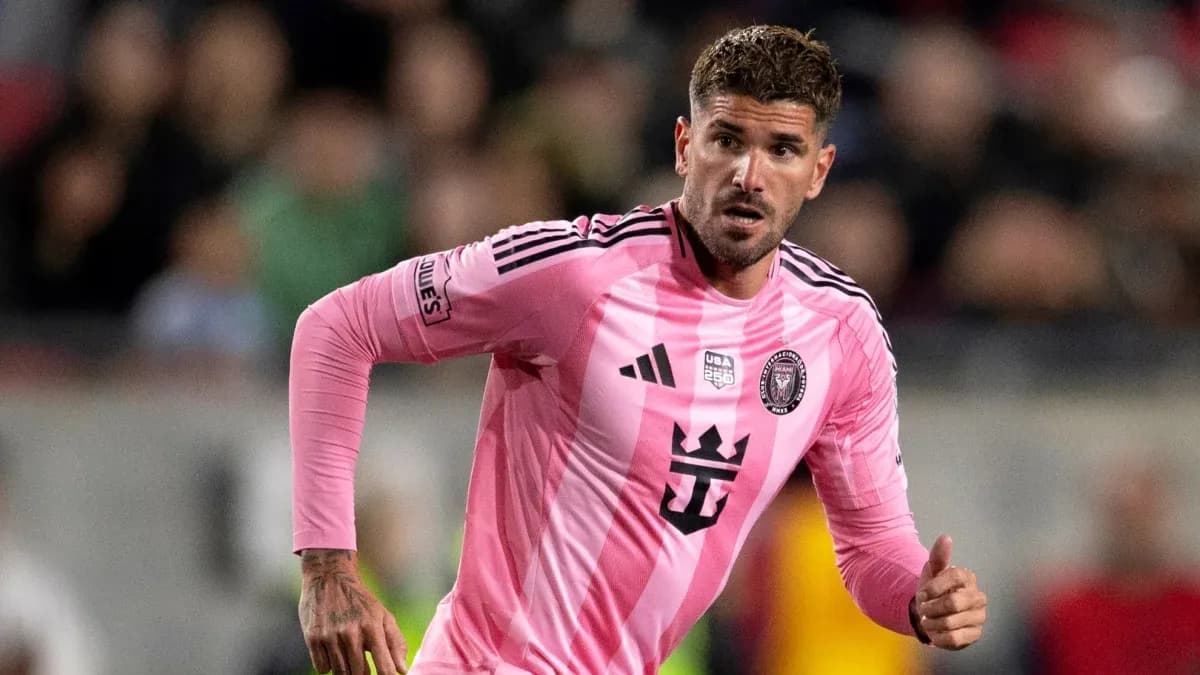
Robert Lewandowski tangled with Ian Fray, the pair shoving in the box. Within seconds, Rodrigo De Paul arrived like a storm. He sprinted into the confrontation, went straight at the Polish striker and made it crystal clear he would not let anyone lean on his teammate without an answer.
It was a raw, emotional scene, and it put De Paul back under the spotlight he has grown used to in the Messi era: the enforcer, the loyal lieutenant, the one who runs toward trouble, not away from it.
From Avellaneda to Miami: a fortune built the hard way
Behind that combative edge sits a career that has quietly turned De Paul into one of the highest‑paid players in MLS.
His estimated net worth stands at around $25 million, according to Celebrity Net Worth. It is not a formal balance sheet, but it reflects more than a decade of earnings across four countries, stitched together from salaries, bonuses and endorsement deals in Argentina, Spain, Italy and now the United States.
The clearest window into his current status comes from his Inter Miami contract. Figures from the MLS Players Association list De Paul on a base salary of $7.57 million and roughly $9.69 million in guaranteed annual compensation for 2026. Only Lionel Messi and Son Heung-min earn more in the league. For a midfielder whose game is built on sweat and sacrifice, it is elite, superstar money.
None of it arrived quickly.
De Paul came through Racing Club, a technically gifted but combative midfielder who soon drew interest from Europe. Valencia took him to La Liga, the first big leap and the first big contract. His real transformation, though, came in Italy. Five seasons with Udinese turned him from a talented prospect into a complete, relentless engine, the kind of player big clubs circle for years.
Atlético Madrid finally moved in 2021, paying around €35 million to bring him to Diego Simeone’s side. The fee went to Udinese, not to De Paul directly, but it signaled something crucial: his market value had soared, and with it his leverage at the negotiating table. When Inter Miami came calling four years later, they spent around €14.5 million to sign him permanently, another marker of a player whose name now carries serious weight.
The numbers behind the grind
Capology estimates that De Paul has earned close to $29.9 million in gross base salary over his career, without counting bonuses, image rights or sponsorship money. The true figure, once those are folded in, is significantly higher.
His success with Argentina only adds to the financial picture, even if the exact sums stay behind closed doors. FIFA awarded the Argentine federation $42 million for winning the 2022 World Cup, but it never disclosed how much of that pot each player received. The same goes for the bonuses tied to the Copa América triumphs in 2021 and 2024. Those numbers remain off the record, but they form part of the backdrop to a player who has turned elite international success into long‑term security.
Lewandowski’s résumé glitters with club trophies – a Champions League title, a stack of Bundesliga championships, years spent among Europe’s most feared scorers. De Paul’s pride lies elsewhere. He became the tireless bodyguard next to Messi, the midfielder who never stops running, who presses, fouls, covers and confronts, and who now owns two Copa América medals and a World Cup winner’s tattoo on his neck to prove it.
That ink – the date of Argentina’s 2022 World Cup victory – is not subtle. It is not meant to be. It is a permanent stamp of the night his career reached its summit.
Family, fashion and the man behind the midfielder
Away from the roar and the arguments, De Paul’s life has been just as closely watched.
He is the youngest of three sons of Mónica Ferrarotti and Roberto De Paul. In Argentina, his family life has often shared the front pages with his football. His former relationship with Camila Homs, with whom he has two children, Francesca and Bautista, has drawn intense media coverage, sometimes rivaling the attention on his performances for club and country.
His 11-year run in Europe, from his move to Valencia in 2014 to his departure from Atlético Madrid in 2025, did more than shape him as a player. It also sharpened his tastes. De Paul developed a strong interest in fashion, his off‑field style becoming as recognizable as his on‑field tenacity. Tattoos followed, each one a story, the World Cup date the most visible of all.
So when he charged at Lewandowski in that heated moment against Chicago, it was not an isolated flash of temper. It was the public expression of the identity he has built over a decade: a multimillionaire midfielder who earned his money step by step, country by country, and who still measures his worth not just in contracts and trophies, but in how fiercely he protects the players beside him.