Newcastle United's Managerial Change: Planning for the Unthinkable
Newcastle United spent the early weeks of summer braced for upheaval on the pitch. What it did not expect was the earthquake on the touchline.
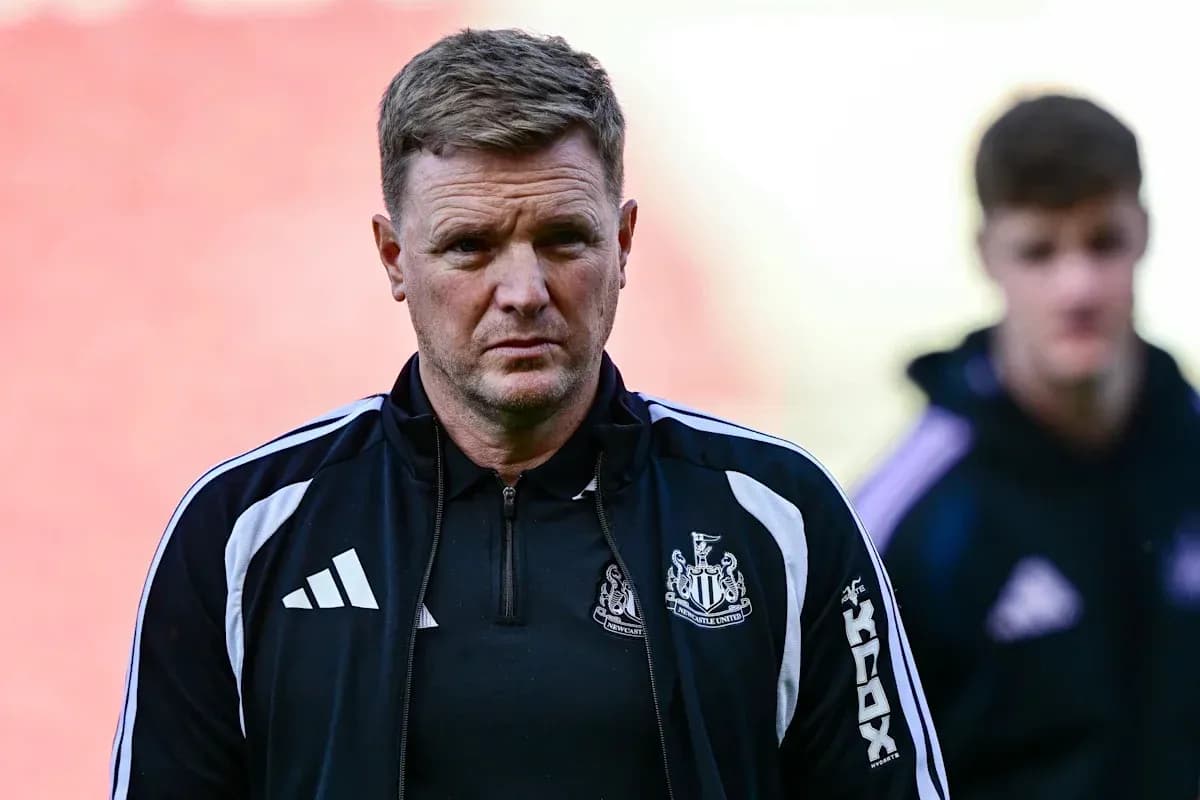
Eddie Howe’s decision to walk away, early in preseason and right in the thick of the transfer window, detonated at the worst possible time for a club trying to reshape its squad and sharpen its ambitions. Preparations were in full swing. Players were coming and going. Then the manager, the man who had delivered a long-awaited trophy and helped reawaken a sleeping giant, was suddenly gone.
From the outside, it looked like chaos waiting to happen.
Inside the building, Ross Wilson insists it never came close.
Two windows at once
Newcastle’s sporting director has revealed that the club had already been working through a detailed succession plan long before Howe chose to leave. The groundwork, he says, meant that when the bombshell dropped, Newcastle could pivot straight to Matthias Jaissle without losing time or direction.
To the scouting department, Wilson framed it in stark terms. According to The Athletic’s Chris Waugh, he told them it was “almost like running two transfer windows” at the same time: one for players, one in total secrecy for a potential new head coach.
For two weeks, that hidden search ran alongside the club’s recruitment drive. No leaks. No noise. Just a parallel operation, ready to be activated if the moment came.
When it did, Newcastle moved.
“No, it never felt chaotic inside at all,” Wilson said. He made a point of underlining Howe’s legacy, too. “Big respect to Eddie for the job he did for us over a long period of time. Bringing that trophy here means we would all describe him as a club legend.”
That word — legend — is not used lightly on Tyneside. Howe had committed to another season only weeks earlier. His exit cut across the club’s carefully staged summer and forced a reset just as fitness work, tactical drills and transfer negotiations were all peaking.
Planning for the unthinkable
The timing was brutal. The scale of the rebuild only heightened the stakes.
Newcastle were already in the middle of a sweeping overhaul, committing up to £300 million across eight new signings. Those deals were meant to push the squad into its next phase, not be wrapped in the uncertainty of a managerial change.
Wilson admits the club never expected to be replacing Howe at that point in the summer. The calendar was against them. The market was moving fast. Preseason minutes were precious.
Yet the idea that Howe might one day need replacing had been on the table from the moment Wilson arrived.
“Eddie would tell you, since I came to the club, I’ve been planning in the background for a managerial change,” Wilson said. “Part of our responsibility as leaders of the club is to be prepared.”
So they prepared. Quietly. Methodically. Names were assessed. Profiles were built. The club mapped out coaches who could work with the existing core while also aligning with the broader direction of travel.
That process led them to Jaissle.
A fast handover, by design
Because the plan already existed, Newcastle could push ahead with Jaissle while continuing to chase transfer targets that suited both the outgoing and incoming head coaches. The idea was continuity, not a hard reset. Players were identified who could thrive under Howe and still fit Jaissle’s demands.
“Clearly the timing was not (what) we had planned for,” Wilson admitted. “But we had a plan in place, which is why we could execute it as quickly as we did.”
That speed mattered. A drawn-out search would have wrecked preseason, muddled the dressing room and left those eight new signings stepping into a void. Instead, the club presented a new face, a new voice and a clear line of succession.
Newcastle’s summer still carried risk. Any change at the top does. But behind the shock of Howe’s departure lay a simple truth: this was not a club scrambling in the dark. It was a club that had already rehearsed the worst-case scenario — and then had to live it.
Now the question hangs over St James’ Park: was that quiet planning the foundation for a smoother new era, or the start of the most scrutinised gamble of Newcastle’s modern history?