Morocco’s World Cup Bid Faces Political Challenges
The race to stage the 2030 World Cup final has burst out of the boardroom and straight into Morocco’s domestic politics.
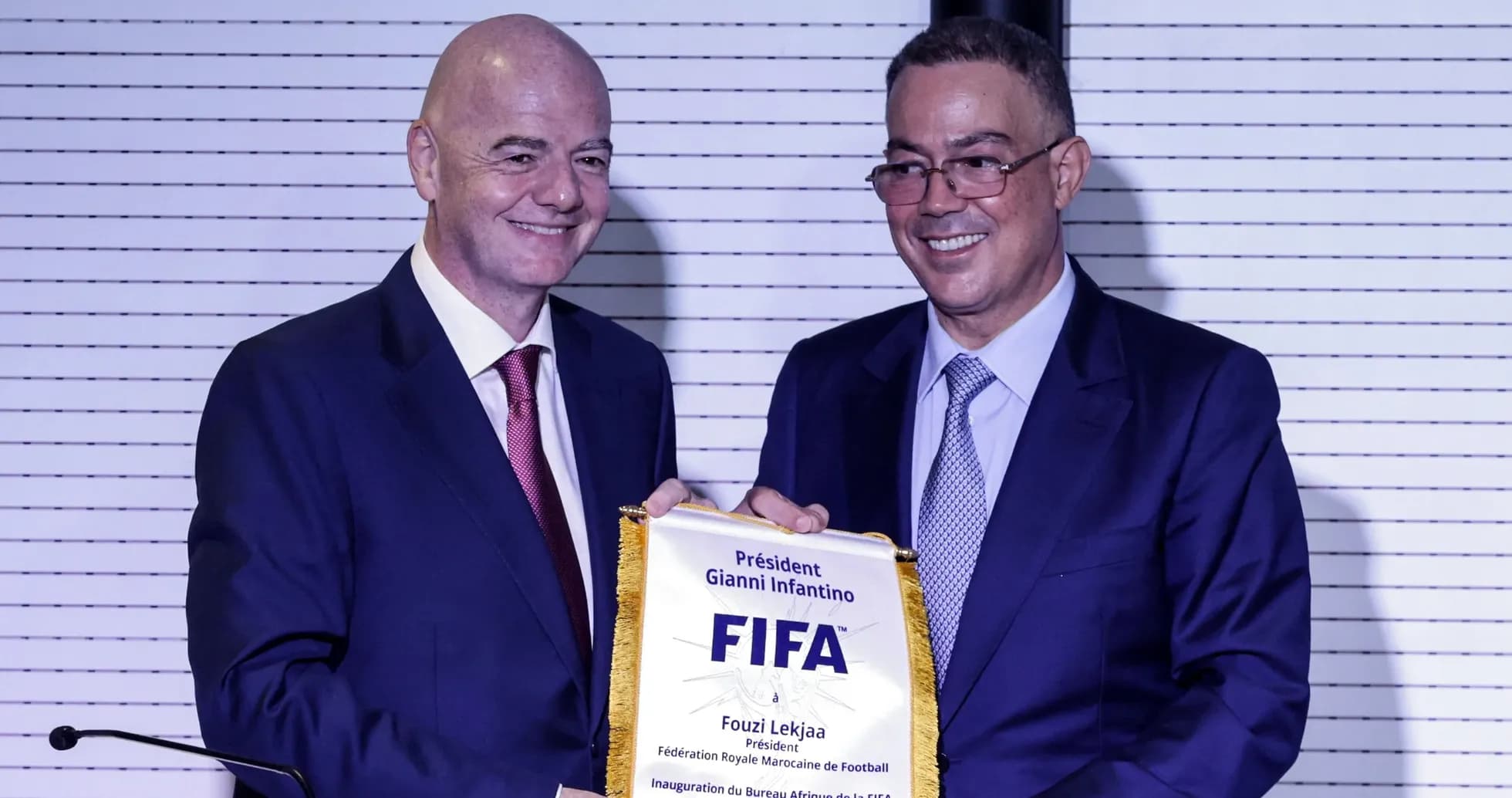
Prime Minister Aziz Akhannouch has publicly rebuked Fouzi Lekjaa, the powerful president of the Royal Moroccan Football Federation (RMFF), warning him to stop making bold promises about Casablanca hosting the showpiece game before anything has been agreed with Morocco’s co-hosts, Spain and Portugal.
The message was blunt. The timing, deliberate.
A public slap on the wrist
Speaking at a rally, Akhannouch addressed Lekjaa directly after the federation chief had told a political gathering that Morocco’s planned new stadium in Casablanca would have the “honour” of staging the 2030 final.
That crossed a line for the Prime Minister, who moved quickly to cool a situation that risked spilling into a diplomatic row.
“Do not offer to host the big final game in Morocco while we still have not discussed the matter with our allies, Spain and Portugal,” he said, stressing unity within the three-nation bid. “There should be some respect, brothers. Stop using electoral promises to pull the rug out from under us. These are huge matters. Deciding where the final will be held is a major issue.”
In one intervention, Akhannouch reminded Lekjaa that World Cups are not won on domestic stages and campaign platforms, but in negotiations with partners and in the corridors of FIFA.
A final up for grabs
The 2030 tournament, marking 100 years of the World Cup, will be co-hosted by Morocco, Spain, and Portugal, with symbolic opening matches in South America to honour the competition’s origins.
The final, though, remains the glittering prize. And for now, it is officially still up in the air.
FIFA has kept its cards close, saying only that “a decision will be made in due course.” No timetable, no hints, no guarantees.
That vacuum has encouraged competing claims. In North Africa, Morocco is pushing hard to bring the final back to the continent for the first time since Johannesburg in 2010. Across the Mediterranean, Spain is equally convinced the last game should be theirs.
Spain turns up the volume
On the Spanish side, the tone is confident, almost dismissive of any alternative.
Rafael Louzan, president of the Spanish federation (RFEF), has been outspoken about where he believes the final belongs.
“Even though no decision has been taken, I believe Spain is the place because it cannot be any other way,” he told Cadena SER radio. He pointed to Spain’s status as reigning world champions and their track record in staging major events. “I believe Spain’s organisational capacity for major events is beyond question and that is why reality dictates that the grand final cannot and must not be held anywhere other than in Spain.”
It is not subtle. It is not meant to be.
Spain leans on its football pedigree and infrastructure. The revamped Santiago Bernabeu in Madrid, now a gleaming, multi-use arena, and the ongoing expansion of Barcelona’s Spotify Camp Nou give the RFEF ready-made stages for the biggest night in the sport.
Add the momentum of their men’s national team, who beat Argentina to claim a second World Cup title this past summer, and the Spanish argument grows louder.
Morocco’s grand design
Morocco, though, is not playing small.
The country is building a 115,000-seat stadium, a vast new arena designed to be the largest football-specific venue on the planet. The project is aimed squarely at matching – and in capacity, surpassing – Spain’s legendary grounds.
Lekjaa’s enthusiasm about Casablanca is rooted in that ambition. A brand-new colossus, a centenary final, and Africa back on centre stage. It is a powerful narrative, and one that resonates with Moroccan fans who have watched their national team rise on the global stage.
That same narrative, when voiced prematurely on a political platform, forced Akhannouch to step in.
For the Moroccan government, the stakes are broader than football. They want the final, but not at the cost of unsettling relations with Madrid and Lisbon. Managing expectations at home has become part of the job.
FIFA’s clock, not theirs
The decision on the 2030 final will not be rushed. The precedent is clear: for the 2026 World Cup, New Jersey’s MetLife Stadium was only confirmed as the final venue in early 2024, long after the hosting rights had been awarded.
That kind of drawn-out process gives FIFA leverage and keeps all three European and African hosts on their toes.
Spain can point to its world titles and stadiums. Morocco can point to its mega-project and the symbolic power of returning the final to Africa. Portugal, quieter in this particular tug-of-war, still stands as a key partner in the tri-nation bid.
What Akhannouch’s intervention underlined is simple: the battle for the 2030 final will be fought in unity or not at all. For now, the grand stage remains unassigned, and the political temperature around it is already rising.