Mohamed Salah's Rock: From Ordinary Boulder to Tourist Attraction
High on the Kürtdere plateau in Turkey’s north-eastern Trabzon province, an ordinary rock has suddenly become anything but.
It’s just stone. No plaque, no statue, no grand design. Yet crowds now climb into the hills, phones in hand, hunting for one specific boulder where Mohamed Salah once sat and stared out at the landscape. They don’t just want the view. They want the pose.
The story started with a few photos on Salah’s social media. The Egypt captain, fresh from lighting up Turkish football, shared images from his quiet escape to Kürtdere: him perched on a rock, the plateau rolling away behind him. A simple moment, a star taking a breath.
The internet did the rest.
The pictures tore through social media, and within days fans and tourists began tracing his steps, asking locals where “the Salah rock” was. Once someone found it, word spread quickly. People arrived, queued, and sat in the same spot, copying his posture, framing their own version of the now-famous shot.
Locals didn’t take long to give it a name. They call it “Salahtaşı” – “Salah’s rock” in Turkish. A nameless boulder in the middle of the plateau has turned into a landmark, folded neatly into the mythology of one of the game’s biggest stars.
The fascination has had its lighter moments. Turkish media picked up on the story, capturing the mix of amusement and pride in the area. In one clip reported by Al Jazeera, a journalist jokingly asked the owner of a nearby facility if the whole area might soon be rebranded as “Salah’s plateau.” She laughed the idea away, pointing out that these were her “Subaşı” facilities – her own business, her own name – even as the Salah wave washed through.
A shop owner close to the rock went a step further, sending a warm, off-the-cuff message to Salah. No marketing slogan, no scripted PR. Just a simple invitation: come back, visit the shop, sit down for a cup of tea. In a region where hospitality is a point of pride, the biggest star in Turkish football right now has an open table waiting for him in the hills.
As the flow of visitors grew, the area began to adapt. Turkish platforms started sharing videos explaining how to reach the heights Salah had visited, guiding fans along the same route. Reports say a directional sign has now been installed, pointing the way to “Salah’s rock” for anyone keen to add their own photo to the endless scroll.
This is not just about a day out in nature. It’s about timing, and about the force of a player at the peak of his powers.
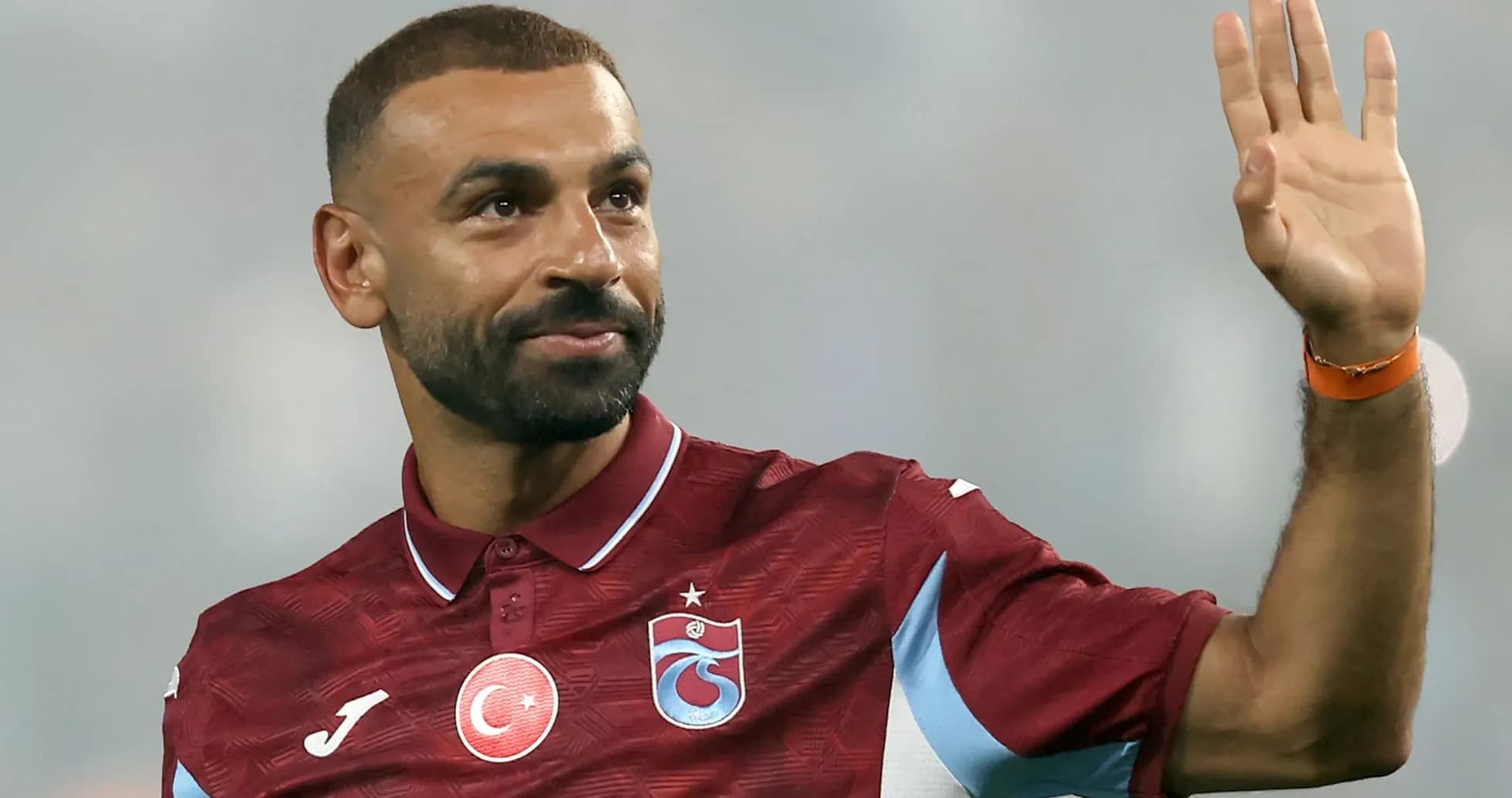
The rock craze comes on the heels of Salah’s explosive performance in a Trabzonspor shirt, a display that has dominated Turkish headlines. Wearing the claret and blue, he ripped through Galatasaray in a 4-0 win, scoring three and setting up another. A hat-trick and an assist in one of the country’s biggest fixtures is the kind of statement that doesn’t fade quickly.
That night turned him from visiting superstar into a phenomenon for the local game. He didn’t just beat Galatasaray; he owned the occasion, dragging the spotlight firmly onto Trabzon. Turkish media and fans have been talking about him ever since, and now the geography of the region is starting to talk too.
A rock is now Salah’s rock. A plateau is now a backdrop to his story. And somewhere in Trabzon, as more visitors file past that boulder and strike that familiar pose, the question lingers: how much bigger can his shadow grow over Turkish football?