Mauricio Pochettino's Vision for US Soccer: Beyond the World Cup
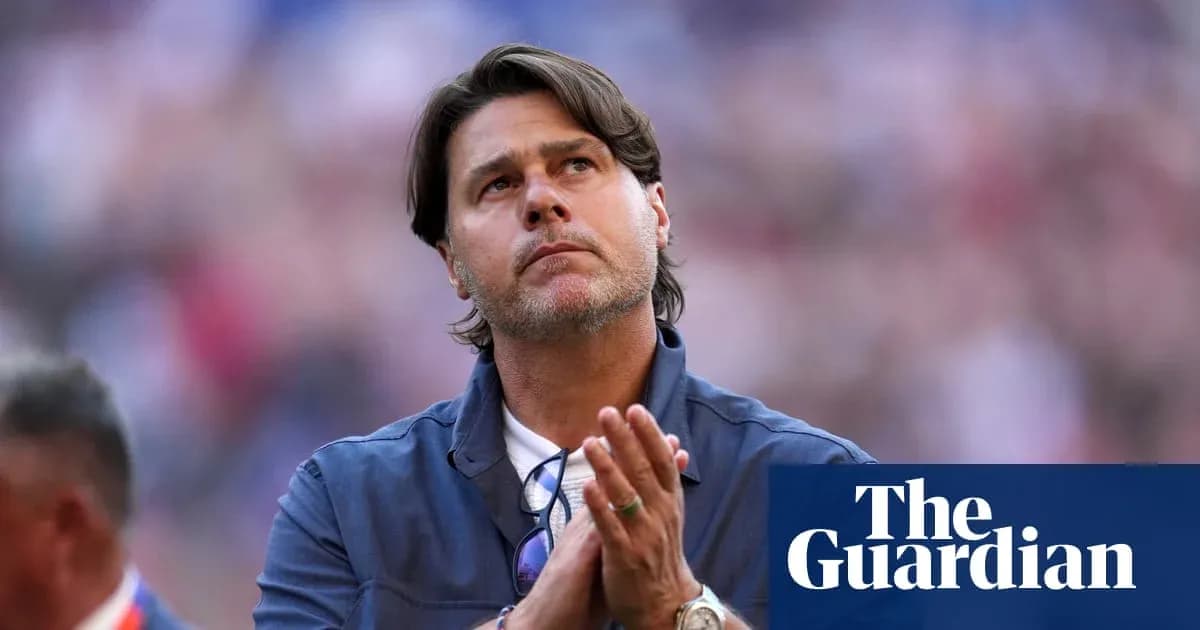
Two months after the World Cup exit that sucked the air out of a nation’s hopes, Mauricio Pochettino is back in front of microphones, talking not about damage control but about legacy.
The US men’s national team crashed out in disappointing fashion, yet the man hired as a short‑term solution in 2024 has just committed to the long haul. The former Tottenham and PSG manager was initially brought in to ride the wave of a home World Cup, the country’s first in more than 30 years. Somewhere along the way, the project changed. So did the expectations.
By August, Pochettino and US Soccer had agreed a contract extension. The message was clear: this is no longer a one‑off tournament partnership. This is a bet on a man to help reshape the sport’s structure in the United States.
A coach, and something more
The calendar says the US will be back on the field soon enough – four friendlies in late September and early October against Peru, Chile, Mexico and Canada. Useful tests, yes, but small steps compared with the road ahead.
Pochettino still has the basic job description every national team coach lives by: qualify for the next World Cup, in this case 2030, and be ready to compete. Yet his remit now stretches far beyond matchday.
US Soccer’s announcement of his renewal came with a notable twist. The Argentinian will play a larger role in youth development and coaching education, and he will advise on collaboration with the professional leagues. In a federation that has never given a head coach such broad influence over the direction of the entire program, that is a major shift.
He welcomed it.
Staying on for another cycle, he has said, is a chance “to have a lasting impact on the sport in the country that has welcomed us so warmly – and for that impact to extend beyond results on the field.” On Monday, speaking with a small group of reporters, he leaned into that idea again. This is about more than a starting XI.
US Soccer is in the middle of a significant restructuring, creating two new director roles overseeing the men’s and women’s senior and youth programs. Pochettino has already offered to be part of that process – with one caveat. “It can’t [just] be my guy,” he joked, making it clear he wants something that outlives any single coach.
“This is the future of the USA,” he said. “We want to try to perform in the World Cup and to create something special with the fans. And now it’s about being a part of the legacy that the federation wants to create – becoming one of the most powerful countries in soccer. That is a dream, no? It’s amazing. If we can be part of that, we are so excited and so happy.”
The horizon is crowded. The US will take part in the Los Angeles Olympics in 2028, a rare chance to showcase a young core on home soil. It has also been widely reported that the team may play in the Copa América that same summer. For Pochettino, those tournaments are not isolated events; they are stepping stones in a broader attempt to hard‑wire a winning culture into the national setup.
Balogun’s brutal deadline day
While the long‑term vision expands, the day‑to‑day realities of players’ careers still bite. This summer’s transfer window was relatively quiet for the USMNT. Gio Reyna moved to Strasbourg, Sebastian Berhalter joined Middlesbrough, and teenager Zavier Gozo jumped from MLS to Crystal Palace. Many others stayed put.
Folarin Balogun expected to be on the move. After a breakout World Cup, the Monaco forward looked set for a big transfer. Everton pushed late. The deal collapsed even later.
The Premier League club cited a potential fitness issue, a claim Monaco – and Balogun – disputed. The 25‑year‑old was left with no move, no new league, and a very public question mark over his condition.
Pochettino has seen this kind of deadline‑day chaos before. He knows the helplessness players feel when medical reports and boardroom decisions dictate their futures.
“Yes, it’s difficult because you cannot influence that decision,” he said. “You need to support what they are doing with the people making the decisions. In some special cases, like Flo’s, I will call in the next few days. I wanted to give him a little bit of space after that situation in Everton. I want to know from him what happened. But we are always offering our support, and that’s it.”
There was no doubt about Balogun’s importance in his tone.
“I think he’s an important player for us, he was an important player in the World Cup and I hope that he can find being in Monaco, or in another place, his best place to perform in the best way.”
The message was part empathy, part challenge: reset, respond, and return to the level that made him one of the faces of this cycle.
The tug‑of‑war over dual nationals
If Balogun’s future is about club football, another battle for the US is being fought in living rooms, training grounds and phone calls across Europe and beyond.
Pochettino kept his cards close to his chest on the 26‑man roster for the upcoming camp. One name, though, is already off the list: Noahkai Banks. The Augsburg center‑back, a 19‑year‑old German‑American, remains undecided on his international allegiance and will not join the US this window.
Banks has said he hopes to make a decision by “the next international break, or at the latest by the international break after next.” In Germany, reports have already detailed how new national team coach Jürgen Klopp has scouted him in person. The race is on.
Pochettino knows this is not just about sales pitches or minutes promised. It is about relationships.
“We are in contact with all the potential dual nationals,” he said. “I think it’s important for us, of course, because that is the human connection that is so important.”
He used Banks’s nickname, “Noki,” as he spoke, a small detail that underlined the personal touch he wants.
“Even if they, like in that case, Noki, didn’t change his mind and is waiting still, no decision, and of course we cannot consider him for the next camp … But the organization is working with all the dual nationals and players with the possibility to make a decision. That human connection is important because if one day they feel that they can defend and they want to fight and to be part of our national team … Of course, if they deserve it, and we consider that they deserve to be involved, of course we are going to call [them up].”
For a country that has built much of its recent rise on convincing dual nationals to buy into the project, those words carry weight. The US cannot afford to lose too many of these battles if it truly wants to stand among the sport’s powerhouses.
The next few friendlies will offer only glimpses of what Pochettino’s second act might look like. The real judgment will come later – in Olympic stadiums, in Copa América cauldrons, in World Cup qualifiers far from home.
He has signed on to help the US become “one of the most powerful countries in soccer.” The question now is simple: can this ambitious structure, and this coach, turn that dream into something opponents actually fear?