Mauricio Pochettino's Journey: From World Cup Challenges to Premier League Dreams
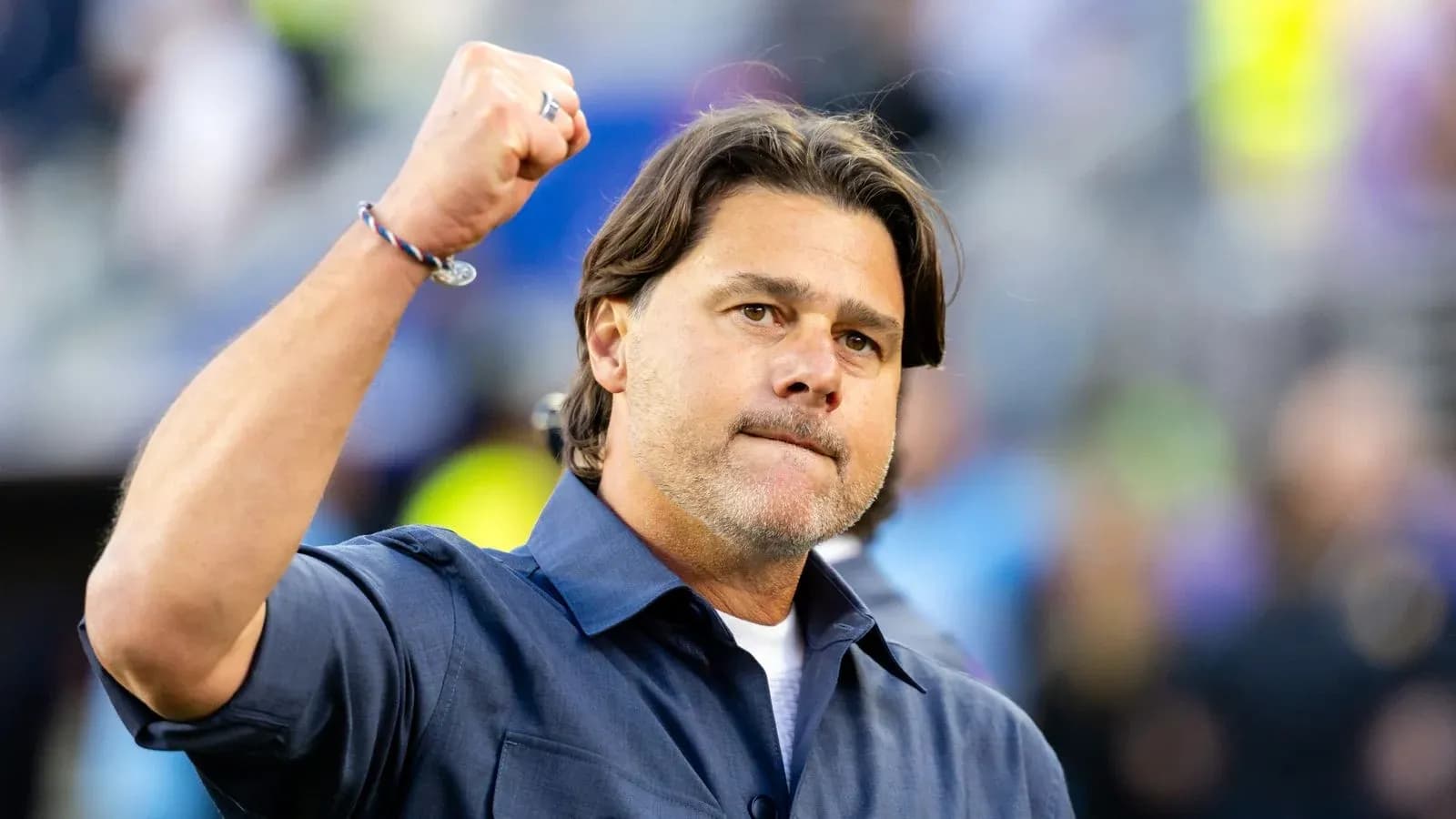
Mauricio Pochettino walks into the room the way he tends to walk into football clubs – smiling, open-armed, genuinely pleased to see people. The hugs are real, the small talk easy. But his summer has been anything but.
The man who once took Tottenham to the brink of immortality has just lived through a World Cup on home soil with the USA, navigated presidential politics, a FIFA storm, a striker’s legal limbo and, somewhere along the way, accidentally turned himself into a style reference point. Then he quietly signed up for four more years of it.
Not bad for a manager who many expected to be back in the Premier League by now.
‘We are much better coaches now’
Ask Pochettino where to begin and he goes straight back to the World Cup. Not the noise, not the circus. The work.
“We are much better coaches now,” he says, and it doesn’t sound like a throwaway line. The tournament has clearly sharpened something in him. He talks about the weight of tiny details, the impossibility of getting every decision right, the strain of trying to imprint complex ideas on a group that spends a fraction of the time together that a club side does.
“Everything needs to be perfect,” he says. In a World Cup at home, perfection isn’t a demand, it’s a necessity.
The USA’s run ended in the last 16 against Belgium, a cold, blunt full stop on a campaign that had carried a nation with it. The result is on the record. The reality, for Pochettino, is that the experience has hardened him, not drained him.
There were moments, of course, when life must have felt surreal. Managing at a World Cup is one thing. Managing a host nation whose President thrives on the spotlight is something else entirely.
Donald Trump was never far away – in the dressing room, on the podium, in the background of almost every major decision. Pochettino chooses his words carefully, but he leans on one theme: the support and backing the team received from the White House. That, he says, was the constant.
Balogun, FIFA and the storm before Belgium
The Balogun saga threatened to swallow everything.
Folarin Balogun’s “suspension of his suspension” became a legal and political tug-of-war on the eve of the knockout tie with Belgium. FIFA deliberated, the noise outside grew, and Pochettino found himself dragged into a narrative he never wanted.
He admitted at the time that the “politics and manipulation” around the case overshadowed the game. He understood the anger. But his role, he insists, was simple: shut out the chaos.
“If you pay attention to the noise, you become crazy,” he says.
When FIFA’s letter arrived the day before the game confirming Balogun could play, the decision for Pochettino was straightforward. He picked his striker and moved on. The rest, he could not control.
Balogun has returned to the headlines in recent weeks for very different reasons. His proposed Deadline Day move from Monaco to Everton collapsed late, leaving him stuck where he started. Pochettino hasn’t called him. Deliberately.
He knows the sting of a move falling apart at the last moment. He wants to give Balogun room to breathe, to reset. He would have liked to see him in the Premier League, he admits. Instead, the forward stays in Ligue 1, and Pochettino simply hopes he can find a good place – mentally and on the pitch.
The accidental fashion icon
Amid the tactical tension and political subplots, there was another, more unexpected storyline: Pochettino, style icon.
His navy touchline ensemble became a talking point of its own. Clean lines, sharp cut, understated authority. It didn’t just turn heads; it opened wallets.
Wayne Rooney went out and bought the same outfit. Pochettino saw the pictures.
“I saw him. He looked good on him, like a top coach,” he laughs.
It was that kind of summer. World Cup pressure, presidential intrigue, FIFA letters – and a manager’s wardrobe going viral.
Four more years with USA – but England still calls
Once the World Cup dust settled, the rumour mill spun into life. Pochettino’s name was linked with a string of clubs. It always is. But the speculation didn’t last long.
He signed a new four-year deal with the USA, tying himself to the national team until 2030. For a coach who has spent most of his career in the relentless rhythm of club football, six years away from that grind sounds like an eternity.
Is this the end of his Premier League story?
He doesn’t hesitate. No.
“I have the ambition,” he says. “My dream now is to be in the USA for four years, but after that, why not? We are still young, and I think coming back is always my goal; to win the Premier League, to be in the Premier League and to build a project with the possibility of winning.
“I love the football here. I think to have the chance again is one of my wishes and I hope that happens.”
The message is clear: the door to England is not closed. It’s just locked for now, with a key marked 2030.
Spurs, the call that never quite came
Talk of the Premier League drags him, inevitably, back to Tottenham.
Eighteen months or so ago, he sat down and openly admitted he would like to return to Spurs one day. The relationship, the memories, the near-misses in the league and in Europe – it all felt unfinished.
Since then, the club has lurched from one direction to another. Ange Postecoglou arrived with optimism, then departed as results and performances unravelled. Thomas Frank and Igor Tudor came and went as Spurs flirted dangerously with the drop. The club that once reached a Champions League final under Pochettino suddenly looked fragile.
So did the rescue call ever come?
“Always I say, one day, why not?” he replies when asked about a return in general.
Pressed on whether it was a real possibility this time, he is blunt: “People talk and maybe we receive some approach, but it never was close.”
Not this time. The romance stays on hold.
Other suitors, doors kept shut
His name floated around other big jobs too. At one point, AC Milan looked like a genuine option from the outside. From the inside, it never advanced.
“We were not open during the World Cup to talk with different clubs that were interested,” he says.
Were there clubs interested?
“Yes, always,” he shrugs, as if it’s simply part of the landscape now. “Yes, always have different, you know, options.”
Did any of them get close to turning his head?
“We never gave the opportunity to be close. We always closed the door before it got close.”
For once, Pochettino was the one saying no.
Watching Spurs spend what he never had
If he is not in the Premier League, he is certainly still watching it.
Tottenham, he notes, are spending heavily, and doing so in a very specific way – on players who already know the division. It’s a deliberate shift after a couple of turbulent seasons.
“They are investing like other clubs,” he says, seeing the logic in the strategy.
It’s impossible not to contrast that with his own time in north London, when he took Spurs to the edge of greatness on comparatively modest outlays. What would he have done with £300m to spend on ready-made Premier League talent?
He offers only a mischievous smile and a joke that he can’t even imagine what £300m looks like.
Will the new approach work?
“You never know,” he replies. “We need time to see if that works or not.
“Like in all the games, when you make a decision like a coach that can work well or not. I think it’s a different strategy and a different way to operate. I always wish the best for Tottenham because it’s in my heart.”
The affection is still there. So is the distance.
Chelsea, Xabi Alonso and a new direction
Across London, his former club Chelsea are also trying to redraw their map.
The role Pochettino held two years ago has shifted from head coach to manager. The recruitment model has changed too, with the club now targeting Premier League-ready players rather than long-term projects under Xabi Alonso.
Pochettino is wary of drawing direct comparisons, but he recognises the intent.
Buying players with proven league experience, he says, brings with it an obvious expectation: “buying players like this you can expect to fight, to be a contender for the Premier League.”
Chelsea’s early defeat to Arsenal has already served as a sharp reminder of how far they still have to go. Pochettino urges patience for Alonso, who has only three Premier League games under his belt.
“Of course they are disappointed after the defeat against Arsenal, but I think we need to give time to Xabi’s first season after three games in the Premier League,” he says.
“I think we need to give time, and of course for Tottenham the same.”
Both of his old clubs are trying to buy their way back to the summit. Both, he believes, need space to grow into their new identities.
Arteta, Arsenal and the benchmark
Ask Pochettino who sets the standard right now and he doesn’t look to his past. He looks across north London.
“For Pochettino, Arsenal are very much in pole position,” is how you might frame it. He puts it more directly.
“Mikel [Arteta] is the best coach in the Premier League today,” he says. “Knowing what he needs to do, it’s going to be tough to beat them.”
It’s a striking admission from a man so closely tied to Tottenham’s history. But it’s also a clear marker of where he thinks the bar now sits in English football.
Arteta has his project. Pochettino has his.
For the next four years, his world is the USA, another World Cup cycle, another attempt to knit together a national team in short bursts and send it into battle against nations with deeper roots and longer histories. He believes he and his staff are better coaches now. The last tournament convinced him of that.
The Premier League can wait. His ambition there hasn’t dimmed; it’s just been pushed down the road.
One day, he says, “why not?” The question now is which English club will be ready – and brave enough – to hand him the kind of project he craves when that day finally comes.