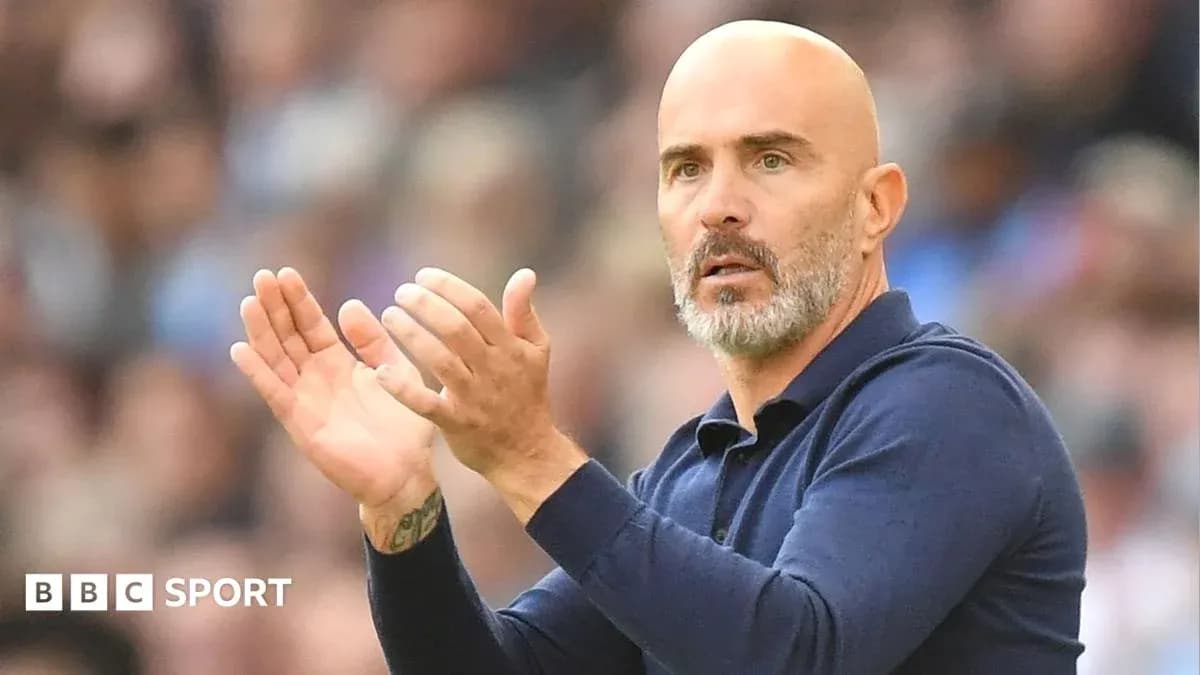
Maresca's No-Excuse Approach Ahead of Manchester Derby
Enzo Maresca is not interested in excuses. Not his, not anyone else’s.
On Sunday he walks into his first Manchester derby as Manchester City manager with the league leaders enjoying a 48-hour advantage in preparation over their neighbours. City wrapped up a controlled 2-0 win at Porto on Tuesday night in the Champions League. Manchester United, by contrast, were still cutting loose on Thursday, hammering Sabah 4-0.
Two extra days’ rest before the biggest domestic fixture of the season? Many managers would lean on that narrative. Maresca refused.
“You need to adapt,” he told BBC Sport, the phrase returning again and again as he batted away questions about scheduling. No grumbling, no grandstanding. Just a clear message: deal with it.
Maresca shrugs off derby advantage
The fixture list has handed City the sort of edge that usually lights up pre-derby debate. Yet Maresca quickly reached back to last season to puncture any sense of injustice on United’s side.
He recalled September’s build-up to Arsenal away, when the calendar turned against City. Back then, Arsenal had played at Athletic Club in the early Champions League kick-off on the Tuesday. City were stuck in the late Thursday slot against Napoli, then asked to go again against Mikel Arteta’s side with minimal recovery.
The memory still lingers at the club. Pep Guardiola even joked at the time that he was taking his players “hiking in the mountains” to get them ready for the Emirates Stadium.
Now the shoe is on the other foot.
“The club mentioned to me that it happened exactly the same last year when the club played Napoli and then, after two days, played Arsenal,” Maresca said. “Sometimes it happens in football. I don’t have any doubt that Man United are going to be ready for that. It just matters to adapt.”
No sympathy, but no gloating either. Just a pointed reminder that the calendar spares no one.
A new Champions League era, a heavier load
This season’s expanded Champions League has thickened the schedule even further. The group phase now demands two extra games before the end of January. English clubs then layer domestic cups on top, with the Carabao Cup already looming over both Manchester sides.
City host Norwich in the third round next Thursday. United face Brighton at Old Trafford the night before. The treadmill doesn’t slow.
Asked whether the congestion eventually balances itself out over a season, Maresca barely shifted from his central theme.
“I think that happens and you need to adapt,” he said. “It happened last year with us, this season with them, next season it will happen with a different team.”
The repetition is deliberate. In his eyes, the schedule is not a storyline. It is a condition of modern elite football. You don’t debate it, you survive it.
Pressed on how Michael Carrick might be feeling about the disparity in rest days, Maresca again declined the invitation to speculate.
“That’s a question for Michael,” he replied. “The only thing I can say is it happened and you need to adapt.”
Derby debut for a manager in stride
Strip away the calendar talk and the derby arrives with a more familiar backdrop: one side flying, the other still searching for rhythm.
Maresca has launched his Premier League campaign with three wins from three. City look sharp, drilled, and already comfortable in his ideas. United, under Carrick, have taken four points from their opening three games and remain a step behind in both results and fluency.
“It is very important for different reasons,” Maresca said of the derby. “We know how important a derby is, especially here. It is a special game.”
He did not dress it up as a title marker or a definitive statement, but the stakes are obvious. For City, a chance to extend an early-season surge and tighten their grip at the top. For United, an opportunity to jolt their campaign into life and puncture their rivals’ momentum.
Maresca’s focus, though, stayed firmly on identity rather than narrative.
“The most important thing we can do is try to be ourselves and then we see the final result.”
No talk of psychological blows. No indulgence in the theatre of “mind games.” Just a coach convinced that his team’s best version will be enough, regardless of how many hours the opposition have had with their feet up.
On Sunday, the noise, colour and chaos of a Manchester derby will take over. The schedule will fade into the background, as it always does when the whistle goes. What remains is Maresca’s simple challenge to his players and, indirectly, to everyone else in this unforgiving calendar:
You can complain about the fixtures. Or you can adapt.