Manchester United’s Week of Noise and Doubt: A Goalkeeper's Perspective
The week began with another limp start and another defeat, this time in Como. It ended with Michael Carrick delivering a five‑minute, emotionally charged address that sounded less like a routine pre-match press conference and more like a plea for standards, humility and unity.
In between, the captain questioned the tactics on live television.
At Manchester United, that counts as just another week.
A Captain’s Broadside, A Manager’s Monologue
Seven games without a win in all competitions. Their worst run since 2014-15. One clean sheet all season, and that against Sabah in the Champions League back on September 10. The football has been flat, the mood fractious, the questions relentless.
Last week it was Lisandro Martinez, challenging the club’s hierarchy and ambition. This time it was Bruno Fernandes, turning the spotlight squarely on Carrick and his staff, querying the tactical direction after another defeat.
The pressure finally told on Friday. Carrick arrived for his pre‑Bournemouth media duties and unloaded. Five minutes of controlled frustration. References to humility and humbleness, pointed enough to feel like they were aimed straight through the cameras and into the dressing room.
If that was the manager’s challenge, the players needed an answer. It came, quietly but firmly, from the man in gloves.
“Is This Changing Room United?”
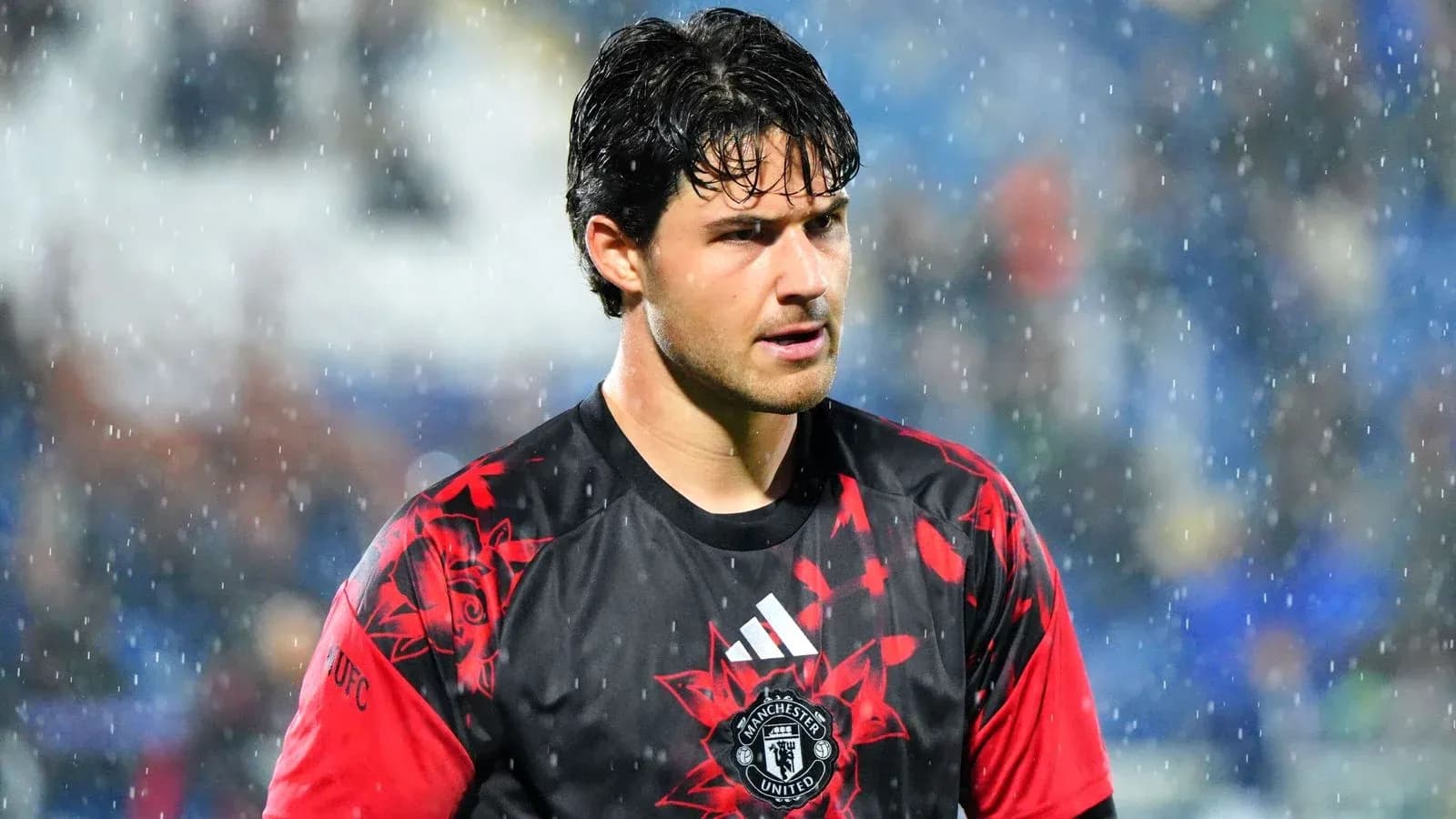
Senne Lammens, United’s No 1 goalkeeper, has had the clearest view of the mess in front of him. Early goals conceded. Game plans shredded inside 120 seconds. A team that last season hunted in packs now chasing shadows.
So the first question almost asked itself: is this dressing room still together?
“For me personally, I think it is,” Lammens said.
He didn’t dodge the frustration. He leaned into it.
He spoke about the raw emotion after games, the things said in the heat of defeat that don’t always land as intended once clipped up and shared. He accepted that supporters at home only see the body language, the interviews, the flare-ups.
But he was adamant about one thing: “We’re all together behind the coach, as a staff, players, front office. Everyone knows, of course, they have to do better, but I think we are united and we are trying to get better as a team and together.”
It sounded less like a slogan and more like a defence of a dressing room under siege.
Early Goals, Broken Plans
The pattern is becoming a problem. Against Como, United conceded inside the first few minutes. The week before, Atletico Madrid scored even earlier. Either side of the international break, Fulham and Spurs were allowed to dictate the opening spells.
One clean sheet in all competitions tells its own story. Lammens did not pretend otherwise.
“It’s difficult,” he admitted. “You can try to come up with plans and tactics, but if you get a goal against in the first or second minute, it kind of screws up a little bit your game plan and you’re kind of chasing the game from then on.”
That’s the crux. United are living every game on the back foot, trying to drag themselves back from 1-0 down before they’ve even settled.
“That’s probably one of the biggest things we need to work on right now,” he added, “to keep ourselves in the game and to try and get that first goal ourselves, instead of being 1-0 down straight away.”
From the outside, it looks like effort. Or a lack of it. “Why don’t you just try harder?” is the easy accusation. Lammens bristled at the simplicity of that narrative.
“Trust me, we are trying harder every day and trying to come up with a solution, but sometimes when it’s not going your way, everything falls into place for the other team.”
One performance, he insisted, can flip the mood. One result to reset the season.
What Has Actually Changed?
The question that now hangs over Carrick is not only about spirit. It’s about structure. Last season, his first five months in charge were defined by intensity: aggression, running, a willingness to suffer without the ball. That energy fuelled big wins over Chelsea, Arsenal and Manchester City.
Those traits have drained away. Carrick himself did not hide from that after the Como defeat. He admitted his side lacked aggression, intensity and running – the very pillars that underpinned his early success.
Tactically, though, this was never meant to be a repeat of last year. The staff tried to evolve the style in pre-season, to move away from being primarily a counter-attacking side. Lammens feels the shift.
“Last season I felt like, playing-wise, maybe we played sometimes better this season, but last season everything just clicked and went the right way for us,” he said.
They struggled at times under pressure, he conceded, but they did not concede many. They were dangerous on the break, pragmatic and ruthless. Everyone knew, though, that opponents would adjust.
“So that’s why we had to evolve this season and in preseason, we tried to do some different things to get us in the best position to win games.”
The evolution has brought teething problems. United want to be more assured with the ball, braver in possession, calmer playing out from the back. Lammens believes they have improved there. The cost, he fears, might be in the mindset when they lose it.
“I think we need a little bit more like last season, the way we fought together, even when it wasn’t going the best and just trying to fight as a team and defend as a team, I think that’s probably something we need to try to get back to.”
The Fine Line They’ve Lost
The word he kept returning to was “fight”. Supporters at Old Trafford have seen too little of it this season. The numbers, the running stats, the data – he knows they’re out there, but he doesn’t live in spreadsheets.
“I get it, I see people talking about numbers and maybe stats and data, I’m not sure about that, because every game is a little bit different,” he said.
With the ball, he argues, there has been progress. Without it, the edge has dulled.
“Maybe the mindset of having the ball and trying to play around has that mindset of when you don’t have the ball and try to fight for it the way we did last season,” he reflected. “We need to get a bit of both.”
That balance – aggression off the ball, calmness on it – is where this United side keep falling. “It is a fine line, to be honest,” Lammens said. “When you don’t have the ball and when you have the ball, you want that calmness, that being able to play from the back and being able to play through the press. I think it’s just finding that fine line in ourselves.”
Right now, they’re on the wrong side of it.
An Emerging Voice in a Bruised Dressing Room
It has been a bruising spell for everyone tied to Manchester United. Public criticism from senior players. A manager forced into an impassioned defence of basic values. A run of form that drags the club back to some of its bleakest modern stretches.
Inside that storm, Lammens did something not many players risk when the walls feel like they’re closing in: he spoke plainly. He didn’t pretend everything was fine. He didn’t throw anyone under the bus. He acknowledged the tactical tweaks, the failures, the need to rediscover the fight that carried them to Champions League football last season.
And he made one thing clear: this dressing room, in his eyes, is still behind Carrick.
In a week when the loudest voices came from the podium and the post-match flash interview, the most significant might yet prove to be the one from the goalmouth – a young goalkeeper, under siege, sounding very much like a leader who intends to stay there.