.svg&w=384&q=75 "logo")
Manchester United's Defensive Issues Cost Them Again in 2-2 Draw
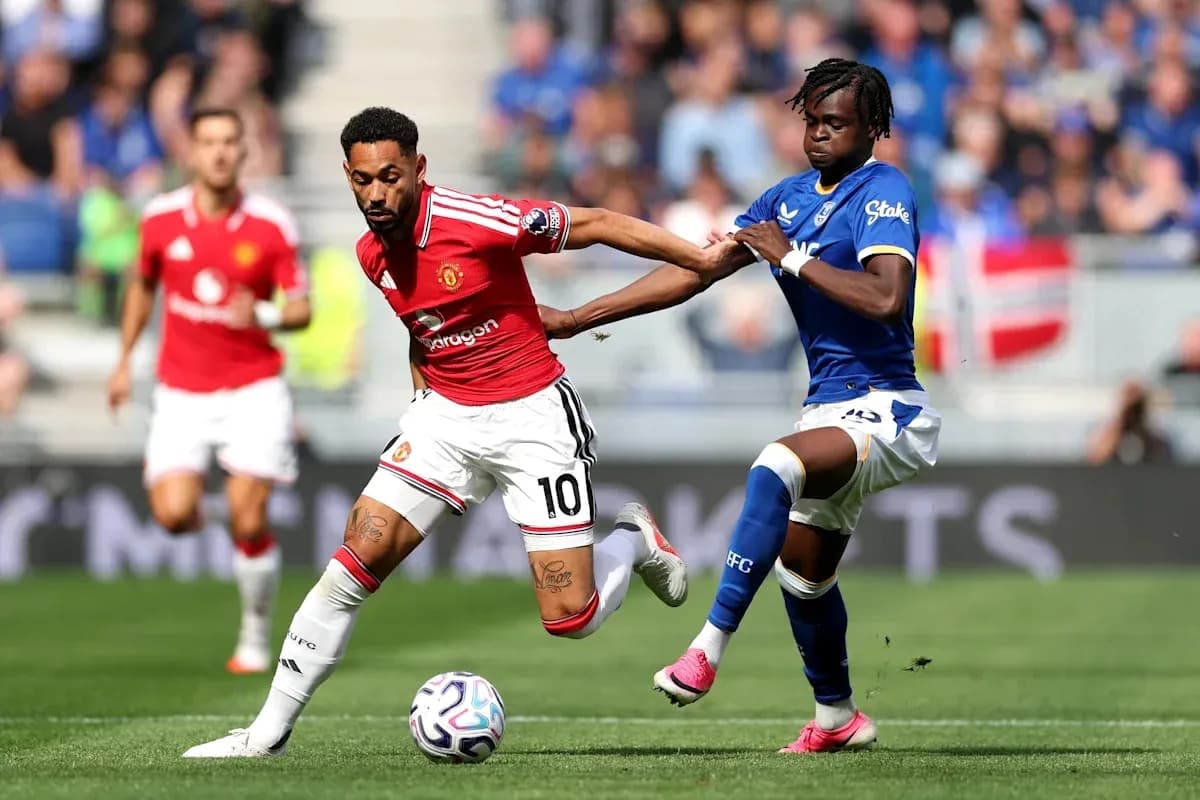
Manchester United walked out of Goodison Park with a 2-2 draw and the unmistakable feeling of a defeat. They led twice, scored twice from well-worked restarts, and for long spells looked the better side. They still couldn’t finish the job.
Not in front of goal. Not with the ball. And certainly not when it mattered most at the back.
Attacking ideas, missing edge
United’s attacking play carried far more purpose than the scoreline suggests. Three creative forwards knitted moves together, dragged Everton’s back line around and repeatedly opened promising lanes. The structure was there. The patterns were there.
The penalty area presence was not.
Time and again, United moved into good positions only to find nobody attacking the right space, nobody gambling across the near post, nobody alive to the second ball. The lack of a true penalty-box striker hung over every promising move.
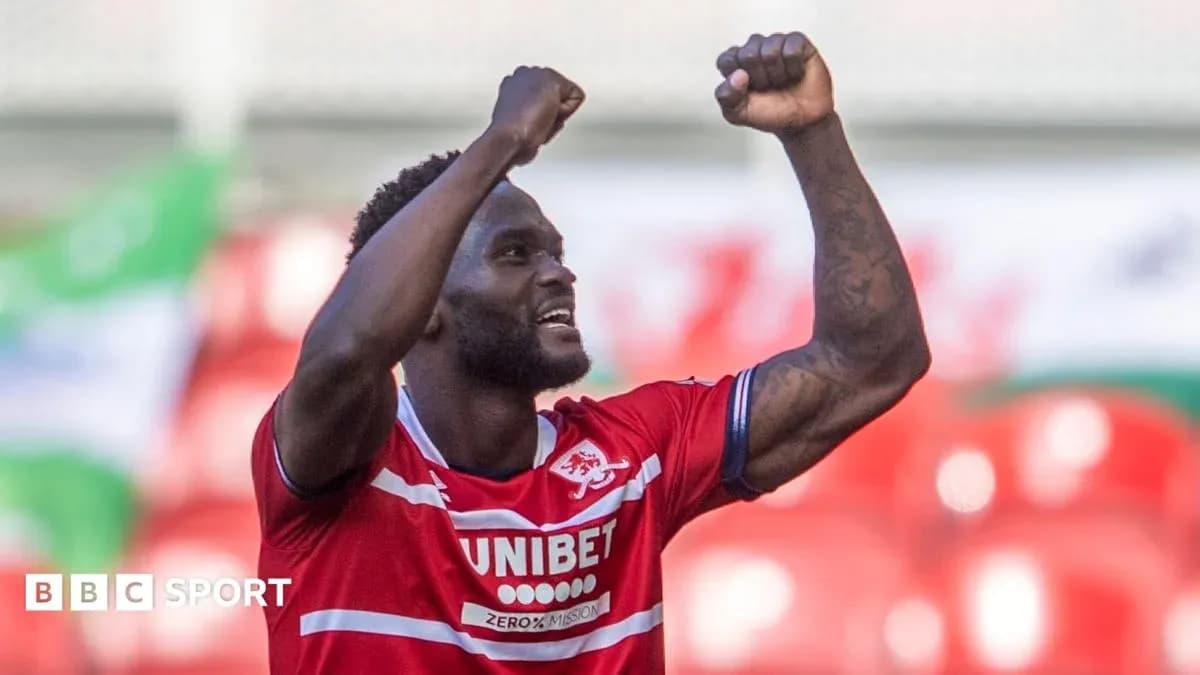
Benjamin Sesko’s return to fitness offers one obvious solution. Bryan Mbeumo, if restored to a central role, is another. Both can run beyond, both can occupy defenders, both can live in those dangerous pockets that went begging on Sunday. The absence of Amad on the right only sharpens the problem. Shea Lacey may be the long-term answer, but he is not ready to carry that burden yet, and Matheus Cunha does not look like a serious option at right wing in this setup.
Even so, United twice found a way to edge in front. The issue was never just about scoring. It was about what happened once they did.
A back four that never settles
For the third straight league match, United conceded twice. Six goals shipped to Hull City, Ipswich Town and now an Everton side that has laboured in attack. That’s not a blip; it’s a pattern.
Luke Shaw, under scrutiny after two poor outings at left back, actually produced a far better performance. He blocked, overlapped Marcus Rashford, and delivered several dangerous crosses, one of which Sesko buried with a towering header that looked, for a fleeting moment, like the 88th‑minute winner.
Yet Shaw’s night still carried a familiar stain. On Tyrique George’s first goal, the equaliser in the 83rd minute, he drifted too far inside, again. George had the room he needed to lash a vicious strike into the near-post top corner. Arnaud Lammens got a hand to it and might feel he should have done more, but the ball still ripped into the net.
Shaw was not alone. As individuals, Harry Maguire, Lisandro Martinez and Diogo Dalot never convinced. As a unit, they allowed Everton far too many looks.
Maguire was fortunate not to be punished when Thierno Barry rose unmarked in the 42nd minute and headed over from a position that should have yielded a goal. Dalot’s attempted clearance in first-half stoppage time went straight to Jarrad Branthwaite, who could only fire at Lammens. Later, a poor Dalot cross in midfield left Shaw and Martinez scrambling to shut down Brennan Johnson, forced into a desperate recovery that ended with the ball deflected over the bar.
These weren’t isolated lapses. They were signposts.
Sitting deep, inviting trouble
United held a 1-0 lead for most of the second half and reacted as if the only route to the final whistle was to retreat. They sank back, ceded the ball, and allowed Everton to dictate the rhythm.
The pressure mounted. The shots from distance followed.
Had United kept the ball with more conviction and pressed higher, Everton would have struggled to set themselves for the spectacular. Instead, the home side were given territory, time and encouragement. The two “screamers” that decided the match did not come out of nowhere; they were the natural consequence of a team that stopped trying to control the game.
After the first equaliser, Michael Carrick tried to shut things down with changes at fullback, introducing Noussair Mazraoui on the left and Leny Yoro on the right. The plan backfired.
In the 90th minute, Mazraoui lost George again, allowing the winger another crack at the near post. Lammens saved, the flag went up for offside, and United escaped. They would not be so lucky in stoppage time.
With Everton pouring forward one last time, Hayden Hackney drifted past Yoro far too easily and rolled the ball into the path of Kiernan Dewsbury-Hall. Mazraoui’s attempted clearance only reached Ainsley Maitland-Niles on the edge of the box. One touch, one outrageous, Puskas-level strike, and United’s lead was gone again. Two points vanished with it.
Would leaving Dalot and Shaw on have changed the outcome? On this evidence, that is far from certain. The problem runs deeper than substitutions.
Structural flaw, not just form
The fullback positions remain the loudest alarm bell. Shaw still has quality on the ball but no longer possesses the recovery pace to live on the front foot without cover. Dalot faces similar issues on the opposite flank. Every time United push men forward, the centre-backs are left to defend huge swathes of grass when transitions break against them.
Better sides will see it instantly. They will drag the fullbacks high, flip the ball into the channels, and test those spaces behind. Everton, hardly an attacking powerhouse, did enough to expose that weakness repeatedly.
Matthijs de Ligt is nearing a long-awaited return and will add presence and pedigree in the middle. Ayden Heaven waits in the wings for a chance. But the central defenders, whoever plays, are firefighting problems created out wide and in front of them. This is about balance, not just names.
United’s summer was spent reshaping the midfield, and there are signs that work has paid off. They look more composed in possession, more inventive between the lines, more capable of creating sustained pressure. The forwards, when fit and properly deployed, should score plenty.
Yet the same story keeps playing out at the other end. Two goals conceded. Leads surrendered. Points dropped.
A Champions League campaign now looms, with sharper attacks and less margin for error. United can talk about returning players and tactical tweaks, about Sesko’s fitness or Mbeumo’s role, about when Amad comes back or whether Heaven deserves more minutes.
Until they stop leaking goals like this, every lead in Europe will feel as fragile as it did in the final seconds at Goodison Park.