.svg&w=384&q=75 "logo")
Liverpool's Tactical Shift: Life After Salah
Just over two months since Mohamed Salah walked away from Anfield, Liverpool are still feeling the echo. The goals, the angles, the inevitability of that left foot from the right. All gone.
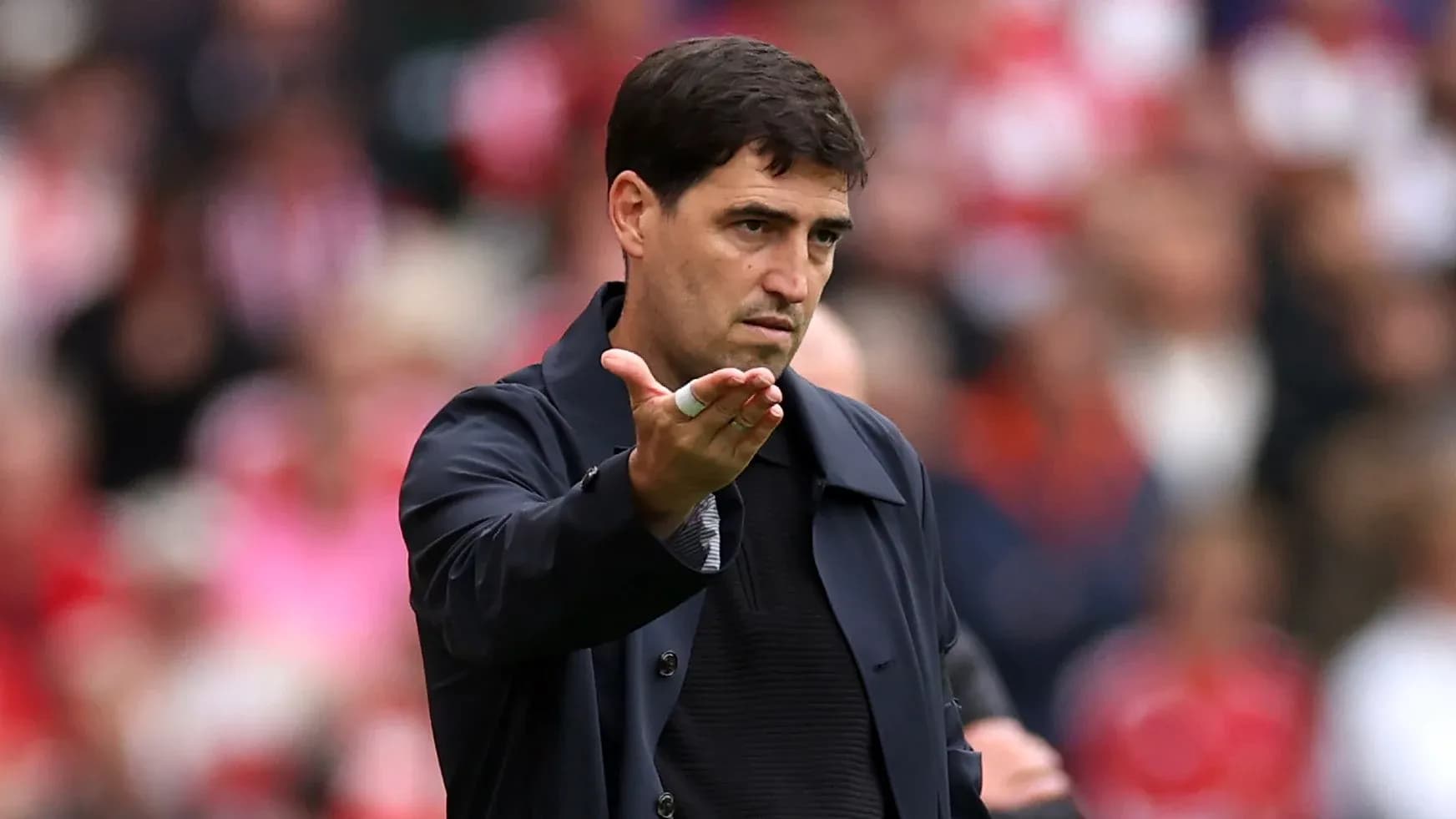
In his place, there is no like-for-like heir. No comfort blanket. Instead, there is Andoni Iraola and a bold tactical gamble that turns Liverpool’s attack on its head.
Barcola and the Inverted Blueprint
Liverpool did not go shopping for a new Salah. They tore up the template.
Bradley Barcola arrived from Paris Saint-Germain as one of the most expensive signings in the club’s history, not to mimic the Egyptian, but to change the geometry of the attack. Thirteen goals and seven assists last season in France tell you he can carry a threat; his positioning tells you he will carry it from somewhere very different.
Barcola is right-footed and happiest when he starts on the left, drives inside and attacks the box from there. It is, in effect, Salah’s role flipped in a mirror. Where once the right side bent inwards around Liverpool’s talisman, now the left is expected to carry that creative and goalscoring load.
That shift has created a new problem.
A Left-Heavy Squad and a Glaring Gap
Liverpool now have four players who prefer the left wing. They do not have a single natural right winger. The transfer window is shut. The imbalance is not theoretical; it is on the team sheet.
The early experiments have been bumpy.
Teenager Rio Ngumoha was thrown onto the right against Newcastle and looked exactly what he is: a gifted left-sided prospect learning a new language on the opposite flank. Cody Gakpo, asked to do a similar job against Nottingham Forest, was more solid but still short of the incision and width Iraola wants.
So attention turns to Víctor Munoz.
Munoz: The Right-Sided Fix?
Munoz, a new arrival, offers something closer to what the system demands. He may have logged more minutes on the left in his career, but Iraola sees a different picture.
“Víctor has played more games on the left in his career but has maybe been even better on the right,” the Liverpool manager said before Friday’s Premier League trip to Ipswich Town.
That line matters. It hints at a manager who knows he has, at least on paper, a ready-made answer to his tactical headache. Munoz can stretch the pitch, attack the outside, and give Liverpool a more orthodox presence on the right to balance Barcola’s inverted runs from the left.
Yet Iraola is not ready to abandon his younger options.
Ngumoha’s Education
For all Munoz’s suitability, Iraola is determined to use this transition period to shape the next generation. Ngumoha, in particular, is being challenged to grow.
“We know Rio can play on the left and showed his qualities,” Iraola said. “He needs to develop on the right so it gives him more options to play. He is so young. [But] because he wasn't incredible in the first game on the right, we can't say he will never play on the right anymore.”
There is a clear message there: this is not a one-game audition. Liverpool are prepared to ride out some rough edges on the right flank if it means turning Ngumoha into a more versatile, more selectable forward.
The risk is obvious. The Premier League rarely offers a gentle learning curve.
Isak’s Supply Line and the Need for Service
The stakes of this tactical reshaping are not confined to the wings. At the heart of the penalty area stands Alexander Isak, a striker who lives off the kind of service a traditional winger can provide.
The Swede is built to dominate the box: strong, tall, and ruthless when the ball arrives in the right areas. He does not want to spend his afternoons chasing hopeful diagonals into the channels. He wants crosses, cut-backs, and quick deliveries from wide that allow him to attack the six-yard line.
A more classic right winger could transform his output. If Munoz, Ngumoha, or even Gakpo can consistently hit those zones from the right, Isak becomes far more than a static reference point. He becomes the focal weapon of this new Liverpool.
Gakpo’s Role in a Crowded Left
Amid all this tactical tinkering, Gakpo’s status remains a live issue. Manchester City and Tottenham showed late interest in the Dutchman during the summer, but Liverpool held their ground. That decision underlines how highly the club still rate him, even as Barcola moves into what looks like his most natural territory.
Gakpo will have to fight for minutes. He can operate across the front line, which may be his way into Iraola’s XI in a system loaded with left-sided options and short on right-footed width. His adaptability could yet become one of the manager’s most valuable tools in this new era.
Ipswich and the First Real Verdict
All of these ideas, all of these positional experiments, now collide with reality at Ipswich Town on Friday.
Liverpool are not just searching for a shape that works without Salah; they are racing the clock to keep their attack sharp enough to compete at the top end of the league. Iraola must settle on a balance between development and end product, between trusting youth and unleashing Munoz in a role that seems tailor-made for him.
The Salah years were defined by certainty on the right. This new chapter starts with a question: who will own that flank now, and how quickly can Liverpool’s reimagined front line turn theory into goals?