Lionel Messi's Emotional Farewell from Argentina: A Legacy Defined
Lionel Messi’s last walk in an Argentina shirt did not come with fireworks or fanfare. It came with silence.
After 120 brutal minutes in suffocating heat, at 39 years of age, he stood on the podium with a silver medal around his neck and tears in his eyes. Not the broken, inconsolable Messi of 2014. Not the lightning rod for a decade of noise and nonsense that tried to frame him as anything less than what he is. He just stood there. Looking. Absorbing. Saying goodbye.
Then he sat down on the grass – that same patch of earth he once left convinced he would never taste international glory – and began to unlace his boots. One last time for Argentina.
No farewell tour. No choreographed “Last Dance”. No multi-part documentary dropping on cue. Messi slipped away from the international stage the same way he walked onto it as a four-year-old kid in Rosario, too small for the older boys, too good to ignore: letting the ball speak for him.
The end of an era
The numbers alone read like fiction. More than 20 years in the national team setup. 207 games. Nine finals. Four major trophies, crowned by the World Cup in 2022. And now, finally, officially, a full stop: Lionel Messi has retired from international football.
His last act in an Argentina shirt is a defeat to a ruthless, superior Spain. The result stings, but it barely leaves a scratch on the story. He was outstanding again in this tournament, dragging his legs, his lungs and his country through one more campaign. The ending is not neat, but his career never needed a perfect script. It wrote its own mythology long ago.
Sitting in 2026, with Messi having completed the set – club, country, records, immortality – it almost feels surreal to remember the old accusations. Yes, he can do it for Barça, but where is the World Cup? Where is the Copa América? Why doesn’t he bleed for Argentina?
Those barbs came from rivals, but they also came from home. From his own people. Messi and his family lived through years of abuse, mockery and suspicion from sections of the Argentine media and fanbase. He was called a foreigner, a Catalan, a fraud. The same voices now trip over themselves to call him the greatest who ever lived.
It took four lost finals. It took the penalty shootout against Chile in 2016, the tears, the impulsive retirement and the eventual U-turn. It took heartbreak after heartbreak before the tide finally, definitively, turned.
La Scaloneta and the dam that burst
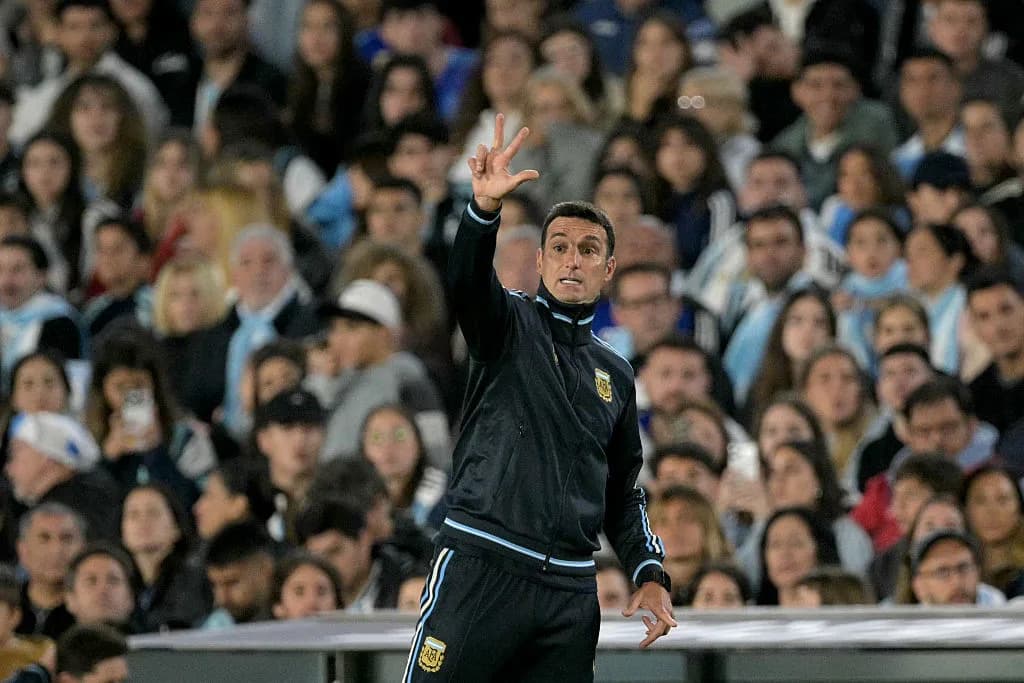
The transformation of Argentina under Lionel Scaloni will be studied for years. Alongside Messi grew a spine and a soul: Rodrigo De Paul running until the lights go out, Cristian Romero snarling through duels, Emiliano Martínez turning penalty shootouts into theatre. The old guard of Ángel Di María and Nicolás Otamendi stayed just long enough to see the circle close.
Then came 2021, at the Maracanã, in the house of Brazil. The dam burst. Messi, Di María, Argentina – all of them – finally lifted a major trophy together. Once that weight came off his shoulders, the flood was unstoppable.
New blood arrived. Enzo Fernández, Julián Álvarez and a wave of hungry talent turned Argentina into a machine. Aside from that shock against Saudi Arabia, they bulldozed their way through tournaments, stacking titles: Copa América, Finalissima, and the one that had always hovered just out of reach, the 2022 World Cup.
La Scaloneta became a nightmare draw. A team that played like a cause. At its head, the smallest man on the pitch, carrying the biggest aura.
By the time Messi walked out for his final match, Argentina’s children had grown up in a country that did not lose knockout games. Not with him around. The player once branded an international failure leaves having presided over the most successful era his nation has ever known. The narrative flipped so completely that some of his harshest early critics now mutter that football itself bent the rules for him.
A game losing its greatest artist
Strip it back to the bare record and it’s still staggering. Ninety-one goals in a calendar year. Eight Ballons d’Or, four of them before his 26th birthday. More than 1,300 goal contributions. Forty-four trophies.
Those marks will stand for a long time. Maybe forever. Yet they still feel like a footnote.
Football is not a lab report. It is not solved by equations or completed by spreadsheets. It is an art form, and no one painted on its canvas with more imagination than Messi.
Talent explains part of it, but not all. It does not fully account for a 39-year-old dragging himself to yet another World Cup final, outplaying opponents closer to his children’s age than his own, while his father lay on his deathbed. It does not explain how a man who has conquered every peak still plays every game as if someone might take the ball away from him tomorrow.
Writers have spent two decades trying to capture what he means. Most have failed, not through lack of skill, but because the subject keeps slipping through the net of language. How do you quantify the feeling of watching someone who sees a different sport to everyone else?
More than goals and medals
For some, Messi will always be the kid slaloming through white shirts at the Bernabéu. For others, he is the blur of blue and red against Getafe, the sprint from halfway against Athletic, the volley of cutbacks from Jordi Alba, the triangles with Xavi and Andrés Iniesta that rewrote how a midfield could function.
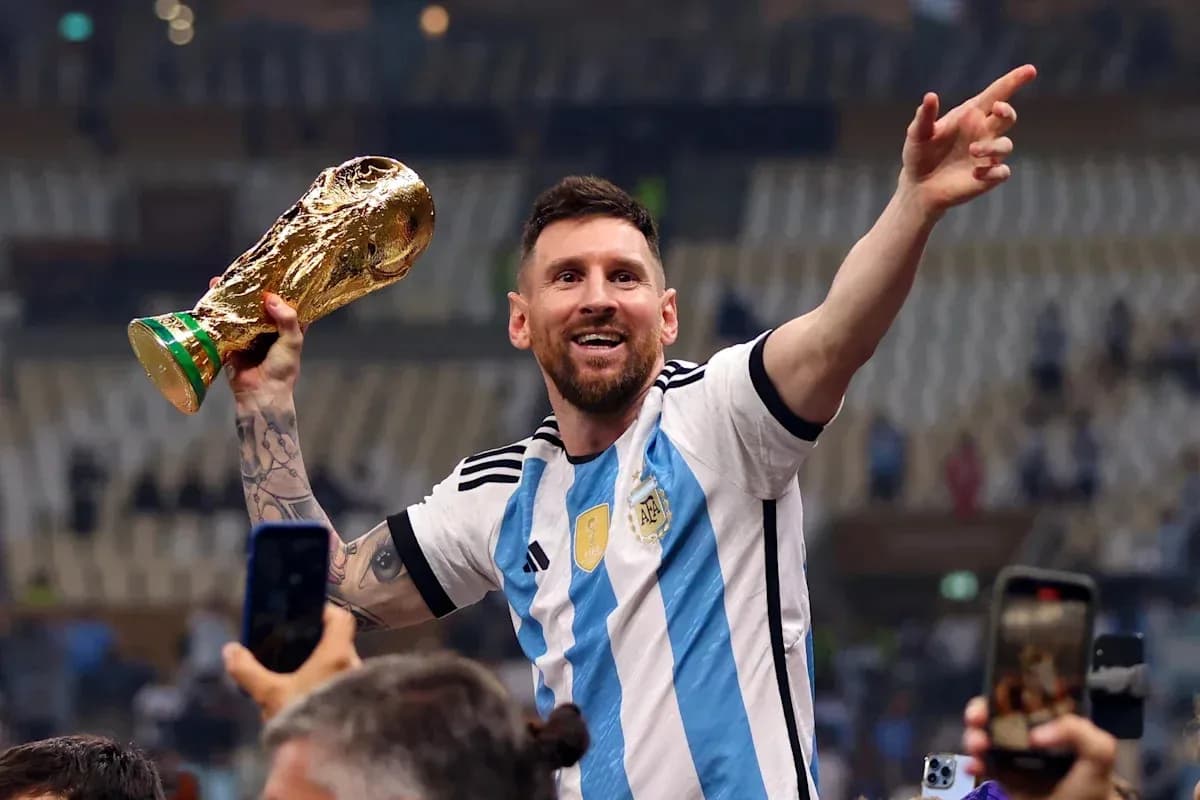
Others will think of the trophies: the Champions League nights, the endless Liga titles, the World Cup in Lusail, the tears on the podium, the kiss to a trophy that once seemed cursed.
But his true legacy lives in the details. A first touch that kills a 40-yard pass and rolls it into space in the same movement. A body feint that sends a defender sliding into a different postcode. A dummy that turns a crowded penalty area into an open field. The pass nobody else sees, through a gap nobody else thinks exists.
Then, on top of all that artistry, he also happens to be the most prolific scorer the game has ever seen.
His retirement from the international stage feels like one of those rare moments when the reaction of a sobbing child matches the emotions of millions of adults. Degrees, careers, responsibilities – none of it insulates you. Football remains a children’s game played for unimaginable sums of money, and one man came closer than anyone to perfecting it.
Messi stripped it back to its core. Joy. Wonder. The gasp in a stadium when he receives the ball on the half-turn. The silence before the net ripples. The shared roar when it does.
A generation that grew up with him
Few players in history have combined iconic talent with the temperament to lead. Messi did both, quietly. Through the way he played, through the way he carried himself, he became a reference point for a generation.
They sold possessions to cross oceans just to see him live once. They sprinted home from school to catch kickoff at Camp Nou. They filled bedrooms with posters and YouTube compilations, then laced up their boots and tried to imitate that left foot on dusty pitches and synthetic turf.
Some of those kids grew up to wear the Argentina shirt themselves. They rose through the youth ranks with his posters on their walls and his name on their lips. Then they stepped onto the pitch with him, not as fans, but as teammates, and they ran themselves into the ground to help him lift the trophy they felt belonged to him.
People like to say football owed Messi a World Cup. It didn’t. The sport owes no one anything. The players around him understood that. They had watched him fail, hurt, come back, fail again, and still return for more. When the chance finally came in 2022, they played not just for themselves or their country, but for the man who had carried their dreams since childhood.
Perhaps the most telling tributes in these days of farewell do not dwell on his goals, but on his character. Former teammates talk about the captain who listened, the leader who never hid, the star who shared the spotlight, the friend who checked in when the cameras were off.
For all the talk of genius, it is his selflessness that keeps surfacing. That is what made him so easy to follow, so easy to love, and what allows him to walk away from the international game as an undisputed champion in every sense.
One last peak, and the long goodbye
His career is not finished. Not yet. In Miami, he still toys with defenders, still scores in bursts – four goals last week, just as a reminder – still plays alongside friends and old colleagues in a more relaxed setting. But the truly high-stakes nights, the ones that defined eras and broke nations, appear to be behind him now.
There is something almost cruel about that. Even at 39, he walked into this last World Cup and showed, again, that he was still the best player on any pitch he stepped onto. Yet there is nothing left to chase. No argument left to win.
So he took off his boots, sat on the grass, and closed the book on Argentina.
The rest of his story will play out far from the World Cup spotlight, under different lights, in a different league, at a different tempo. The numbers will tick upward. The highlights will keep coming. But the chapter that began with a skinny teenager in a sky-blue shirt and ended with a world champion, a legend and a leader, is over.
The game will move on. It always does. The question now is not what more Messi can give to football.
It is how long football will spend trying to find anything remotely like him again.