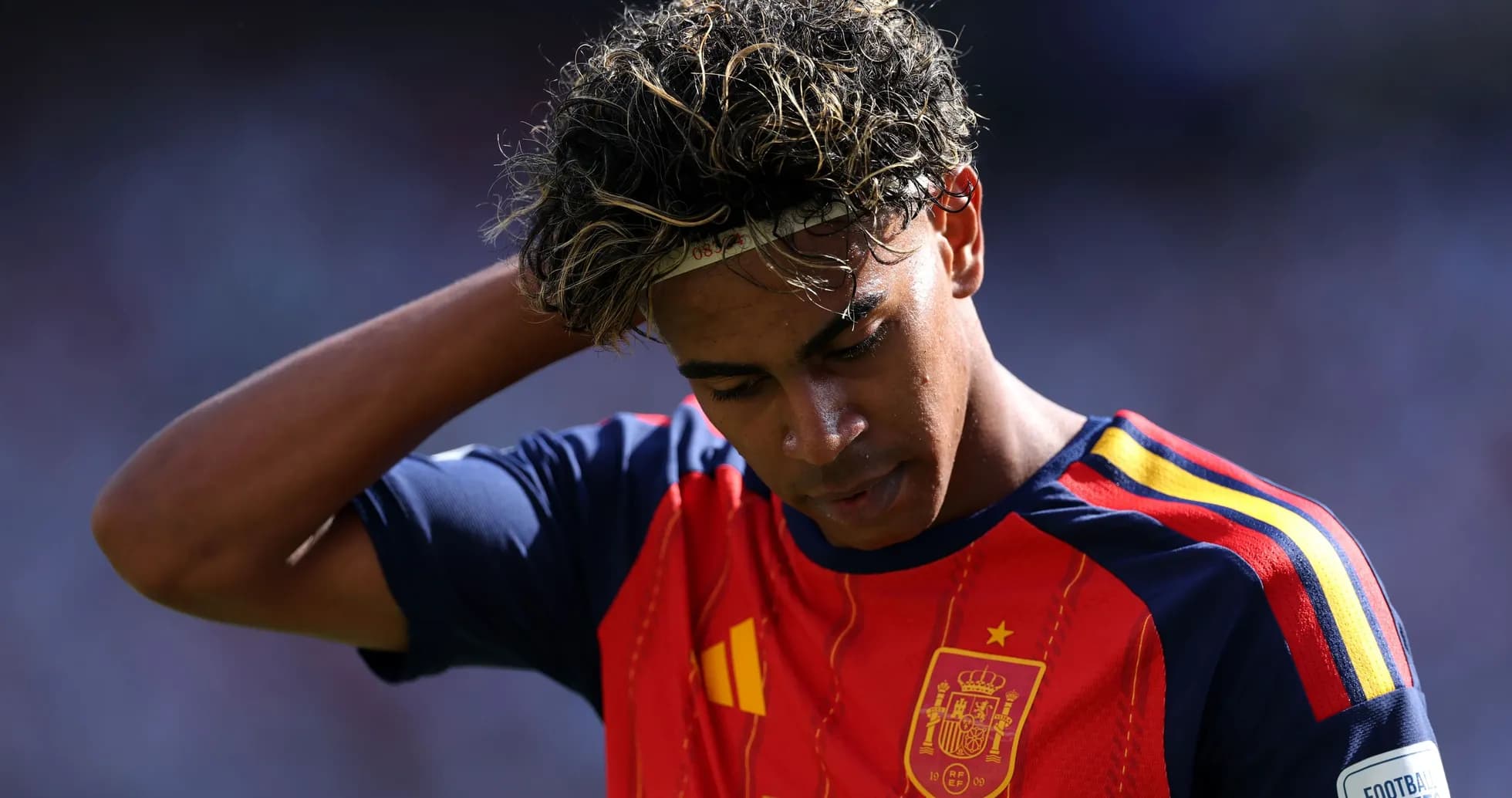
Lamine Yamal: The Young Star with Unfulfilled Ambitions
Lamine Yamal has just lived the kind of season most players would frame and hang on the wall. He refuses to do it.
Nineteen years old, 24 goals, 18 assists for Barcelona. La Liga champion. Spanish Super Cup winner. And at the heart of it all, a World Cup triumph with Spain. On paper, it reads like the perfect campaign. For Yamal, it doesn’t even come close.
The winger’s numbers for club football were electric, the sort that turn a promising youngster into a fully fledged star. Week after week, he bent games to his will for Barcelona, carrying the weight of expectation that comes with that shirt and that stadium. By the time the domestic season ended, he had carved his name into another league title and another trophy parade.
Then came the World Cup, the stage every prodigy dreams about. Spain lifted the trophy. Yamal walked away with a medal, a place in history, and a gnawing sense of disappointment.
Across eight appearances at the tournament, he scored just once and didn’t register a single assist. Spain didn’t need his numbers to win it all, but he needed them for himself. That, more than any injury, is what stayed with him.
“After winning the World Cup, I wasn’t happy. It’s true about the injury, but that’s got nothing to do with it,” he told Universo Valdano.
The words cut through the usual post-tournament glow. No self-congratulation, no comfort in the excuses that were readily available. Just a young forward setting his own bar higher than any critic could.
He insists the injury that shadowed his tournament was not the decisive factor. In his mind, it wouldn’t have changed the essence of his performances. “I know that if the World Cup were to come around again, I’d have performed just as well if I hadn’t had the injury.”
The numbers don’t tell the whole story, and Yamal knows it. He talks about the invisible work, the kind that rarely makes a highlight reel but shapes the geometry of a match.
“I did a lot of things that people didn’t see. For example, I think it’s incredible for a manager to have a player who can draw three defenders away,” he said. Coaches cherish players like that. So do team-mates who suddenly find themselves with an extra yard of space because one teenager is dragging half a back line out of position.
He understands his tactical value, his ability to distort defensive structures and create chaos. He accepts that this mattered to Spain’s title run. But he refuses to hide behind it.
“I wasn’t happy with my own performance because I know that another player performing at my level would have had a great World Cup,” he admitted. “But for me, I could have done more. I did help the team, but I’m really looking forward to the next one.”
That last line lands with intent. The next one. At 19, he has already completed the sport’s most coveted double: European Championship and World Cup. Add three La Liga titles, two Spanish Super Cups and a Copa del Rey, and his trophy cabinet looks like the final chapter of a veteran’s autobiography, not the opening pages of a career just getting started.
Success at that speed can warp a player’s perspective. It can dull the edge, soften the hunger. Yamal is almost obsessively alert to that danger.
He places his own journey against the game’s giants without blinking. “There have been great stars in football, like Leo [Messi], Cristiano [Ronaldo] or Diego [Maradona] - whom I haven’t been able to watch - but never so early on has anyone won so much,” he said. He reaches further back for context. “Take Pele, for example - he did win a lot at a young age, but not so recently.”
It is not a boast. It is a warning to himself. A reminder that history remembers the careers that sustained greatness, not just the ones that burst into life.
And to those who think the medals already earned might soften his drive, he answers with a hard edge. “There are people who think that just because I’ve won things at some point, I’ll take my foot off the gas, but I know I’ve got a thousand things to do to go down in football history.”
That is the crux of it. The numbers, the trophies, the early dominance: they are not a destination for Yamal. They are a starting point. The World Cup sits on his CV as both triumph and provocation, a reminder that even on the sport’s highest peak, he walked away unsatisfied.
If this is how he reacts to winning everything, the question for the rest of football is simple: what happens when he finally has a tournament that meets his own standards?