Lamine Yamal Challenges Ballon d'Or Norms
Lamine Yamal is not easing his way into the Ballon d’Or debate. He’s kicking the door open.
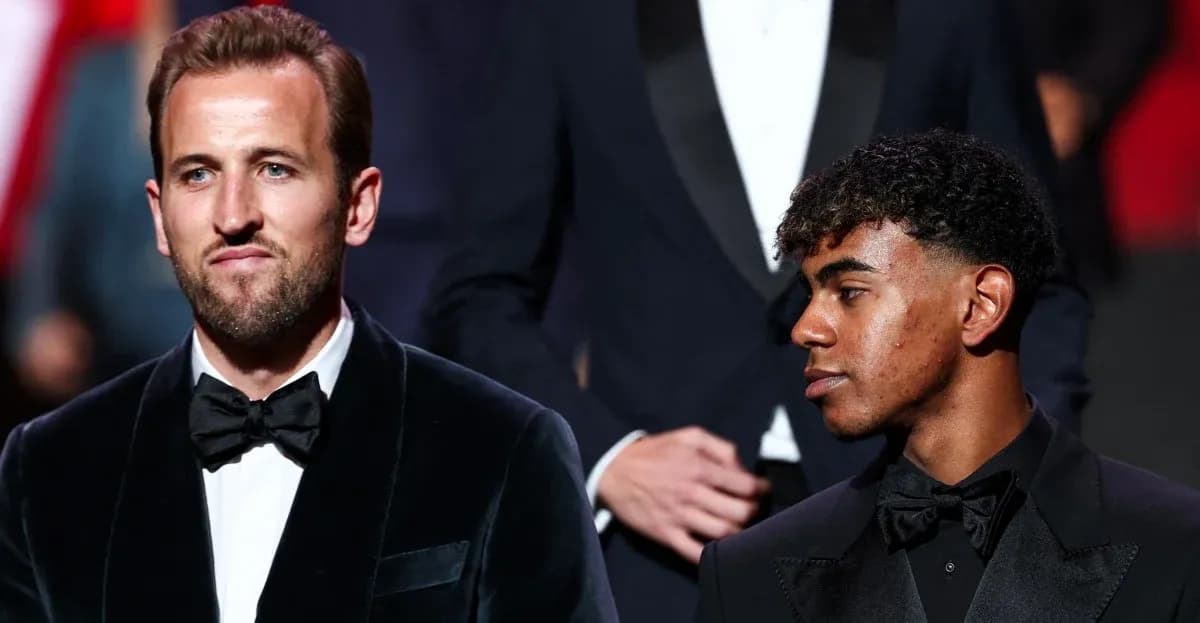
The FC Barcelona prodigy has been loudly backing his own case in recent weeks, and his latest comments have dragged Bayern Munich striker Harry Kane straight into the crossfire of football’s most subjective argument: what does “best in the world” really mean?
Speaking to Movistar Plus Deportes, Yamal laid out his vision of the award in terms that will sting anyone who lives by the numbers.
“I think the Ballon d’Or should go to the best player in the world, period. Not to a player who’s scored 80 goals, because when you score 80 goals, you get the ‘top scorer’ award for that. These are very different things that people aren’t understanding,” he said, as relayed by @iMiaSanMia.
In a season where Kane’s goal tally has dominated headlines, the subtext barely needs decoding. Yamal did not name the England captain, but the profile fits too neatly to ignore: a prolific scorer, chasing records, carrying his club’s attack. The implication is clear — numbers alone should not be enough.
For Yamal, the Ballon d’Or should reward something more elusive, more aesthetic.
“The best player in the world is the one that, as a commentator, you’re watching a game and enjoying – you see him and think, ‘He’s a player who is very different from everyone else,’” he continued. “When the award goes to the best, not the one who scores the most goals or the one who has won the most titles, then it will regain its true value.”
That is a bold stance for a youngster still carving out his place at the elite level, and it lands in the middle of a long-running fault line in football culture. On one side, the scorers and serial winners. On the other, the artists, the creators, the players whose influence can’t be captured by a scoreboard alone.
Yamal has planted his flag firmly in the second camp.
The timing is no accident. As the race for individual honours intensifies, every word from leading contenders and rising stars is weighed, dissected, weaponised. Yamal’s argument leans heavily into the romantic view of the game — the idea that the Ballon d’Or should celebrate the player who makes football feel different, not just the one who finishes the most moves.
It also reads, intentionally or not, as a direct challenge to the Kane narrative. The Bayern forward has built his season around ruthless efficiency in front of goal. Yamal is effectively saying: that’s not enough. Not for this prize.
So where is the line between conviction and arrogance? Between a young player confidently stating his philosophy and a calculated attempt to undercut a rival’s credentials?
That is where the debate now sits. Yamal’s words will resonate with those who believe the award has drifted too far towards goals and trophies, and away from pure, game-changing talent. Others will see a teenager taking aim at a proven star to elevate his own image.
What is certain is this: in a conversation usually dominated by veterans and established icons, Lamine Yamal has made sure his voice is impossible to ignore. The next question is whether his football, not just his rhetoric, can keep him in that conversation when the votes are cast.