Iraola Faces Early Liverpool Dilemmas Amid Fixture Congestion
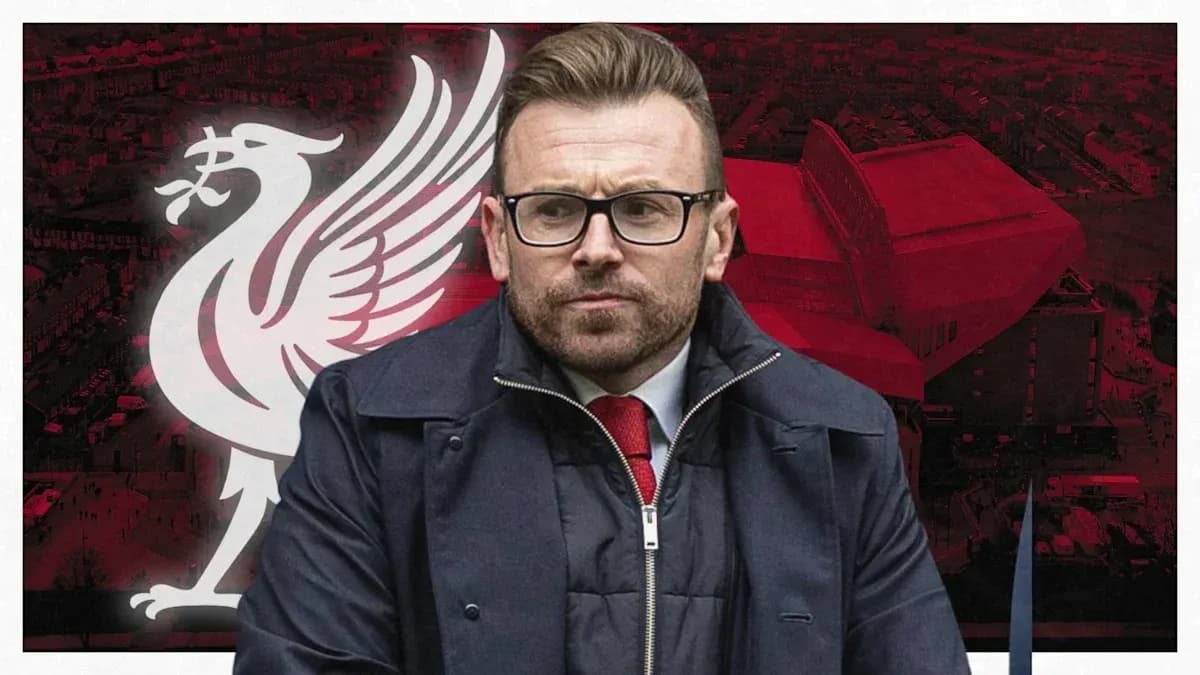
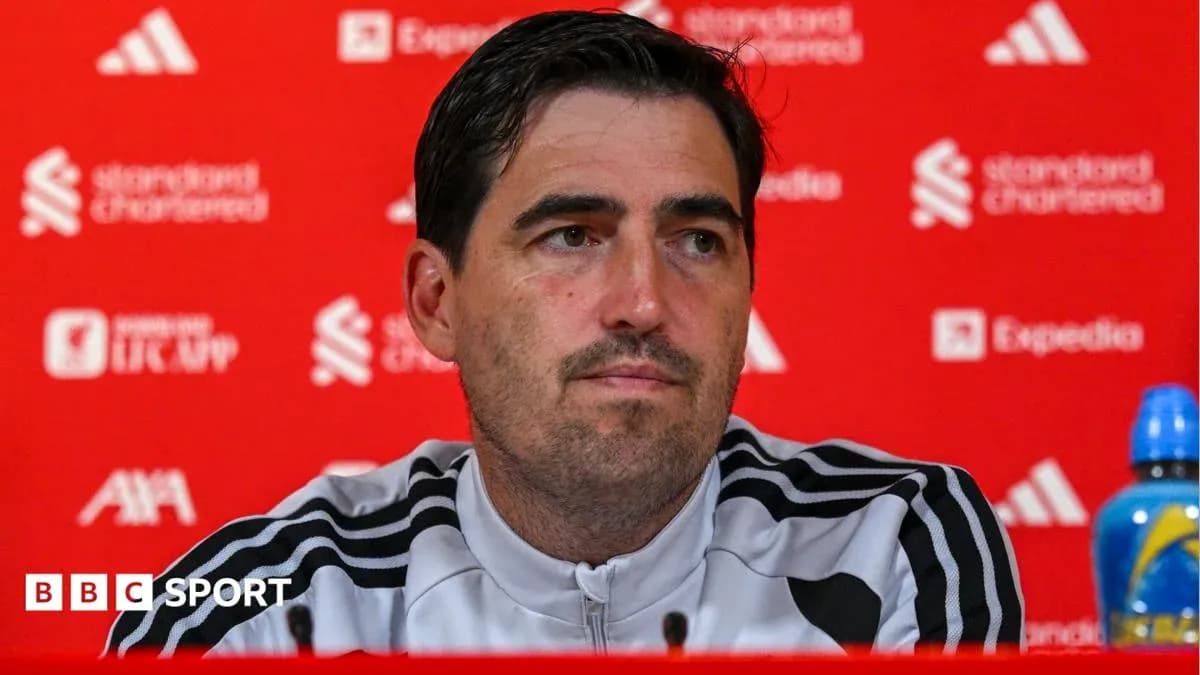
Andoni Iraola is only a month into his Anfield reign, but the calendar has already started to bite.
Two home league games, two draws, a Champions League high wedged in between and now Tottenham in the Carabao Cup. This is the point in an English season when even the most meticulous plans get stress‑tested. Iraola knows it. More importantly, he’s realising which of his players truly do.
Iraola’s first big Liverpool dilemma
Asked whether he can simply go full strength again in the League Cup, the Liverpool manager didn’t pretend.
“No. You can decide and put the same players in every game. The problem is there'll be a moment when they're really tired. And there is more risk of injury.”
That’s the hard edge of the job. The romantic idea of rolling out the same stars every three days collides with sports science and muscle fatigue. Iraola’s answer made it clear he’s not going to ignore the data, but he’s also not about to hide behind it.
“There are players who play every three days with no issues. They are very robust, their performances don't change too much.
“There are other players where the risk is bigger and the performances are different. I have to learn who is ready to play games every three days and who needs a rest so their performance level isn't affected.”
This isn’t just theory. Liverpool’s schedule has already exposed a few truths.
Fulham draw underlines the strain
Anfield on Saturday told its own story. After an impressive, high‑tempo Champions League win over Atletico Madrid, Liverpool laboured to a 0-0 draw with Fulham. Same stadium, same crowd, completely different energy.
For just the third time in 63 years, Liverpool have failed to win either of their opening home league games. Two matches, two draws. That’s not the launch Iraola imagined.
Fulham arrived under pressure, Alvaro Arbeloa still chasing his first Premier League point as a manager after three straight defeats. Instead of being swept away, his side grew into the game and left with a deserved draw – and the feeling they might have taken more with sharper finishing.
Liverpool, by contrast, looked drained. Physically. Mentally. The sharp, vertical side that had outplayed Atletico in midweek never really appeared.
The numbers tell part of the story. Six points from four league games. Draws at home to Nottingham Forest and Fulham, another at Newcastle, with the sole win coming at Ipswich. Unbeaten, yes, but not exactly convincing for a club that measures itself against title contenders.
The £364m front line of Alexander Isak, Bradley Barcola and Florian Wirtz started a league game together for the first time. On paper, it’s a frightening trio. On the pitch, they flickered rather than burned.
Isak’s involvement was alarmingly low again: 16 touches in 90 minutes, the second fewest by a Liverpool outfield player on record, having set the lowest mark (14) against Forest two weeks earlier. Wirtz, outstanding against Atletico, looked a shadow of that player. Barcola and Isak had moments, but as a unit they still resemble an idea more than a finished weapon.
This is where Iraola’s learning curve meets the fixture list.
“It is still early,” as the assessment goes, but the pattern is already clear. When Liverpool have short turnarounds, the performance level drops. That’s not a crisis. It is, though, a warning.
A flat afternoon, a point dropped
The Fulham game laid out the problem in 90 uneasy minutes.
Iraola rotated, but only partially. Kostas Tsimikas, Ryan Gravenberch and Victor Munoz came in for Milos Kerkez, Alexis Mac Allister and Rio Ngumoha. Arbeloa responded with two changes of his own, handing Austrian centre-back David Affengruber a debut and bringing in Sander Berge.
Fulham should have punished Liverpool’s early sloppiness. A mix‑up between Alisson and Gravenberch left Gonzalo Garcia with what looked like a simple chance, only for Jeremy Jacquet to bail his side out with a goal‑line clearance. It was a warning sign, born entirely from Liverpool’s own making.
The visitors were the better side in the first half. Josh King forced Alisson into a save from inside the box. Antonee Robinson rose well but headed wide. Liverpool, by contrast, were reduced to half‑openings – Munoz’s header beaten away by Bernd Leno, a Bradley Barcola volley deflected behind by Timothy Castagne.
Tsimikas struggled and didn’t reappear after the break, Kerkez sent on to try to add thrust down the left. By the hour mark, Gravenberch and Munoz were also gone, Mac Allister and Cody Gakpo summoned to shift the rhythm.
There was a brief lift. Isak fashioned a chance for himself but Leno dealt with it comfortably. Dominik Szoboszlai unleashed a powerful strike; again, Leno stood firm.
Iraola emptied more of his bench on 72 minutes, introducing Ngumoha and Jeremie Frimpong. The pattern, though, barely changed. Liverpool had the ball, Fulham had the clarity.
Deep into stoppage time, Isak headed wide from a corner. Fulham, who still threatened late through King and Kevin, held on and finally had their first point of the season. Arbeloa, once a dependable full-back here, left Anfield with something tangible from his return.
Rotation, risk and a different kind of Cup tie
All of which brings Liverpool to Tuesday night and Tottenham in the Carabao Cup.
Normally, this is the territory of academy prospects and fringe players, especially in the early rounds. A chance to experiment, to rest legs, to reward patience. But a draw against another Premier League side, even one stumbling through a difficult start, changes the equation.
Play a strong team and Liverpool risk adding more miles to already heavy legs. Rotate heavily and Iraola gambles on combinations that haven’t yet convinced. It’s exactly the type of tie that exposes a squad’s depth and a manager’s nerve.
The Spaniard is clear that not all players are built the same for this grind.
“There are players who play every three days with no issues… There are other players where the risk is bigger and the performances are different.
“I thought I had it quite clear in my mind with some, but with others, it's new, even for them, because they haven't played as many games. We are learning.”
This is the heart of his Liverpool project right now: identifying who is “robust” enough to live in a three‑games‑a‑week world without their level dipping, and who needs to be protected so that, when they do play, they can hit the heights expected at Anfield.
A cup steeped in Liverpool’s past – and Iraola’s opportunity
If there is a competition that knows Liverpool’s name, it is this one.
Ten times the club have lifted the League Cup, more than anyone else. The first came in 1980-81, the start of a remarkable run of four consecutive wins that ended in 1984. After that, there was a long pause. The fifth title finally arrived in 1995 at Wembley, Steve McManaman scoring twice against Bolton.
The new millennium brought the trophy back again in 2001 under Gerard Houllier, and then once more in 2003 when Liverpool beat Manchester United in the final. Kenny Dalglish added another in 2012, edging past Cardiff City on penalties.
The wait that followed stretched a decade. It ended in 2022 in unforgettable fashion, an 11-10 penalty shootout epic against Chelsea under Jurgen Klopp. Two years later, in 2024, Klopp delivered number 10, again at Chelsea’s expense.
This is the competition that has so often framed Liverpool eras. Paisley, Fagan, Houllier, Dalglish, Klopp – all left fingerprints on it.
Now it’s Iraola’s turn to step into that history. With at least seven more Champions League games guaranteed and the Premier League campaign only just settling into its rhythm, the fixtures are about to come thick and fast. Liverpool must adapt quickly if they want to live up to their own standards.
The question for Tuesday is simple and sharp: does Iraola lean into the club’s League Cup heritage with a strong side to spark momentum, or does he trust his learning process and ask the squad players to carry the weight against Tottenham?
His answer will tell Liverpool plenty about the kind of season he thinks this can still be.