Iraola's Journey: From Bournemouth to Liverpool's Challenge
Twelve months ago, Liverpool swept through their opening five Premier League games and looked every inch a champion side ready to defend under Arne Slot. The first step on that march came against Bournemouth, coached then by Andoni Iraola.
No one in the away end that night imagined that, a season later, the intense Basque on the opposite bench would be walking out at Anfield as Liverpool’s head coach.
Football moves quickly. Ruthlessly, even.
Now Iraola returns to Bournemouth with Liverpool still unbeaten, but already six points worse off than at this stage last year. The table says one thing. The mood around the club suggests something more complicated.
From seaside to Formby – and straight to work
Iraola has traded the south-coast calm of Bournemouth for the quieter sands of Formby, a well-trodden route for Liverpool managers after Jurgen Klopp and Brendan Rodgers. He’s been seen in the city centre, and as a keen cyclist has already mapped out the coastal routes.
But his real habitat is the training ground.
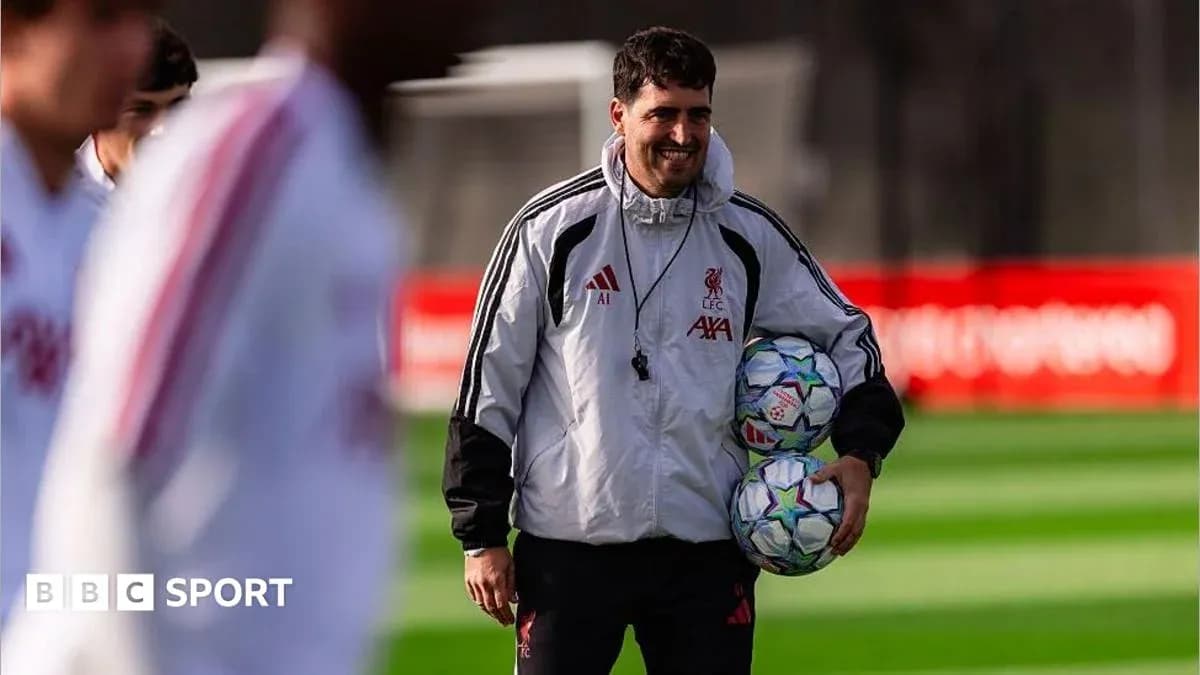
At the AXA Training Centre in Kirkby, staff talk about a “six days a week” coach. Iraola is often the first man on the pitch, laying out cones, shaping drills, setting the tone. The sessions are hard. Relentless.
“It’s really intense. There’s a lot of hard work and no sort of light days. Everyone’s putting in 100%,” said forward Lewis Koumas. That’s the standard now.
Inside the building, he cuts a quieter figure than some of his predecessors. He rarely shuts himself away in his own office, preferring the coaches’ room alongside Tommy Elphick, Shaun Cooper and long-time lieutenant Pablo de la Torre. The hierarchy is clear, but the presence is low-key.
De la Torre, who followed Iraola from Rayo Vallecano to Bournemouth and now to Liverpool, is seen as a crucial figure. His job: make sure players can physically live with the demands of Iraola’s football.
The surprise for many outside is how little has been ripped up. Liverpool’s head coach structure limits sweeping internal change. The system is built to outlast any one man. Iraola has had to fit into that, not the other way round.
Learning Liverpool’s calendar on the fly
His appointment owed much to his work at Bournemouth, where he transformed the Cherries’ style and secured their Premier League status. What he didn’t have to manage there was this kind of schedule.
Liverpool face at least 49 games this season. If they go deep in the cups, that number heads towards the 60s. Iraola is learning that in real time.
He listens. Medical, sports science, fitness staff all feed into how he shapes the week. Training times move with the fixture list. Late afternoon and early evening sessions are now common, tailored to the next kick-off. Under Slot, the clock was more predictable; sessions tended to start at roughly the same time each day.
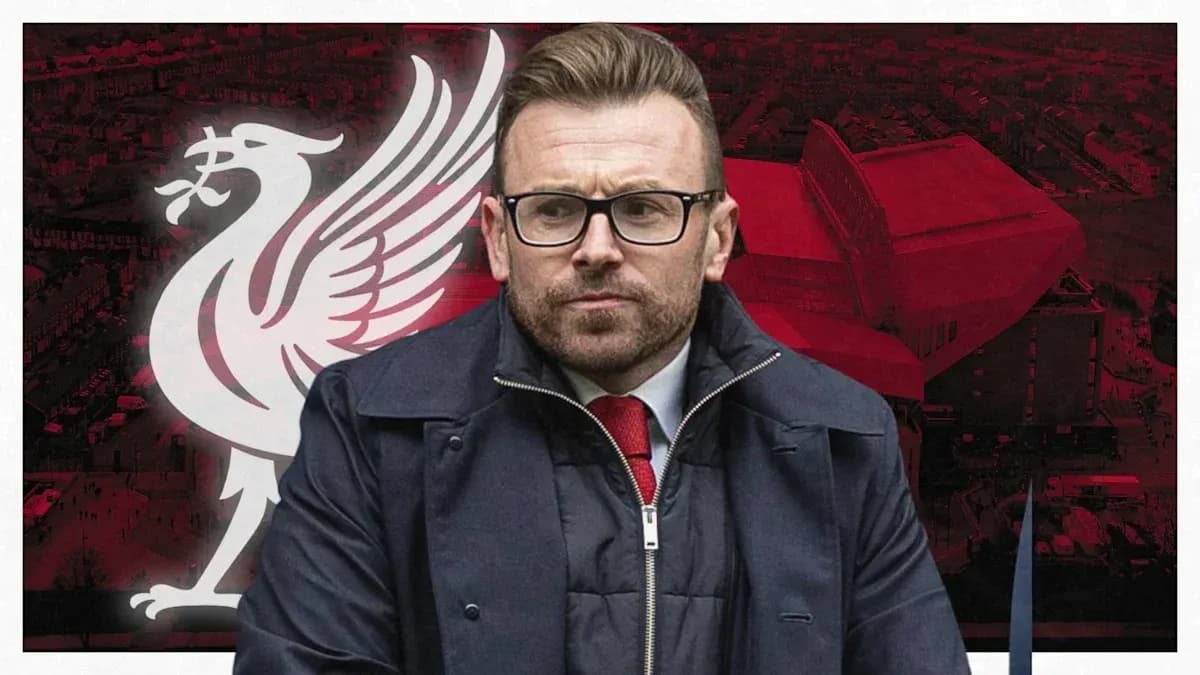
He has also opened a clear line with the academy and Under-21s coach Rob Page, ensuring the pipeline looks and feels like the first team.
“We have an understanding of how the first team play and key principles, like how we press, how he [Iraola] wants his number 10 to press, how he wants his number eight to press, how he wants his centre-backs to press – we mirror that absolutely,” Page said.
The idea is simple: when a youngster steps up, he already speaks the language.
A system built on roles, not reputations
Earlier this week, Dominik Szoboszlai broke down Iraola’s structure in plain terms: a number six, a number eight, a number 10. Fans spent the summer demanding a defensive midfielder, but the coach believes the system can work if the collective sharpens.
Intensity is non-negotiable. Shape is clear. Responsibility is shared.
Iraola prefers to name his team on the morning of the match. Players learn their fate on the day, not days in advance. The post-match debrief comes the following day, once emotions have cooled and data has landed.
He is learning the Liverpool media machine, too. After a pre-season friendly against Monaco, his comments to LFC TV about the team “running out of steam” after 30 minutes and lacking the energy for his intensity were widely circulated. It sounded, to some, like criticism.
In reality, it was a snapshot of where they were in the fitness build-up. But at Liverpool, every line can be clipped, shared, re-framed. Iraola has quickly understood that. In press conferences he comes across calm, measured, open to questions but careful with phrasing.
He is adjusting to Liverpool as much as Liverpool are adjusting to him.
Youth, running power and the cost of intensity
One of the main reasons Liverpool chose Iraola was his track record with young players. The numbers back that up. The average age of their Premier League side this season is 25.3; only five teams are younger.
Rio Ngumoha, 18, Trey Nyoni, 19, and Koumas, 20, all started the Carabao Cup tie against Tottenham. None of them are being treated as token academy stories. Inside the club, there is a clear expectation they will play bigger roles than they did last season.
The style demands it. Liverpool have made the most sprints in the Premier League so far, a statistic that fits perfectly with the “intensity” mantra. But the bill for that effort is already arriving.
Less than 72 hours after beating Atletico Madrid in the Champions League, Liverpool looked flat in a goalless draw with Fulham. The legs weren’t there. The press lost half a yard. The sparkle dulled.
Sunday’s trip to Bournemouth will be their fourth game in 12 days. After the international break, they face four in 10. Between 11 October and 7 November, they will play nine times.
Iraola knows he cannot simply shout “intensity” at that kind of schedule. Set-pieces, moments of individual brilliance, ugly wins – all will have to sit alongside the high-octane football he craves.
Back to Bournemouth, with everything to prove
Bournemouth have changed too. The away dressing room at the Vitality Stadium has been renovated to meet Europa League regulations, a small but symbolic reminder of how far the Cherries have come since Iraola walked in.
On Thursday, they marked their Europa League debut with a win over Real Sociedad in the Basque Country, not far from where Iraola grew up. He will have seen that result. He will have felt something.
Perhaps on the flight down from Liverpool on Saturday, he will look out of the window and allow himself a moment. Three years as Bournemouth manager. Now Liverpool head coach. Unbeaten in the Premier League since January across two clubs. The arc of a career can bend quickly.
Liverpool’s start under him has been steady rather than spectacular. No defeats, but not enough wins for a club that measures seasons in trophies, not in unbeaten runs. Last season’s 12 league losses left scars. Becoming harder to beat is progress, but it is only a foundation.
Vice-captain Alisson said it plainly last week: draws are not good enough for Liverpool.
Iraola knows that. He knows what this job demands, and he knows how it will sound if he walks away from his old home without three points.
For a coach still finding his rhythm in Liverpool red, a first league win on familiar turf would not just be a neat storyline. It would be a statement about where this team is heading, and how quickly they intend to get there.