.svg&w=384&q=75 "logo")
IPL Media Rights: Are Bidders Ready to Shine?
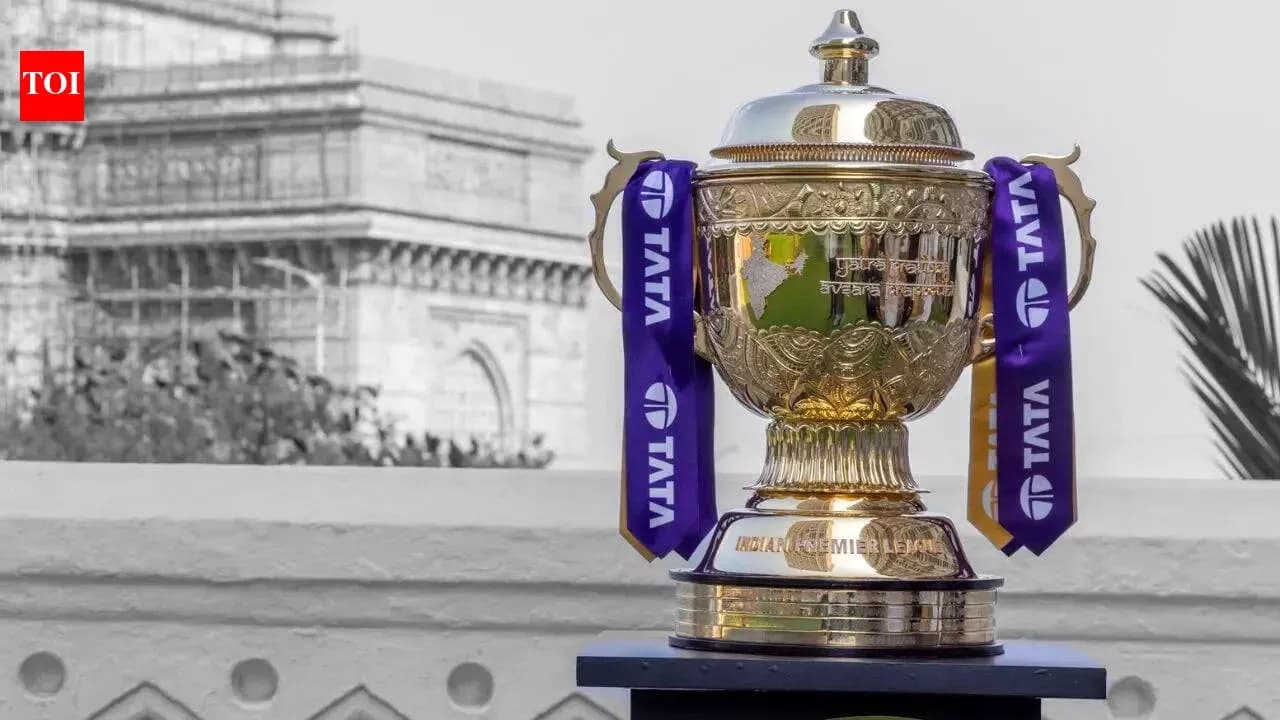
The IPL trophy will glitter again in six months. The question troubling the industry is whether the numbers behind it will shine quite as brightly.
With the final season of the 2023-27 media rights cycle looming, some of cricket’s biggest powerbrokers are staring at an uncomfortable reality: outside of JioStar, there is no obvious heavyweight ready to walk into the ring. No real bidding war. No genuine tension. And without that, the market cannot truly discover what the IPL is worth.
That anxiety is not coming from critics on the fringes. It is being voiced from inside the tent.
At the recent ET World Leaders Forum, Uday Shankar — the media heavyweight who now serves as vice-chairman of JioStar and once helped turn Indian sports rights into a gold rush — laid bare the problem. A decade ago, he said, four or more serious media companies would line up for every major sports property. They would fight, hard, for the rights. Today, he admitted, it increasingly feels like JioStar is standing there alone. And that, he warned, is not healthy.
His reasoning is blunt. Rights costs have exploded. The ability to monetise them has not kept pace. Sports remains a hugely valuable product, but unless the rights holder, the broadcaster and the platform can all make the numbers work, the ecosystem frays. One party overpaying while the others struggle is not a strategy. It is a slow bleed.
Which is why the absence of a visible Plan B for Indian cricket has become the most worrying subplot of this rights cycle.
JioStar’s intent is not in doubt. Its subscription engine runs on cricket. The IPL is the crown jewel in that machine. It will bid, and it will bid aggressively. The concern lies elsewhere: in the Board of Control for Cricket in India’s apparent inability, or unwillingness, to pull more serious players into the contest.
The global landscape has changed. Traditional broadcasters have retreated or recalibrated. Tech giants and streaming platforms have stepped into the space where old networks once ruled. In the West, YouTube has already started to reshape how live sport is packaged and sold.
YouTube no longer treats sport as a string of isolated rights deals. It uses it as an anchor — the beating heart of a broader pay-TV and subscription ecosystem. Its seven-year deal to exclusively distribute NFL Sunday Ticket in the US, reportedly worth $2 billion a season, is built exactly on that logic. Sunday Ticket boosts the appeal of YouTube TV, but also exists as a standalone product sold through YouTube channels. One property, two revenue pathways, and a long-term play on subscriber loyalty.
That model does not translate neatly to the subcontinent. Average revenue per user in India and its neighbourhood sits miles below Western benchmarks. The old assumption that sheer volume of viewers will solve everything looks increasingly fragile. Yet if there is one market in this part of the world where YouTube could justify testing those ideas, it is Indian cricket — and, above all, the IPL.
Netflix, too, is hovering on the edge of live sport. Co-CEO Ted Sarandos told The Economic Times that the streaming giant is interested in live events, including cricket, but does not want to become a conventional, full-season sports broadcaster. That nuance is crucial. It narrows the field of properties that make sense for Netflix. The IPL, with its compact window, high-intensity schedule and narrative richness, fits that brief almost perfectly.
This is not just about live matches. The IPL is an India-first story with global reach — a ready-made canvas for the kind of storytelling Netflix thrives on. It speaks to a billion-plus at home, a vast diaspora abroad, and to markets where cricket quietly acts as one of India’s most effective exports and instruments of soft power. For a platform built on drama, characters and cliffhangers, the league offers all of that in technicolour.
Shankar’s line cuts through the noise: at some point, the economics have to make sense. For that to happen, the rights holder cannot simply sit back and expect the world to come knocking. The federation must sell the story — aggressively, intelligently, and globally.
The IPL is arguably India’s most coveted prime-time asset. But assuming that a media executive sitting several time zones away fully understands the India growth story, the cultural heft of cricket, and the commercial logic of the league without hearing it directly from the people who run it, is optimistic at best.
This is where the BCCI stands exposed. It cannot walk into the next tender assuming that JioStar’s cheque book alone will validate the league’s worth. It needs a real marketing strategy, not just a glossy pitch deck. It must put the IPL in front of every serious media, technology and streaming platform that could plausibly be tempted — from Silicon Valley to Europe to East Asia — and make the case, in person, for why this is the one property they cannot afford to ignore.
Right now, JioStar is clearly Plan A. The real test of Indian cricket’s vision is whether, by the time the auction room opens, there is a credible Plan B — and maybe even a disruptive Plan C — waiting to drive the price, the innovation and the league itself into its next phase.