.svg&w=384&q=75 "logo")
Harry Kane's Evolution: From Striker to Playmaker
Harry Kane has never stood still. Not in the box, not in his career, and certainly not in the way he thinks about football.
At 33, with 73 goals last season for England and Bayern Munich – the most prolific campaign of his life – he is playing deeper than ever, often dropping as far back as his own penalty area to start moves he once only finished. It looks like a contradiction. It feels like a paradox. To Kane, it is simply the game played properly.
“Until you really understand football and understand what we’ve been talking about, it’s so easy to say ‘stay high, you’re going to score’ but it doesn’t work like that,” he says, a grin spreading as the subject comes up. The numbers back him up. So does the tape.
A striker who looks like a coach
Watch him before a session and the picture jars with the old idea of the penalty-box predator. England’s record goalscorer is one of the first out, not juggling balls with the younger players but talking intently with a member of staff, scanning the pitch. From a distance, you could mistake him for a coach. Given his role on it, that’s not far off.
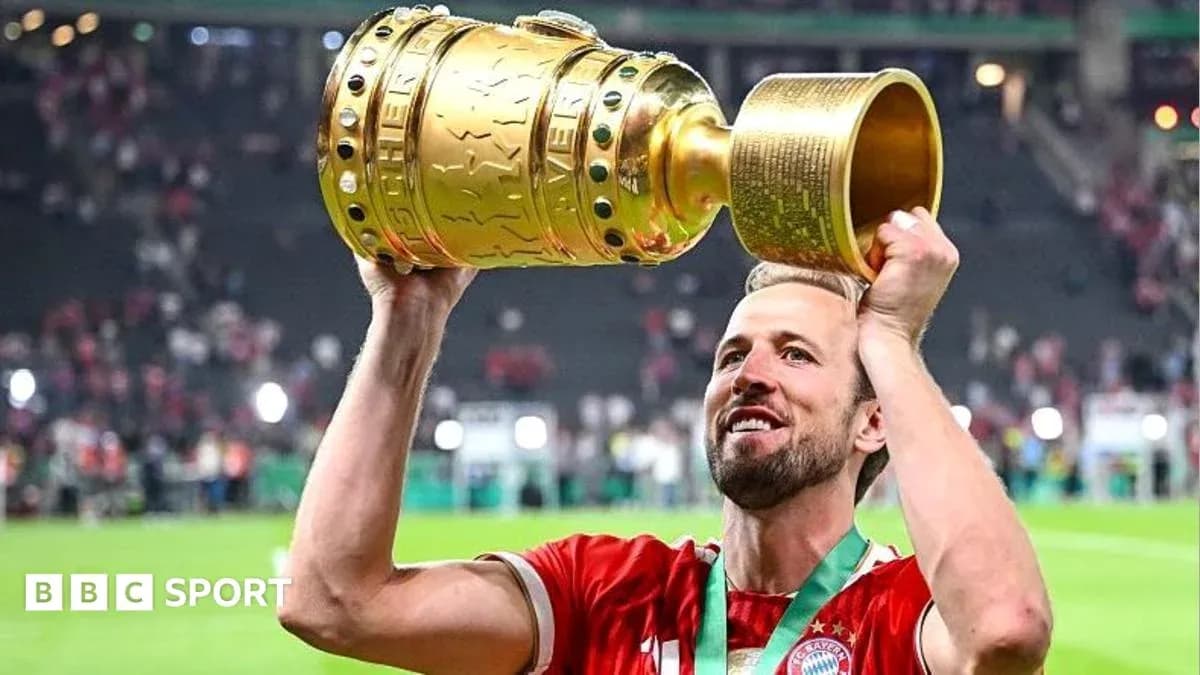
Kane’s style mirrors the person those around him describe: rounded, humble, obsessed with detail. The past year has brought a flood of goals and trophies, yet there is no sign of him drifting into comfort. With only five days of pre-season in his legs, he still completed 90 minutes in Bayern’s 2-1 win over Borussia Dortmund to lift the German Super Cup. The roaming role that drains others seems to energise him.
The data says the same. Across the past six seasons, STATSports – the sports technology firm he has invested in – has tracked his physical output. Distance covered up 8%. High-speed running up 22%. Accelerations up 42%. At an age when many forwards narrow their game to survive, Kane has widened his.
Built for a new kind of game
The sport around him has shifted. “Over the last five or six years, man-to-man pressure has become bigger,” he says. European football has turned ferocious without the ball. Top sides push high, trust their defenders and midfielders to lock into individual duels, and dare you to escape.
Clubs have responded by stockpiling sprinters and dribblers, players who can glide past a man when the pitch breaks into a patchwork of one-against-ones. Kane is not that type. He has never sold himself as the fastest, and he is not a highlight-reel dribbler.
He has found another way.
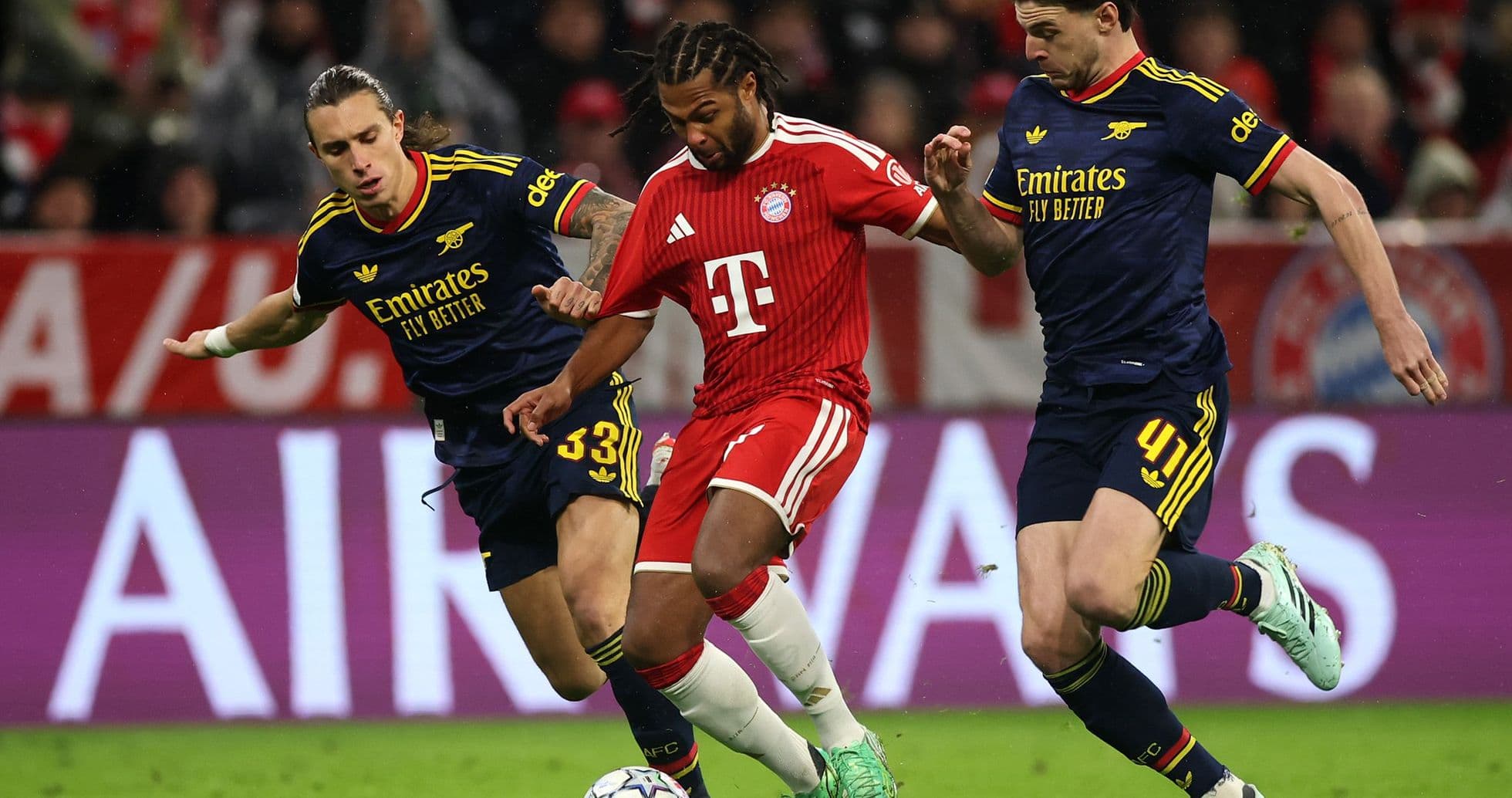
Against Dortmund, one moment captured it. Kane dropped deep, drifting into that grey area where centre-backs and midfielders hesitate over who should go with him. Two yellow shirts chose to converge. Most forwards in that situation would try to beat them with their feet. Kane beat them with his head.
He sank low, used his strength to shrug off Waldemar Anton, then rose and made a tiny adjustment of his body to the right. A feint, no more than a twitch. But those micro-movements are his signature. Daniel Svensson and Jobe Bellingham bit on the shape of his body, shifted with him – and Kane snapped the ball back the other way, suddenly opening the entire pitch from inside Bayern’s half.
His dribbling is not about stepovers. It is about angles, cues, and the half-second he steals by thinking faster than everyone else.
Half coached, half instinct
Bayern manager Vincent Kompany has described Kane’s role as “50% coached and 50% Kane deciding what to do.” The striker agrees.
“I think it’s partly instinct, using my football brain and getting the feeling on the pitch,” he says. “If, for example, I want to drop and see if the centre-back really wants to commit, he might commit into midfield, but is he going to commit if I drop all the way to my box?
“After the first five or 10 minutes you really get an understanding of how the opposition are going to play, which dictates how I play.”
That reading of the game underpins the controlled chaos Bayern create. To the naked eye, their rotations can look random. To those inside it, there is a clear map: zones that must be filled, spaces that must be attacked. Kane, granted more licence than most, sits at the centre of the storm.
“I feel like my position now is as one of two 10s, and you work together,” he says. “You can double up on one side to overload, which causes the opposition centre-backs a problem of who to mark.
“If they want to mark both, they’ve got to go man-to-man and then that leaves space for our wingers or full-backs to run into.
“It’s posing all these questions to the opposition but, personally, I love having someone close to me who I can link with.”
This, from a man who built his reputation as the archetypal lone number nine, is striking. Asked how he sees himself now, he leans more towards a 10, operating in a front two, rather than the isolated spearhead.
“When you’re the number nine on your own you can get marked by two centre-backs and you struggle to get touches on the ball,” he says. “You’re relying on everyone else to find you with the ball.”
So he goes looking for it.
Dropping deep to finish high
Two clips from last season show the pattern that keeps repeating.
In the first, Luis Diaz is operating as one of the two 10s. “The thing with our formation is, as long as there’s someone in each position, it doesn’t really matter who it is,” Kane explains. “Lucho in this clip is playing as one of those 10s.
“I’ve come off to try and create a bit of space and Lucho’s gone through the centre.”
Kane’s movement drags an opposition midfielder towards him. The chain reaction is instant. The gap opens and Joshua Kimmich fires a pass into Diaz. “I think it’s Serge [Gnabry] making the run in behind which takes the defenders back, which allows me and Lucho that space in between,” Kane says.
Diaz lays it off. Kane is now in his favourite zone, 20 to 25 yards out. “Whenever I’m in that position… I’m always looking if I can get my shot off.”
It is a familiar story: Kane drops deep, pulls markers, then arrives late in the pocket he has just created. “By playing deep when the play develops, I end up coming into a number 10 spot when everyone’s dropped,” he says. “I can get shots off from the edge of the box, which is a big strength of mine, or I’m running off the back of players where no-one’s picking me up – because the midfielder finds it hard to [track].”
In the second clip, from Bayern’s Champions League tie against Club Brugge, the detail changes but the principle holds. Usually, a centre-back picks him up. This time, Brugge hand the job to their holding midfielder. Kane spots the tweak and goes to work.
Lennart Karl scores the goal. Kane never touches the ball. His fingerprints are all over it.
“These are the little runs, again, not everyone sees,” he says. With Jamal Musiala and Karl – “Lenny” – between the lines, Kane sometimes chooses to stay higher and let them drop in to receive. “They’re so good at receiving the ball and dribbling so there’ll be times where I will actually stay higher and let those guys get on the ball a bit deeper, and I’ll try and make runs in behind.
“Without changing my game too much, I try and complement the players around me.
“I know Lenny is so good in those pockets and when he gets there, I’m more thinking of running in behind because, one, he can play me in and I can go through on goal, or two, he can dribble with the ball and do exactly what happened here.
“As soon as Lenny gets in that pocket I make the run and not always to get the ball, sometimes it is just to drag the defender away.
“Now he’s one-against-one with a centre-back in the middle of the pitch and that’s dangerous for any centre-back.”
The goal goes down under Karl’s name. The move exists because Kane understood where not to be.
A nine, a 10, and sometimes a six
With the Ballon d’Or announcement approaching, Kane’s candidacy is often framed in blunt terms: goals, goals, and more goals. Seventy-three of them last season. Numbers that push him into a conversation usually reserved for Cristiano Ronaldo, Lionel Messi and Erling Haaland.
Yet the raw tally misses the point of what he has become.
Kane now plays for the team in every phase, across every band of the pitch. He has spoken of operating at times as a 10, a nine and even a six, dropping into the deepest midfield line to help Bayern escape pressure or launch attacks. In an era of hyper-specific roles and rigid tactical scripts, he has carved out a job description that refuses to sit neatly in any manual.
He is the striker who starts moves in his own box, the playmaker who finishes them in the opposition’s, and the leader constantly rewriting what a modern centre-forward is supposed to look like.