Harry Kane's Bid for the Ballon d'Or: A Historic Challenge
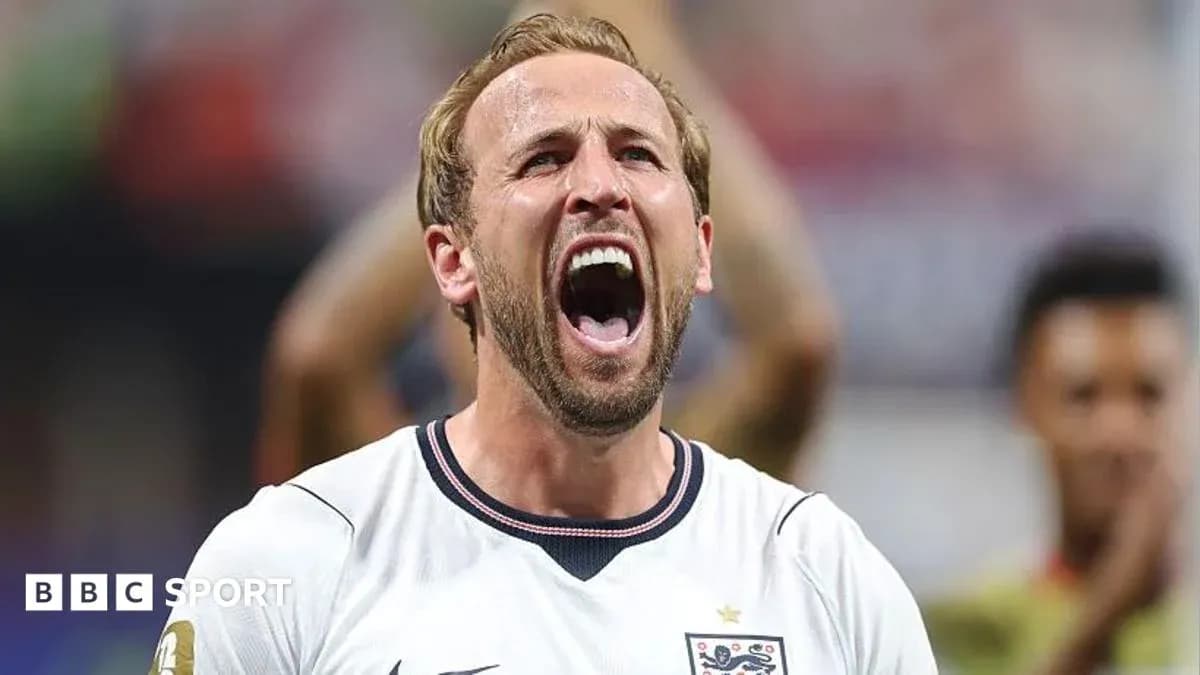
Harry Kane stands on the brink of football’s most glittering individual prize, armed with a season of goals that would flatten most arguments against him. The Ballon d'Or shortlist lands on Tuesday, and the bookmakers have already pushed the England captain to the front of the queue.
History, though, is a stubborn opponent. And it rarely bows to goals alone.
A prize shaped by the biggest stages
Since 1956, when Sir Stanley Matthews became the first man to lift the golden ball conceived by France Football journalist Gabriel Hanot, one theme has repeated itself: the game’s grandest competitions bend the vote.
World Cup years, especially, leave fingerprints all over the ballot box. When France Football revisited every pre-1995 edition to mark the award’s 60th anniversary in 2016, it stripped away the old restriction that limited eligibility to European players and asked a simple question: who really should have won?
The answers underlined the power of the World Cup. Pele, who never officially received the Ballon d'Or in his playing days, was judged the rightful winner in 1958 after dragging Brazil to their first world title at 17, again in 1970 when he inspired their third crown. Garrincha, his compatriot, emerged as the standout of 1962. Mario Kempes (1978), Diego Maradona (1986) and Romario (1994) were all handed retrospective recognition as the players who would have taken the trophy in those years.
Strip it back and the pattern is stark: had the award always been open to all nationalities, every South American World Cup-winning side between 1958 and 1994 would have produced a Ballon d'Or winner.
And that’s before you get to the official roll of honour.
The World Cup’s iron grip
Raymond Kopa was the first man to marry a World Cup year with a Ballon d'Or, rewarded in 1958 after leading France to the semi-finals. From there, the trend hardened.
Bobby Charlton in 1966. Paolo Rossi in 1982. Lothar Matthaus in 1990. Zinedine Zidane in 1998. Ronaldo in 2002. Fabio Cannavaro in 2006. Each of them climbed the podium with a World Cup winner’s medal already in their pocket.
Even when the winner did not lift the trophy, they usually came close. Johan Cruyff’s Netherlands reached the 1974 final. Luka Modric did the same with Croatia in 2018. Deep runs, defining performances, nights that echoed beyond club football – voters have always gravitated to those stories.
There have been outliers. Kevin Keegan took the 1978 Ballon d'Or despite England not even qualifying for the World Cup, yet France Football’s later review still concluded Kempes, top scorer and champion on home soil with Argentina, had the stronger claim.
The message from six decades of rewrites and re-evaluations is clear: the World Cup does not always decide the Ballon d'Or, but it rarely steps aside.
Modern demands: trophies or something transcendent
The World Cup is not the only kingmaker. In the modern era, success in one of football’s super-competitions – the Champions League, World Cup, European Championship or Copa America – has become almost non-negotiable.
Only four of the last 19 Ballon d'Or winners failed to lift one of those trophies in the year they were crowned. The exceptions tell you how absurdly good you have to be to break the rule.
Lionel Messi did it three times: in 2010, when Argentina fell in the World Cup quarter-finals; in 2012, and again in 2019, when he ended the year without a major international or continental title. Cristiano Ronaldo pulled off the same trick in 2013, his season with Real Madrid so extraordinary that Portugal’s failure to get beyond the World Cup play-offs could not drag him down.
On the flip side, some monumental seasons have still not been enough. Wesley Sneijder’s treble with Inter Milan and run to the 2010 World Cup final. Franck Ribery’s role in Bayern Munich’s 2013 treble. Mohamed Salah’s record-breaking 2017-18 campaign. Each time, voters chose a different narrative.
That is the backdrop Kane walks into.
Kane’s case versus football’s old logic
The England striker arrives with numbers that would usually end the conversation. A prolific season for club and country, relentless scoring, consistency at a level that only the very best sustain.
Yet history keeps asking the same question: where are the biggest trophies?
That is where his rivals come in.
Rodri may be his most serious obstacle. The midfielder, already a former Ballon d'Or winner, anchored Spain’s march to a second World Cup title and walked away with the Golden Ball as the tournament’s outstanding player. Voters love control, influence, the sense that a player dictated the biggest matches. Rodri offered that in spades.
Lamine Yamal added a World Cup winner’s medal to a season in which he helped Barcelona reclaim La Liga. His teenage team-mate Pau Cubarsi collected the Fifa Young Player Award after a string of standout displays on the global stage. Those two represent something else voters often lean towards: the sense of a new era taking shape.
Kylian Mbappe and Messi are never far from the conversation. Mbappe finished as the World Cup’s top scorer with 10 goals, then claimed both the Champions League Golden Boot and La Liga’s top scorer award, despite France falling short of the final and Real Madrid ending the season without a major trophy. Messi, at 39, captained Argentina to a second successive World Cup final and still found eight goals on the biggest stage.
Against that backdrop, Kane’s season becomes a test case. How much are voters willing to reward a year of individual brilliance if it is not wrapped in the ribbons of the game’s biggest prizes?
A rare English shot at history
If he does prevail, Kane will walk into one of football’s most exclusive rooms. Only four Englishmen have ever won the Ballon d'Or: Matthews, Charlton, Keegan and Michael Owen. The wait for a fifth has stretched over two decades.
He would also break new ground for German football’s top flight, becoming the first player representing a Bundesliga club to win the award since Matthias Sammer in 1996.
So the choice facing the international jury – one specialist journalist from each of the men’s top 100 nations – is stark.
Do they side with the weight of history, the World Cup and the major trophies that have so often framed this award? Or do they decide that one of the most prolific goalscoring seasons of the modern era deserves to bend the rules and drag Harry Kane into Ballon d'Or immortality?