.svg&w=384&q=75 "logo")
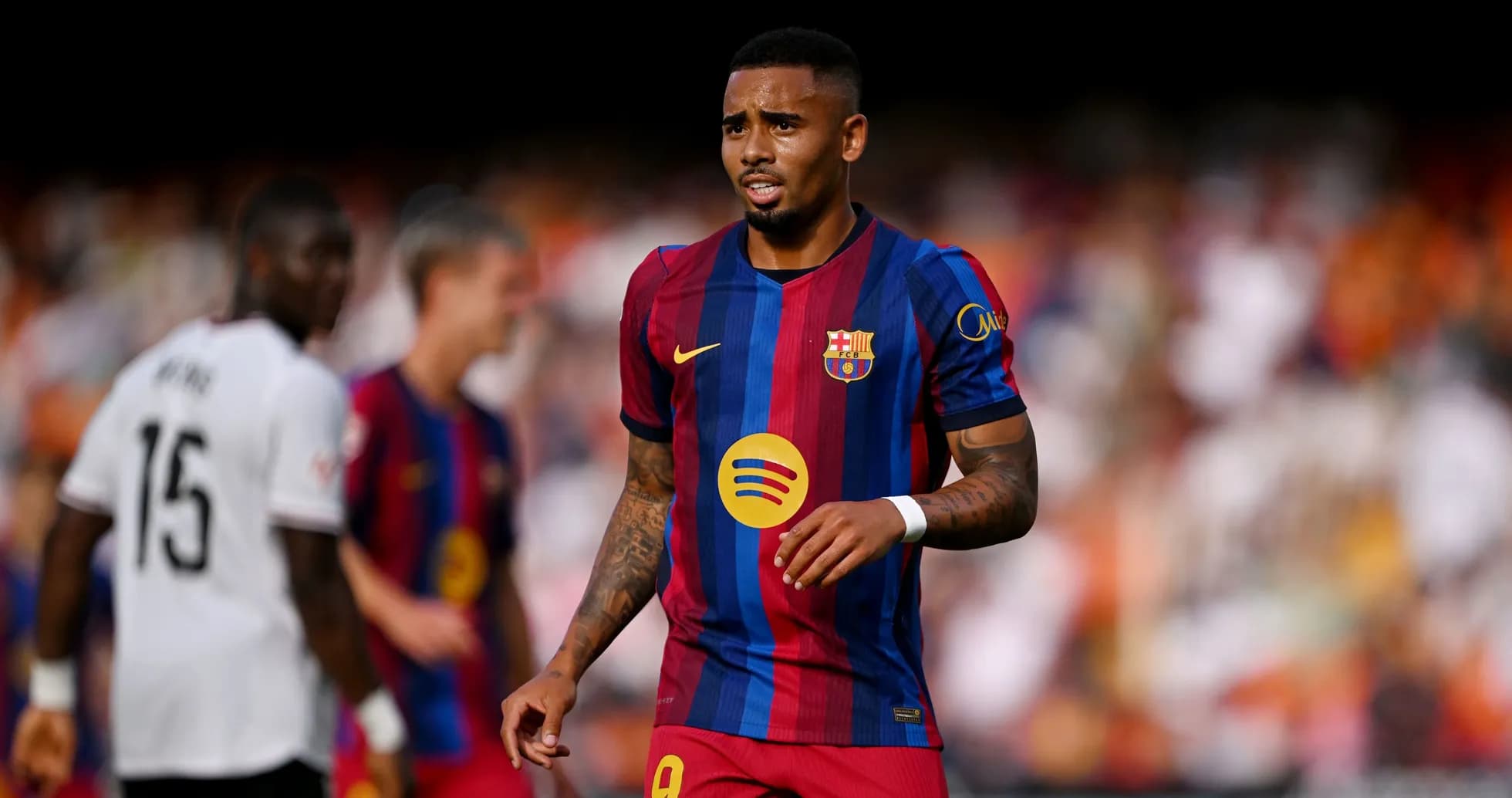
Gabriel Jesus' Debut for Barcelona: A New Beginning
Jesus needed only a week in Catalonia to swap paperwork for grass stains.
Signed on deadline day, unveiled as the man to lead a new-look Barcelona front line, the 29-year-old finally pulled on the shirt in competitive action at Mestalla. With Valencia already dismantled and the scoreboard showing a four-goal cushion, Hansi Flick sent him on in the 80th minute, a straight swap for Pedri and a gentle first step into La Liga.
No jeopardy. No panic. Just a new No 9 jogging into a team already humming.
A whirlwind arrival
The move from Arsenal, completed in the final hours of the window, came with the urgency of a club that had run out of centre-forwards. Robert Lewandowski gone. Ferran Torres gone. A gaping hole through the middle of Flick’s high-octane system.
Barcelona turned to a familiar Premier League face. €10m up front, performance-related add-ons on top, and a three-year contract. For that price, for that profile, the boardroom view is clear: this is a bet worth taking.
Jesus knows it is a personal crossroads as much as a tactical one. His last 18 months have been scarred by setbacks, the most brutal a serious ACL injury in 2025 that cut through the tail end of his Arsenal spell and stalled the momentum of a career built on relentless movement and intensity.
So when the final whistle sounded at Mestalla and he spoke to club media, the emotion came quickly. Debuting in this jersey, he admitted, made him “so happy”. The smile told the rest.
Building the body back up
For all the joy, there was no pretending. Jesus did not hide from where he stands physically.
"I feel physically good, but I need more match sharpness. I’m very happy with the minutes I got," he said, framing this cameo for what it was: a starting point, not a statement.
He repeated the message, almost as if reminding himself as much as anyone else. "Physically I feel good, though I’m still building up match fitness. The more minutes I get, the better I’ll feel. I'm just really happy for the debut and the win."
Flick’s football does not allow passengers. The pressing lines are high, the tempo unforgiving. That reality means Barcelona will have to drip-feed him starts, manage workloads, and trust the medical department to protect a body that has already taken heavy punishment.
The player understands that. The staff do too. The plan is clear: short bursts now, bigger stages later.
A team already in full flow
What he walked into at Mestalla will have helped. Barcelona were ruthless, slick and merciless, picking Valencia apart with a fluidity that left the home side chasing shadows.
From the bench, Jesus watched a front line interchange positions, a midfield dominate the ball, and full-backs pin their opposite numbers deep. When his turn came, the pressure had gone, replaced by something far more valuable for a new signing: freedom.
"We have a very great team full of quality and we play beautiful football," he said afterwards, the admiration obvious. He then leaned into what will resonate most with the terraces. "I love football and I love Barcelona. This is the way I love playing. It makes me very happy."
The affection is not performative. For a forward raised on high pressing, quick combinations and aggressive movement, this Barcelona – this version under Flick – offers a familiar script, just in different colours.
Deco’s calculated gamble
Behind the touchline emotion sits a cold calculation. For Sporting Director Deco, this deal is risk and opportunity wrapped together.
At €10m, in a market where elite forwards often start at three or four times that fee, Jesus represents value. The caveat is obvious: only if he plays. Only if those knees hold up. Only if the sharpness he talks about returns quickly enough to matter in the title race and in Europe.
His CV helps the argument. He has lived inside dressing rooms that chase major trophies every season. He understands the demands of a high press, the responsibility of leading the line in a team that expects to have the ball and expects to win.
In that sense, he slots naturally into what has already been dubbed the “Flickball” era at Camp Nou – a period defined by aggression without the ball and incision with it.
The debut at Mestalla will not make any season review. It will barely register on a highlight reel. But for Barcelona’s new No 9, those 10 minutes were the first proof that the long road back from injury now runs through Catalonia.
The next question is simple and unforgiving: can he turn a gentle introduction into a relentless presence at the heart of Flick’s attack?