Fifa President Gianni Infantino Agrees to Independent Governance Review
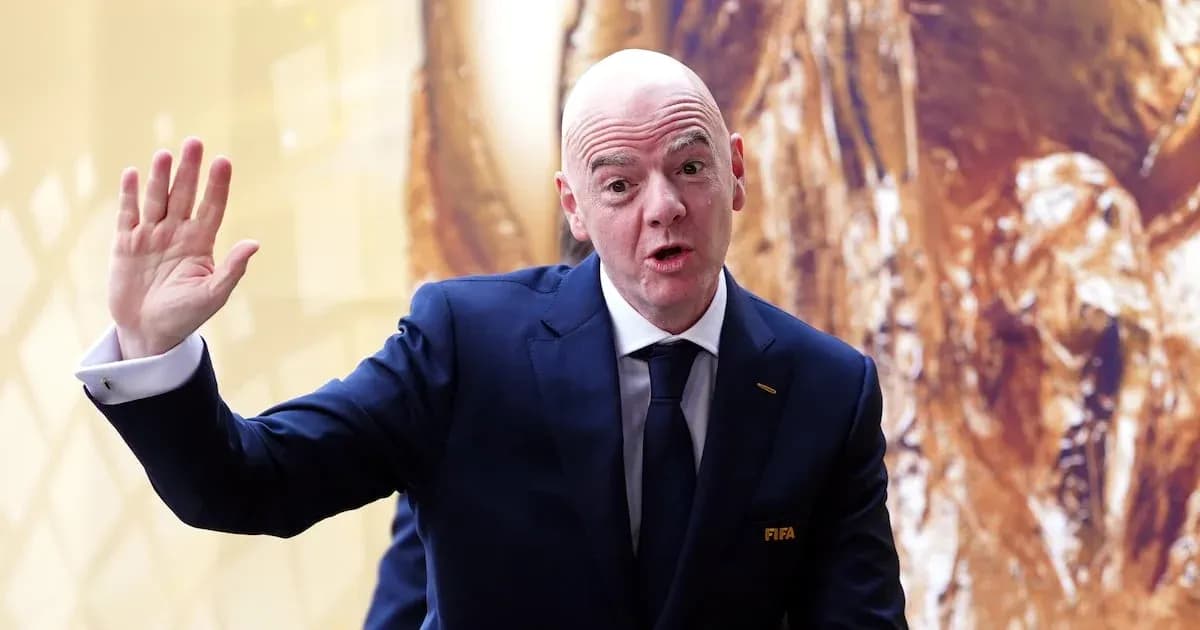
Gianni Infantino has finally blinked.
Under growing pressure from within his own house, the Fifa president has agreed to commission an independent governance review, a move he has resisted for months as disquiet over his leadership hardened into open revolt.
The trigger was the fallout from the proposed Fifa Forward Enterprise (FFE) sell-off and the row over the Folarin Balogun case, two flashpoints that exposed deep mistrust over how decisions are being taken at the top of the world game. Several members of the Fifa Council had already been lobbying for an external review. Then Debbie Hewitt, the English FA chair and a Fifa Council member, raised the stakes last week by formally writing to Infantino and demanding the release of all documents related to both controversies.
Infantino did not respond to those critics directly. He chose a different stage. In a letter sent to all 211 member associations, he signalled for the first time that he is prepared to submit Fifa’s governance to outside scrutiny.
The shift is significant. The timing, even more so.
Independent review on the table
Infantino told the associations he will ask the Fifa Council, when it meets in Zurich on 15 October, to approve an independent external review of Fifa’s governance framework for “major strategic initiatives” and to recommend possible improvements.
“First, I will ask the council whether it wishes to commission an independent external review of Fifa’s current governance framework for major strategic initiatives and recommend potential improvements,” he wrote.
He then went a step further, inviting proposals to examine how decisions are made inside Fifa itself. He said he will propose that the council set up a “direct, structured and time-limited consultation” with confederations, member associations and other stakeholders on how Fifa’s decision‑making can be “further strengthened”.
That consultation, he said, would seek concrete ideas on earlier institutional involvement in big calls, and on clarifying the roles of the president, the bureau, the council and the congress. The stated aim: more transparency, wider participation and greater accountability around major strategic projects.
On paper, it is exactly what his critics have been demanding: daylight on the machinery of power at Fifa.
Big questions, careful wording
Yet the wording of Infantino’s letter matters. He does not promise that the review will specifically examine the FFE plan or the handling of the Balogun issue. Those were the two cases that sparked this storm. Debbie Hewitt had explicitly called for all documents on those matters to be released. On that front, Infantino has stopped short.
The council is almost certain to approve an external review. The body is made up of 28 representatives from the six confederations, eight vice-presidents and Infantino himself. Few expect a rebellion on the principle of commissioning an outside assessment. The real battle will be over the terms of reference: how far the review can go, what it can see, and who it can challenge.
That will decide whether this becomes a genuine moment of reform, or simply another exercise in consolidating power as the presidential election looms in March next year.
Money on the table
Governance is not the only front on which Infantino is being squeezed.
He is also facing mounting demands to unlock Fifa’s vast cash reserves. The organisation is sitting on around $6bn (£4.5bn). Last week, the presidents of Uefa and Concacaf, Aleksander Ceferin and Victor Montagliani, formally requested that each national association receive at least $10m from that pot.
The call for a major payout has now spread. On Monday, Asian Football Confederation president Sheikh Salman bin Ibrahim Al Khalifa sent his own letter, pushing the same line and ensuring that funding will sit high on the agenda when the Fifa Council gathers next month.
So Infantino heads into October with two intertwined battles: one over how Fifa is run, the other over how its money is spent.
He has offered a review, promised consultation and talked of strengthening transparency and accountability. The next move belongs to the council – and to a football world that has heard reform pledges from Zurich before.