FAI's John Martin Defends Israel Fixtures Amid Controversy
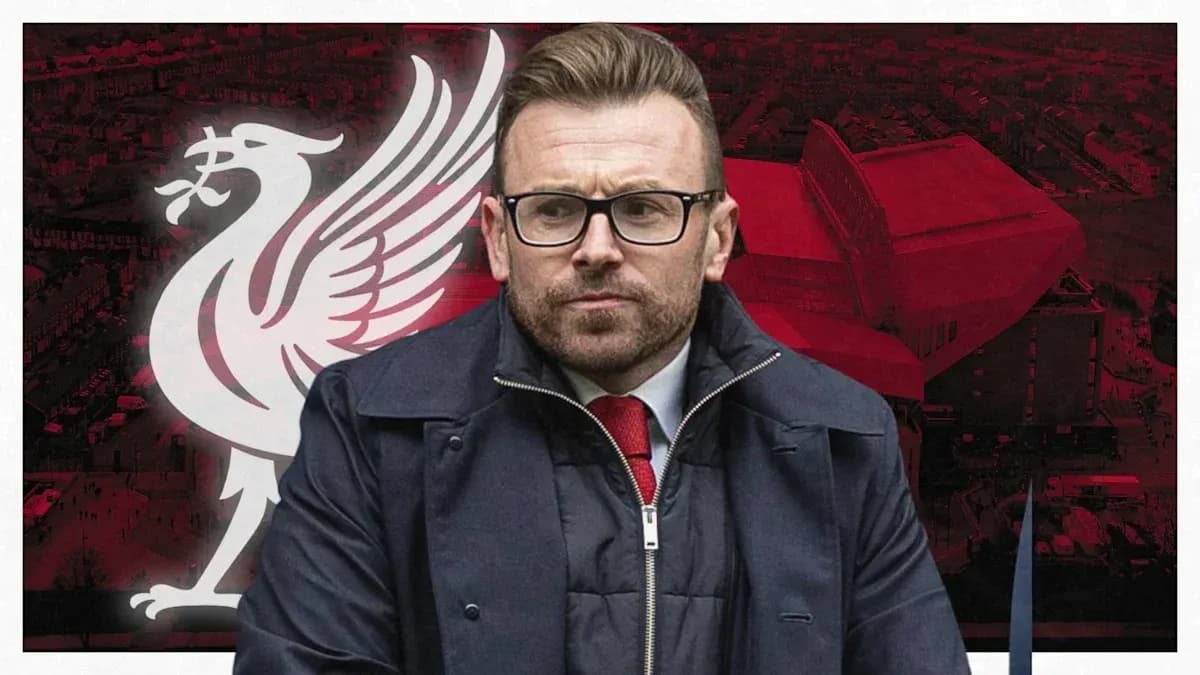
The Republic of Ireland’s autumn Nations League dates with Israel are going ahead. John Martin knows exactly where the anger is being directed – and he is trying to drag it away from the dressing room door.
The FAI Director of Football cut a blunt figure as he addressed the controversy around the September and October fixtures, both being staged on neutral soil and under heavy restriction. Ireland are due to face Israel in Debrecen, Hungary on 27 September, before a ‘home’ game in Backa Topola, Serbia on 4 October.
The association’s decision to fulfil the fixtures survived a bruising test in July. Delegates at an extraordinary general meeting voted 68% to 32% in favour of backing the board’s stance to play. The political, moral and sporting arguments have raged ever since.
The pressure has not eased. Campaigners continue to call for a boycott. The FAI has already confirmed there will be no tickets for Ireland supporters at either game. The September tie will have only Israeli fans in the ground, while Ireland’s designated ‘home’ match will be played behind closed doors.
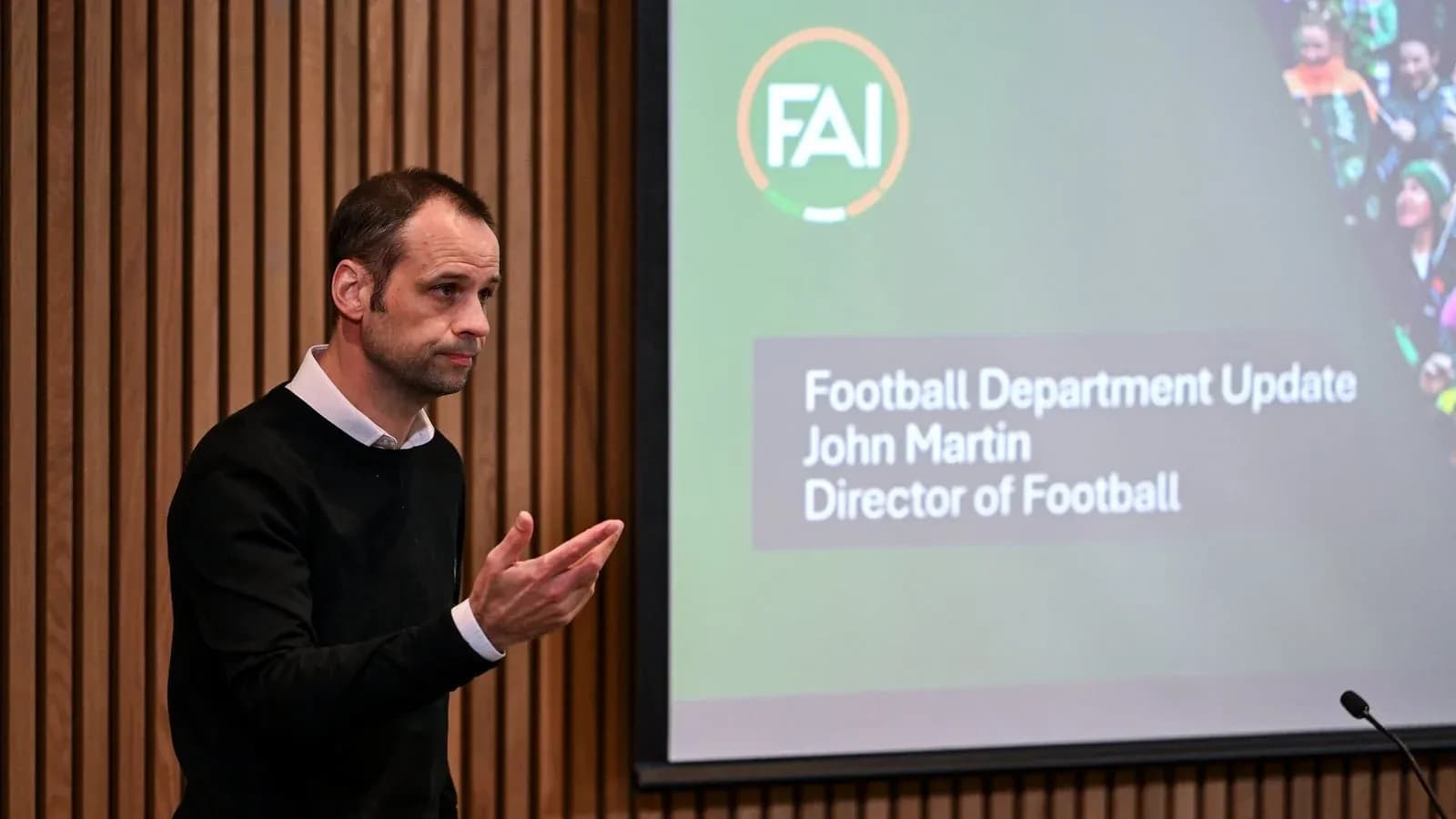
Into that storm walked Martin, who did not pretend to be comfortable with any of it.
“We all agree, and the association has been on the record to say that we don't want to be playing these games,” he told RTÉ Sport. “That is the reality. I don't want to play the games.”
Then came the line that explains why the FAI is pressing ahead.
“For that to impact Irish football, that's where I would maybe disagree with some of the voices, say we shouldn't play the game. I think it's for Irish football we will play the game.”
In other words: the fear of UEFA sanctions – and the damage they could inflict on the wider game in Ireland – outweighs the desire to walk away.
Shielding the dressing room
Martin’s most urgent message, though, was not about UEFA or governance. It was about the players.
“It's really hard on the players because I think someone said, ‘oh, it's falling on the players’. It always falls on the players in a performance environment,” he said.
“In this situation, the decision shouldn't fall on the players because it's not at the player's decision. It was a decision made by the association, by the board and by the executive.
“People like me and David Courell made this decision, not the players.”
That is as clear a line in the sand as any official can draw. Martin knows that, once the whistle blows, cameras and criticism tend to drift towards those in boots, not suits. He is trying to drag the spotlight back onto the boardroom.
“We need to protect the players and look after the players because we shouldn't find a situation where they’re being criticised,” he said. “People can criticise me and David, that’s fine, and people are getting heavily criticised over it. It's a deeply uncomfortable situation for us to be.”
The FAI has already accepted that some players may not feel able to take part. Martin stressed that involvement will be a matter of conscience.
“It's a personal choice for the player,” he said. “We have a fantastic manager in person in Heimir who will manage that. But at all stages, we need to mind the player, but you always need to mind the player.”
“You should never forget the player. We’re always mindful of the environment the player is in and we need to protect them as best as possible.
“It [is] going to be really difficult because it does fall on them naturally because they're on the pitch.
“But I would hope people can see that they're following the lead of the association and following the decision that the association took, as opposed to putting them at the centre.”
The message is unmistakable: whatever side of the debate you’re on, Martin wants the argument aimed at him and the FAI hierarchy, not at those named on the teamsheet.
Third‑party ownership probe casts a separate shadow
While Martin wrestles with one controversy in his current role, another issue from his past has re-emerged.
The Sunday Times reported that the FAI is investigating alleged third-party ownership breaches involving Shamrock Rovers players Michael Noonan and Alex Noonan. The agreements in question date back to Martin’s time as Rovers CEO.
The case is sensitive. Third-party influence remains a red-flag area for FIFA, and the FAI is now seeking documentation to establish whether any rules were broken. Martin, now employed by the association, insists he has not been asked to step aside despite the potential conflict of interest.
Crucially, he is not part of the FAI team conducting the investigation.
The chain of events is already public. Earlier this year, a complaint was made by Michael Noonan’s mother to the English FA regarding agent agreements. Shamrock Rovers then announced they were working with FIFA to review two agreements, stressing that the club itself was not the focus of the inquiry. The case has since been referred back to the FAI, who are now trying to piece together the facts.
Martin has long maintained he is comfortable with his record at Tallaght Stadium, and he did not shift from that position.
“I'm very comfortable about my time from Shamrock Rovers, exceptionally comfortable,” he said. “I can't comment. I'll leave that to other people to figure that out. It's not something I'm worried about.”
Asked directly if there had been any request for him to stand down while the probe continues, his answer was short and sharp.
“Absolutely not,” he replied.
He admitted the constraints of the process grate on him.
“It is frustrating because there's things that I'd like to be able to go into more detail on,” he said. “I've been incredibly dignified, professional and respectful of the club. I intend to continue being dignified, professional and respectful towards the law because I think someone in my role needs that.
“I don't think Irish football needs people to be talking public negatively about each other because that damages the perception of the game. I'm a naturally positive person. I've only good things to say about the club. It's a situation I can't talk about. But I'm in no way worried about it.”
Two separate storms, then, swirling around the same figure at the heart of Irish football. One about where Ireland should play. The other about what happened at a club he once ran.
Martin has chosen his stance on both: take the heat himself, keep the players out of the firing line, and let the investigations and fixtures run their course. The real test will come when Ireland walk out in Debrecen and Backa Topola – and the world sees who actually steps onto the pitch.