.svg&w=384&q=75 "logo")
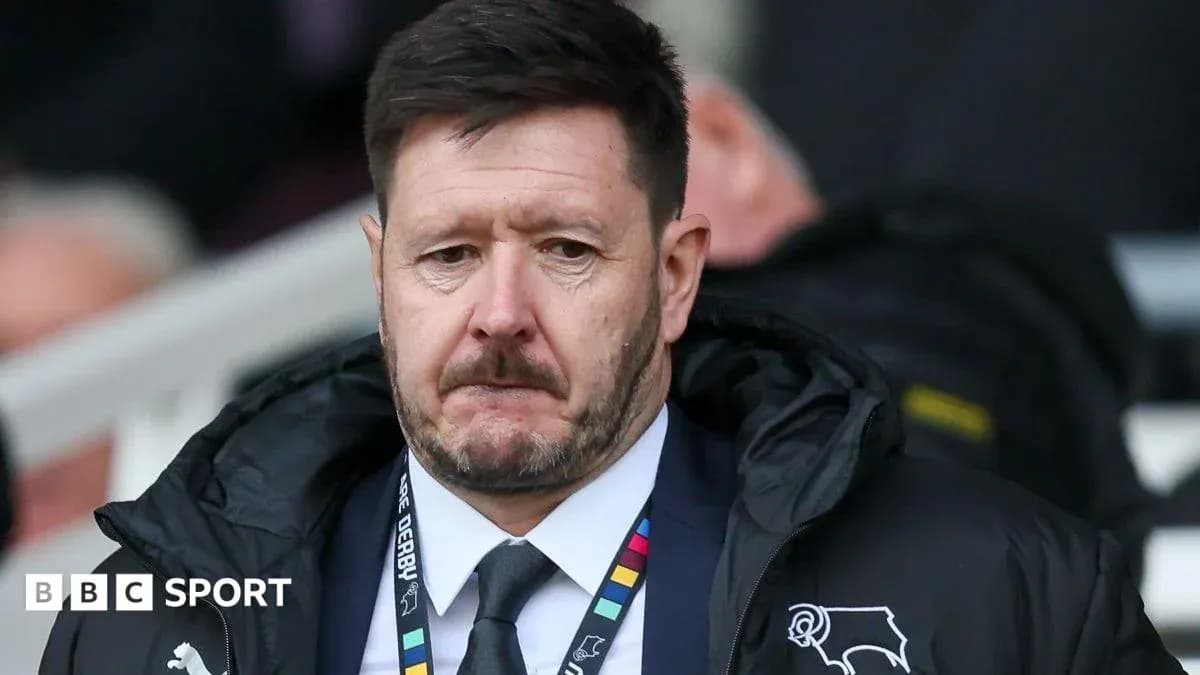
Derby County's Owner Doubles Down After Failed Takeover
An hour from goodbye, Derby County’s owner chose to double down instead.
David Clowes, the Derbyshire property developer who dragged Derby County out of administration in 2022, was on the brink of handing over the club in August. The paperwork was in place. The Independent Football Regulator had signed it off, the EFL had given the green light, and Turki Al‑Sheikh – a powerful Saudi government official and heavyweight player in global boxing – was ready to become the new owner of a Championship club with Premier League ambitions.
Then, at the last moment, it vanished.
Al‑Sheikh abruptly withdrew. No gradual cooling, no drawn-out haggling. Just a deal that, as chief executive Stephen Pearce put it, collapsed “completely out of the blue” about an hour before Derby believed it would be completed.
“The wind was taken out of our sails, totally,” Pearce told BBC Radio Derby, reflecting on a summer that left the club suspended in mid-air. For weeks, Derby operated in what he called a “holding pattern”, waiting while the bid went through scrutiny and approvals, their transfer plans hovering in limbo as the clock ticked down on the window.
Then the deal died. The question was what came next.
Owner who spent to sell – and then stayed
What followed says plenty about Clowes’ grip on Derby County and his determination to chase promotion on his own terms.
Even as the takeover process moved towards what everyone thought was the finish line, Clowes had already signed off a substantial transfer budget. He funded moves that, on paper, would almost certainly benefit someone else.
- The club spent £6m to bring Bobby Clark in on a permanent deal from RB Salzburg.
- They agreed a loan-to-buy for Sam Szmodics from Ipswich, worth £2.7m.
- Around £600,000 went on Alex Mowatt from West Bromwich Albion.
All three deals went through while Clowes believed he was about to sell.
“This is why he’s such an incredible owner,” Pearce said. “He thought the takeover was going to happen, he knew he was never going to get a penny back for all of that money he spent on those players and he still did it.”
He could have frozen everything. He could have told Pearce and head coach John Eustace that the club had to sit tight, wait for the new regime, and accept that every extra pound spent was money he would never see again.
“And he didn’t. He backed it regardless and that’s why we’re in such a strong position,” Pearce said.
The plan, for a long time, had been clear. Clowes had never hidden his wish to bring in fresh investment to fuel a serious push back to the Premier League. After a season in which Derby finished just outside the play-off places, the agreement with Al‑Sheikh looked like the rocket fuel.
Instead, when the deal imploded, Clowes pulled Derby off the market.
Off the market, still on the march
There was no fire sale, no retreat. Clowes stayed in charge and pushed on with the squad rebuild he had started while expecting to walk away.
The biggest statement after the aborted takeover came in the form of David Ozoh. Derby spent £4m to prise him from Crystal Palace, the largest single outlay since the failed deal. Around him came a string of free transfers and loans, including a deadline-day reunion with Eiran Cashin.
The pattern was unmistakable: this was not an owner bracing for impact after a collapsed sale. This was an owner doubling down on his original promise.
So did the disrupted summer stall Derby’s climb towards the Premier League? Pearce didn’t hesitate.
“Not in the slightest, otherwise we wouldn’t have spent all the money we’ve spent,” he said. “We want to push on. We want progression this season.”
Derby were an hour away from changing hands. Instead, they head into the campaign with the same owner, a heavier wage bill, and a squad built on the assumption that promotion is not a dream but a target.
The margin between those two futures was razor-thin. The ambition, clearly, is not.