.svg&w=384&q=75 "logo")
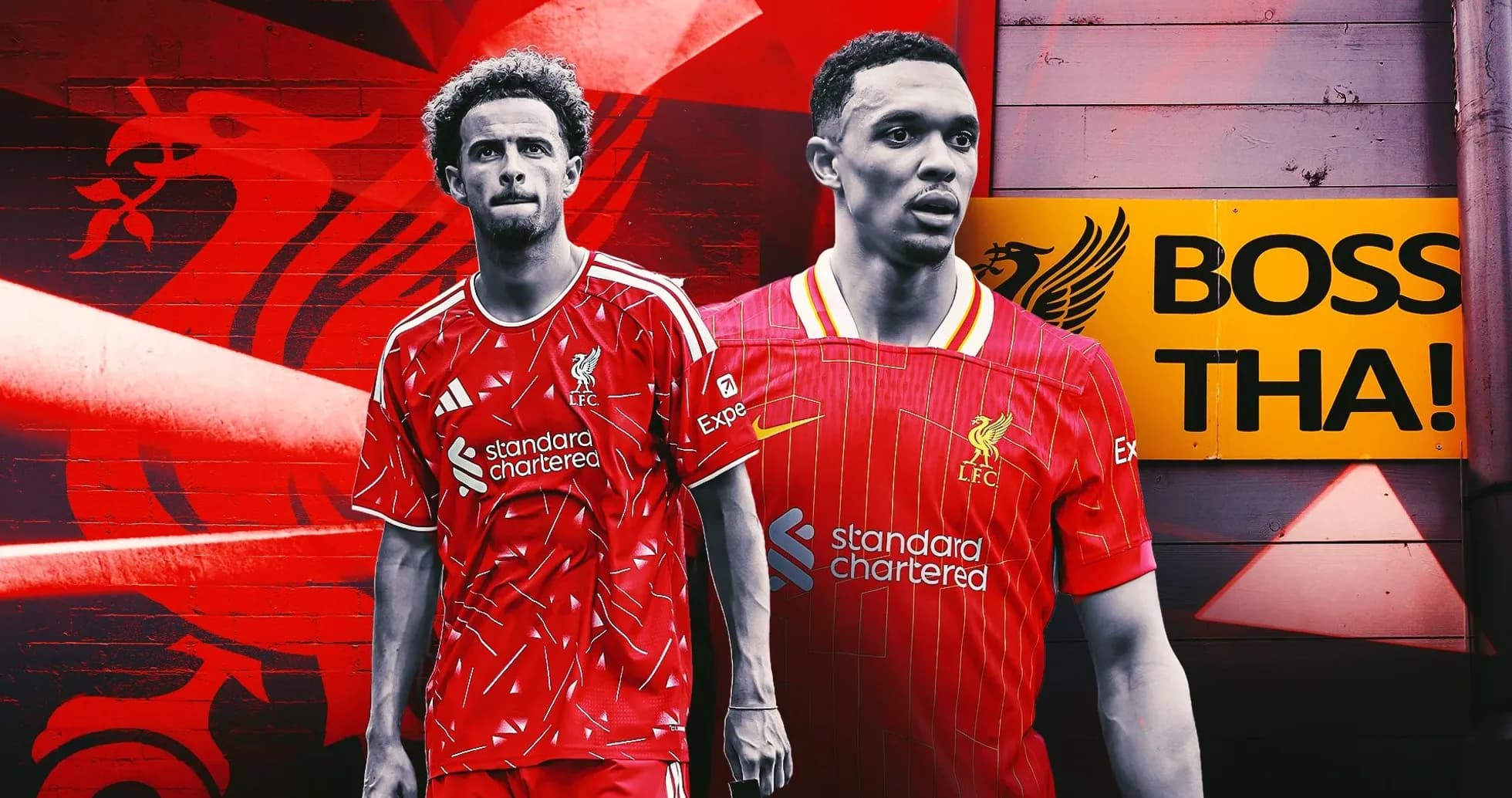
Curtis Jones Leaves Liverpool: A Scouser's Departure
Curtis Jones’ departure from Liverpool was a long time coming, but when it finally landed on August 21, it still felt like something more than a transfer. It felt like a line being crossed.
Liverpool did not want to lose him. Inter did not overpay to get him. And the club that once prided itself on a heartbeat that thumped to a distinctly local rhythm suddenly woke up without a single Scouser in its senior squad.
For Liverpool, that is not just a statistic. It’s a warning sign.
A Scouser Walks Away
Jones had reached the final year of his contract. He was not going to sign another. That much was clear inside Anfield long before Inter came calling.
The 25-year-old had grown up dreaming of the Kop, yet by the end he was playing as an emergency right-back, a square peg hammered into a round hole as last season fizzled out. Arne Slot’s sacking didn’t reset anything for him. Under Andoni Iraola, there was no guarantee of a permanent role in midfield, no promise that his best years would be spent in the position he believes is his own.
So he walked. Not in anger, but in search of minutes and meaning.
Liverpool banked £25 million. In a market where relegated West Ham could sell Mateus Fernandes to Spurs for more than three times that figure, it looked like a bargain for Inter and a compromise for Liverpool. The fee stung. The lack of an obvious replacement stung more, especially with Iraola so open about needing more bodies in midfield.
Yet the coach had also been clear about Jones’ value, and not just with the ball at his feet.
“It’s very important that he’s Scouse, that he’s from here,” he said in July, when the midfielder’s future still hung in the balance.
A Basque Coach, A Scouse Problem
Iraola’s stance made perfect sense. A proud Basque who spent most of his career at Athletic Club, he knows what it means when a player doesn’t just wear the shirt but shares the streets, the accent, the history.
On Liverpool’s pre-season tour in the United States, he drew the comparison himself.
“I see a lot of similarities between Liverpool and Bilbao,” he said. “This sense of belonging, of being a little bit different, and this connection, also, with players from the academy.”
That connection now feels thinner than ever.
With Jones gone, Liverpool will start the season without a single Scouser in the senior squad. In modern times, that is unprecedented. At a club that has always sold itself as a reflection of its city, it is also deeply uncomfortable.
Money, Power and a Shifting Club
The tension between Liverpool and its local fanbase did not begin with Jones’ move. It has been building for years.
Fenway Sports Group rescued a club on the brink of financial collapse and turned it into one of the most profitable operations in world football. On the balance sheet, it is an extraordinary success story.
In the stands, the picture is less clean.
Supporters’ groups such as Spirit of Shankly have railed against rising ticket prices, arguing that the people who built the club’s culture are being slowly priced out. “Matchday income represents a relatively small proportion of total revenue yet comes at the expense of affordability, loyalty and trust,” SOS wrote in an open letter to FSG earlier this year.
Then came last month’s news: 1892 Holdings, a consortium backed by Amazon founder Jeff Bezos, had acquired a 38 percent stake in the club and could complete a full takeover within a year. If fears about the club drifting from its roots were already loud, that development turned up the volume.
Kieran Maguire of The Price of Football Podcast summed up the mood when he spoke to GOAL at the time. Liverpool, he pointed out, is a proud working-class city. The long-standing anxiety that the traditional fanbase is being marginalised has only deepened.
“A lot of supporters are already concerned that more tickets will be going to more rich people, and for extortionate prices, and that would continue to dilute what makes a trip to Anfield unique,” he said. For the people of Liverpool, the club is “far more than a tourist attraction,” and the fear is of a continued “Disney-fication” of something that forms part of the city’s history, heritage and identity.
Strip away the Scouse voices on the pitch, and that fear only grows.
Gerrard’s Red Line
Steven Gerrard didn’t bother dressing it up. The club’s former captain, academy coach and the defining Scouse figure of the modern era admitted earlier this summer that he was flatly against selling Jones for one blunt reason: he is one of their own.
“I just think that, naturally, being around Liverpool, growing up in the city, we understand the demands of the club, the style, what the fans want,” he told BFM Radio. “It’s embedded in us because we know the city inside out.”
For Gerrard, the academy is not a nice-to-have. It is the artery that keeps the club connected to its people.
“If you look back, Michael Owen, Jamie Carragher, Robbie Fowler, Steve McManaman, Trent Alexander-Arnold, myself, even the likes of players like Jay Spearing and Stephen Warnock who don’t play the same amount of games, they come into the team and they understand the values and the principles of what we’re about.”
That list is not just nostalgia. It is a roll call of players who carried the city onto the pitch.
Now, with Alexander-Arnold gone and Jones following, that line has been broken.
Carragher’s Unease
Jamie Carragher, another standard-bearer of that tradition, has been left questioning the club’s direction in a different way: recruitment.
“What we did last summer, I didn’t really like it,” he told Football Ramble. “It felt like a Real Madrid summer – Florian Wirtz, Alexander Isak, we’re gonna get Hugo Ekitike, another striker, for £80m even though we’ve got one for £125m.
“This summer, it’s all about Bradley Barcola. What about the days we had before when we built that team under Klopp and we were getting players who people weren’t quite sure about and getting great value? I almost want to go back to that.”
He is not alone. Anfield once thrived on smart, hungry signings who grew into the shirt. Now the club’s four most expensive transfers have all arrived in the past two summers, and the path from Kirkby to the first team looks steeper than ever.
The numbers tell their own story. With Barcola signed from Paris Saint-Germain just before the window closed, Liverpool could field three players costing over £100m in Friday’s Premier League opener at Ipswich Town. Iraola, though, will not have a single local lad in his squad.
Academy Faces, Different Reality
The academy has not vanished. It has just changed shape.
Rio Ngumoha, brought in from Chelsea, is technically a former youth-team player. Trey Nyoni, who sat unused on the bench during the Carabao Cup win over Chelsea that made Jurgen Klopp so proud, is expected to have a significant role this season. Lewis Koumas’ strike partner Jayden Danns, once fit again, could also re-emerge in the first-team picture, especially with Isak the only orthodox No.9 and Ekitike not expected back until 2027.
Those are hopeful threads. But they are not the same as a Gerrard or a Carragher or an Alexander-Arnold stepping out to “You’ll Never Walk Alone” with the accent of the stands ringing in their voice.
The recruitment strategy has shifted. The club is richer, glossier, more global. For young Scousers, the door has never looked heavier.
A Unique Night, A Vanishing Soul
Klopp once called Liverpool’s Carabao Cup triumph unique. He meant the sheer audacity of winning a major trophy with a team packed with kids, a patched-up squad defying logic and fatigue.
He may have been more right than he knew.
That night now looks like the end of something as well as the peak. A team that still carried a sense of Scouse soul, still felt unmistakably like Liverpool, lifting silverware in a way that might never be repeated.
Not because the club can’t win trophies with youth again. Because somewhere along the way, in the rush for revenue, superstars and global reach, too many people around Anfield seem to have forgotten a simple truth.
For Liverpool, having a Scouse soul has always meant more than everything else. What happens when that soul no longer steps onto the pitch?