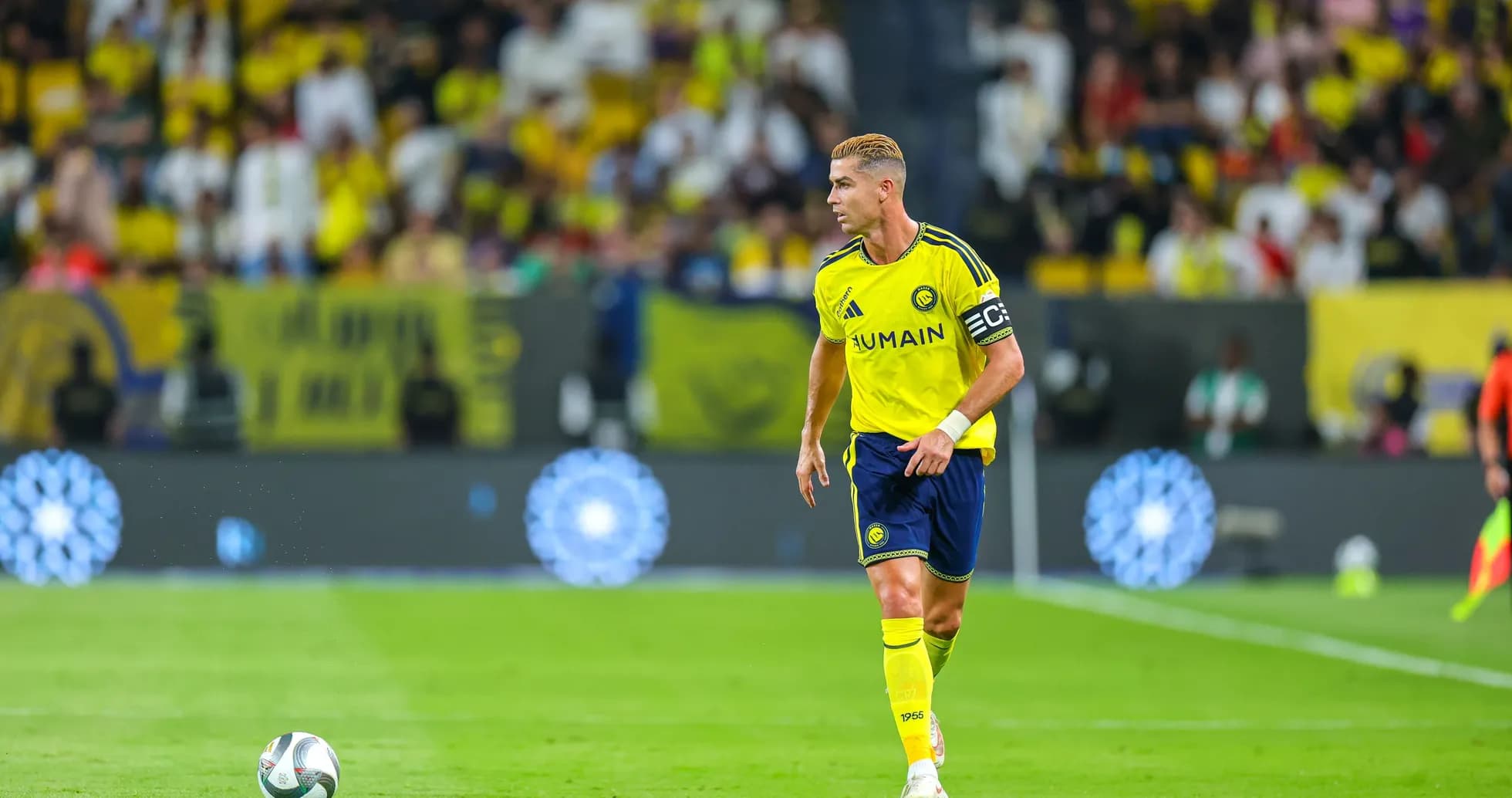
Cristiano Ronaldo's Tactical Masterclass Against Abha
Cristiano Ronaldo did not play as a classic No. 9. He tore up that script.
From the first whistle, the Al-Nassr captain roamed everywhere, drifting deep into his own half, sliding into midfield pockets, then exploding into the spaces behind Abha’s back line. He treated the pitch like a chessboard, not a penalty box.
He read the spaces with the eye of a playmaker. At times he dropped almost to the centre-circle, dragging a centre-back with him and ripping a hole in Abha’s defensive shape. One moment he was linking passes in the build-up, the next he was sprinting past the last man, hunting the ball over the top.
Abha’s defenders never found a reference point. They looked for a fixed striker to mark and discovered a moving target instead. Ronaldo popped up wide, then central, then vanished from their line of sight before reappearing exactly where the danger lived.
The key was that he didn’t drift for the sake of it. Every movement had a purpose. When he retreated into midfield, he invited pressure, pulled a defender away, and created a lane for a teammate to burst through. As the attack developed, he timed his run back into the area, turning from architect into finisher in a handful of strides.
This was not a performance built on raw speed or brute force. At 42, Ronaldo leaned on something sharper: his brain. He offered a lesson in timing, angles, and anticipation, showing how a forward can control a game without constantly racing in behind.
And yet, the old instincts never left him.
For all the tactical subtlety, he still did what has defined his career. He scored. The opener for Al-Nassr arrived in familiar fashion: Ronaldo rising above his marker to meet a cross and thump a header home. It was a reminder that, even as his role evolves, he remains lethal when the ball is delivered into the box.
That goal stitched together both sides of his night. The creator who had spent long spells outside the area suddenly became the predator inside it. He helped shape the move, then finished it, turning territorial dominance into something that actually counts.
His influence ran through every phase. He didn’t just wait for service; he helped build it. His constant shifting pulled Abha’s back line out of position, opened passing lanes for teammates, and set the rhythm of Al-Nassr’s attacks. When the chance finally arrived, he was already where he needed to be.
The man-of-the-match award underlined what the eye had already seen: this was one of his most complete displays in an Al-Nassr shirt, technically sharp and tactically rich.
The numbers told the same story. Ronaldo posted an 8 out of 10 rating, unleashed 8 shots with 4 on target, created two key chances for others, and completed a dribble. The stat line backed up the impression on the pitch – a forward involved in everything, not just the final touch.
One goal was enough to settle the argument. His value stretched far beyond the scoreboard. His movement disorganised Abha, his passing stitched together attacks, and his presence in the box delivered the finish that separated the sides.
Questions will keep coming about how long he can hold this level as the years stack up. Abha, though, saw a version of Ronaldo shaped by time, not beaten by it – a forward who now wins matches with his mind as much as with his body, and still finds the net when it matters.