Celtic's Struggles: Conviction Lost After Ibrox Defeat
Celtic look broken. Not just bruised from Ibrox, not merely off-colour on a European night, but stripped of the conviction and clarity that once defined them. For a support raised on Martin O’Neill as a figure of certainty, doubting him feels close to heresy. Yet every new concession, every soft goal, every flat performance pushes that faith closer to breaking point.
Four days after being dismantled at Ibrox, Celtic walked into another beating, this time from Ferencvaros. Three more goals shipped. The same old mistakes. The same alarming drift.
The midfield wandered. The back line sagged. Possession passed sideways and backwards with all the threat of a training drill. Basic patterns of pass and move broke down. The ball was treated like an inconvenience rather than a weapon. The tempo rarely rose above pedestrian.
At 3-1 down, there were flickers of defiance, long-range efforts that looked more like prayers than plans. No coordinated press, no wave of pressure, no sense of a team hunting together. Just pot-shots from distance and hopeful crosses. It felt like watching a memory fade.
Under Ange Postecoglou, Celtic played with a wild, attacking courage. They suffocated opponents, pulled defences apart with angles and speed, and trusted their bravery on the ball. This version is a hollow echo of that side – the shape is familiar, the intent is not.
The ghosts of old failures hovered over this one. Cluj, Copenhagen, Sparta Prague. The Legia Warsaw collapse, the Salzburg and Maribor traumas. Nights when Celtic looked not just beaten, but bewildered. On Thursday, that same confusion seeped into every misplaced pass and every hesitant challenge.
The crowd knew it. The energy in the stands dropped as quickly as it did on the pitch. Boos cut through the night, not just for the result but for the manner of it – a big club looking small, a proud team looking lost.
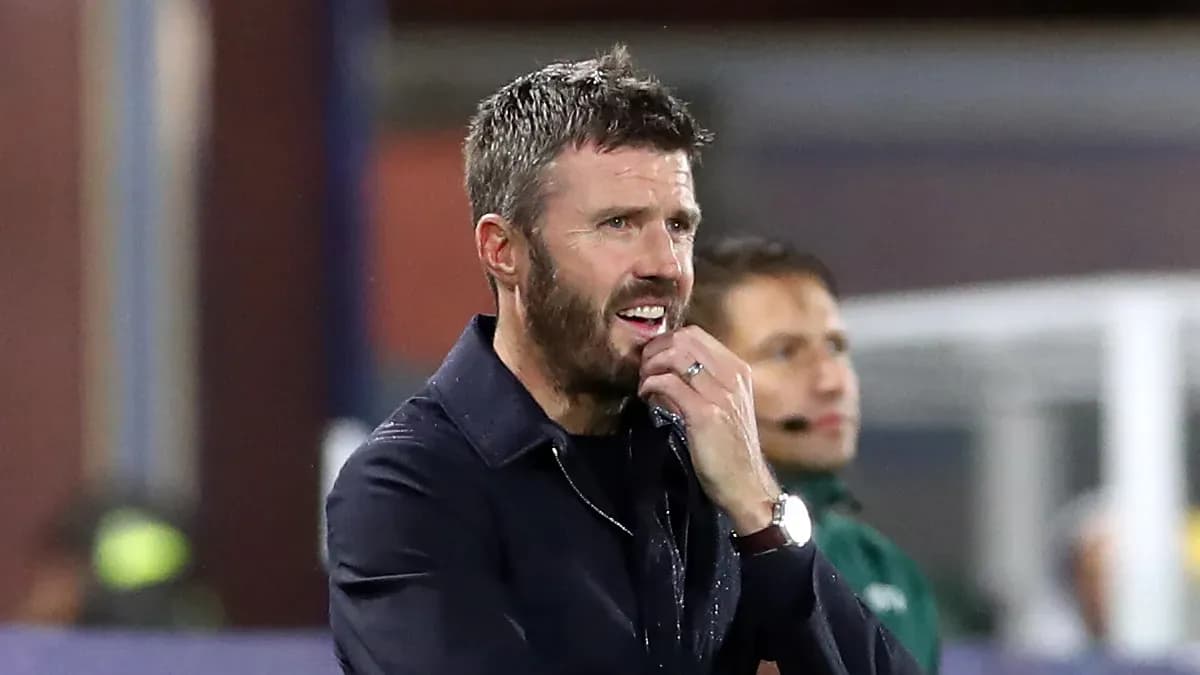
O’Neill fronted up afterwards. He talked about frustration and failure, about the psychological scars that nights like this leave. He promised to “get ourselves together” for Rangers on Sunday, but the delivery didn’t land with the force of a rallying cry. His words trudged along, heavy and tired, much like his team.
He listed the shortcomings. He did not sound like a man holding the masterplan. In truth, his post-match demeanour matched the performance: flat, stale, and worryingly short on inspiration.
This is the manager who once imposed order on chaos, who returned last season and dragged Celtic from disarray to a title charge that turned them into a machine. They were rugged, relentless, hard to beat. In the run-in, nobody did. That steel has vanished.
They actually started reasonably against Ferencvaros. Some control, some possession, a hint of purpose. Then came the first soft concession. One lapse, one moment of slackness, and Celtic were behind. They responded with a flash of quality to level, a reminder that there is still talent in this squad, but the surge never came. Instead, they retreated into their shell.
Safe passes. Little edge. Barely a spark of anger or emotion. The second goal, just before half-time, summed up everything wrong with them. A loose ball not attacked with conviction. A cross allowed far too easily. Defenders caught in no-man’s land, unsure who to pick up, who to track, who to trust.
By the interval Celtic had enjoyed 62.5% of the ball and still trailed 2-1. It was possession without purpose, dominance without danger.
Up front, Camilo Duran led the line in his preferred central role, preferred to Kasper Hogh. He touched the ball only eight times in the first half. Eight. A player who arrived in Glasgow buzzing with enthusiasm, who spoke and played like a man in love with his new surroundings, now looks drained of that early spark.
Hogh’s decline may be even more jarring. This is the striker who scored against Manchester City, Atletico Madrid, Inter Milan, Sporting, Porto, Jagiellonia and Olympiacos for Bodo Glimt. A ruthless, mobile finisher in Europe, now reduced to an awkward figure up front, first touch deserting him, starved of chances, confidence ebbing away.
One goal in eight games as a Celtic player is not what £11m is supposed to buy. O’Neill has not yet worked out how to unlock him. Right now, Hogh is a symbol of the wider problem: talent misfiring, weapons blunted.
Even Callum McGregor, the emotional and tactical heartbeat of this side, looks adrift. Normally the metronome, the guide, the one constant amid the churn, he now cuts the figure of a player carrying too much and solving too little. If McGregor is “a little bit broken”, as he admitted, what does that say about the rest?
Then came the inevitable twist. Daniel Arzani, the former Celtic winger whose time at the club barely registered, stepped out of the shadows to twist the knife. Of course he did.
The goal was a humiliation. Celtic over-committed, Colby Donovan stranded upfield, the shape ripped apart on the counter. Arzani found himself in oceans of space on the left, time to think, time to pick his spot. He steadied himself, waited, and whipped a stunning strike into the top corner. It was clinical. It was calm. It was everything Celtic were not.
The defending belonged in a slapstick reel. “More order in the Keystone Cops” felt about right.
O’Neill now faces a brutal turnaround. He needs solutions – not one or two tweaks, but a full reset of mindset and structure. His team currently lack ideas, conviction, composure, physical presence, mental resilience, creativity, ruthlessness and, perhaps most damning of all, the appetite for a fight.
The manager himself looks short of inspiration. His career tells you he knows how to survive storms. He has rebuilt broken dressing rooms before. But this job is mounting up: a fragile defence, a blunt attack, a captain searching for answers, a fanbase running out of patience.
Across the city, Rangers will have watched all of this with interest. A “wounded animal” is the cliché, but Celtic right now look less dangerous and more dazed. Rangers will fancy their chances of landing another heavy blow at Celtic Park.
The danger for O’Neill is clear. A response on Sunday doesn’t just feel desirable; it feels essential. The season’s story between Glasgow’s giants is still being written, but the next chapter, at Celtic Park, may tell us exactly how much fight this Celtic team have left – and how much authority their manager still truly holds.