Battle for 2030 World Cup Final: Morocco vs Spain
The battle for the 2030 World Cup final has moved from boardrooms to the political stage – and Morocco’s own prime minister has stepped in to cool the rhetoric.
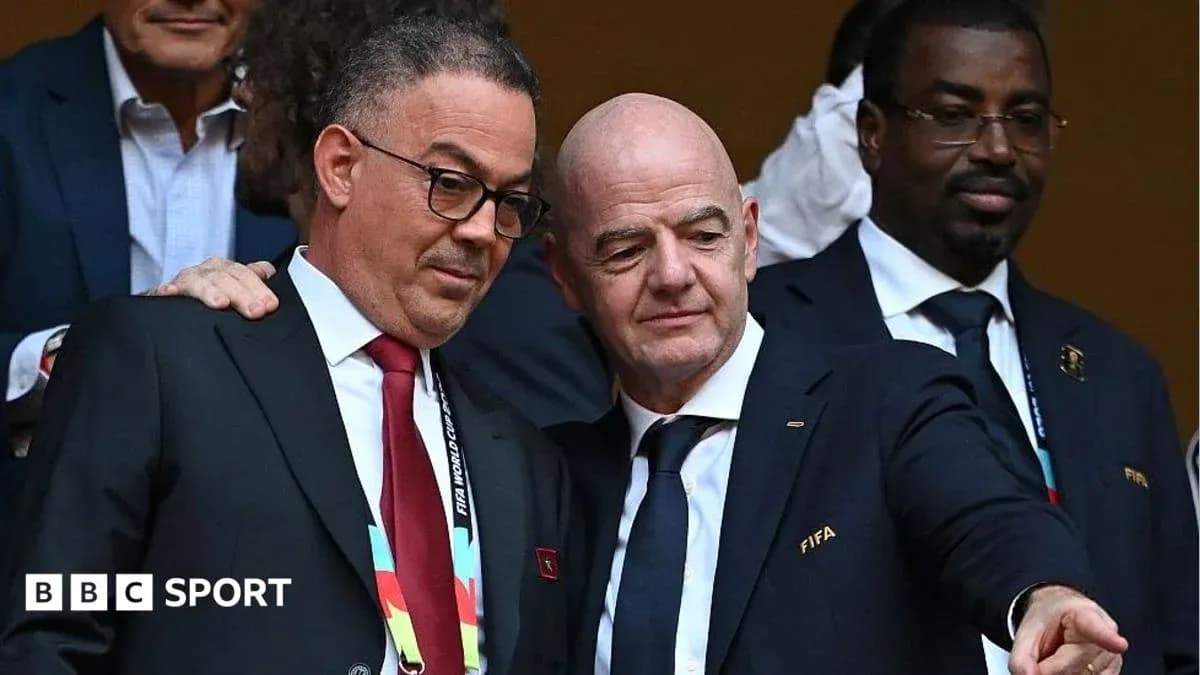
Aziz Akhannouch has publicly rebuked Fouzi Lekjaa, the powerful president of the Moroccan football federation (RMFF), telling him to stop promising that Casablanca will host the showpiece match of the tournament Morocco is due to co-stage with Spain and Portugal.
The message was blunt. And delivered in front of a crowd.
Political warning in Rabat
Speaking at a rally, Akhannouch addressed Lekjaa directly after the federation chief had recently declared that Casablanca would have the “honour” of staging the 2030 final.
“Do not offer to host the big final game in Morocco while we still have not discussed the matter with our allies, Spain and Portugal,” the prime minister said.
Then came the sharper line, aimed at the domestic political temperature as much as international diplomacy.
“There should be some respect, brothers. Stop using electoral promises to pull the rug out from under us. These are huge matters. Deciding where the final will be held is a major issue.”
Lekjaa’s original comments had played well at a political party event, tapping into a wave of national pride around Morocco’s role as co-host and its ambitious stadium plans. But they also cut across a process that remains firmly in FIFA’s hands.
World football’s governing body has already confirmed that “a decision will be made in due course” on the venue for the final, underlining that nothing has been signed off yet.
Spain turns up the volume
While Morocco’s prime minister was urging restraint, Spain has been moving in the opposite direction – talking up its own claim to the final.
Rafael Louzan, president of the Spanish football federation (RFEF), has previously stated plainly that he expects the final to be played on Spanish soil, and he believes recent history strengthens that case.
“Even though no decision has been taken, I believe Spain is the place because it cannot be any other way,” he told Cadena SER. “As you know, we are currently world champions.
“I believe Spain’s organisational capacity for major events is beyond question and that is why reality dictates that the grand final cannot and must not be held anywhere other than in Spain.”
Spain’s men’s team beat Argentina to lift the World Cup in July, their second global title, adding sporting clout to Louzan’s argument that the country should also host the tournament’s grand finale.
The Spanish bid also leans heavily on infrastructure. Real Madrid’s revamped Bernabeu now seats around 83,000 and has been remodelled with major global events in mind. Barcelona’s Spotify Camp Nou, once its renovation is complete, is expected to hold 105,000 – a capacity that would rival any venue in world football.
Stadiums, symbolism and a centenary
The 2030 World Cup already carries unusual symbolism. While Morocco, Spain and Portugal will be the formal co-hosts, the opening three matches are set for Uruguay, Argentina and Paraguay, a nod to the competition’s 100th anniversary and its origins in South America.
A proposed list of host stadiums across the three main co-hosts is on the table but not yet finalised. The biggest question of all – where the final will be staged – remains officially open.
Morocco is pushing hard on that front. The country is building a proposed 115,000-seat stadium, which, if realised as planned, would become the largest football arena on the planet. For Casablanca and for Moroccan football, landing the final would be a defining moment.
Spain, by contrast, leans on proven pedigree. The Bernabeu has long been a stage for Champions League finals and international showpieces. A modernised Camp Nou, with a six-figure capacity, would give Spain another heavyweight option.
History offers a reminder of how late these calls can come. For the 2026 World Cup, New Jersey’s MetLife Stadium was only confirmed as the venue for the final in February 2024 – just two years before the tournament kicked off.
So the political jostling has started early, but the decision-makers in Zurich are in no rush. Morocco wants its new colossus to host the biggest game of all. Spain insists the final belongs in a country that has just reclaimed the world crown.
Between now and FIFA’s verdict, the contest off the pitch may prove as fierce as anything that happens on it in 2030.