Barça Dominates Feyenoord 5-1 in Champions League Opener
On a wet night made for mistakes, FC Barcelona chose to put on a show.
Feyenoord arrived hoping to spoil the opening act of Barça’s Champions League campaign. They left drenched, dazed and beaten 5–1, swept away by a ruthless attacking performance that felt, at times, like an exhibition.
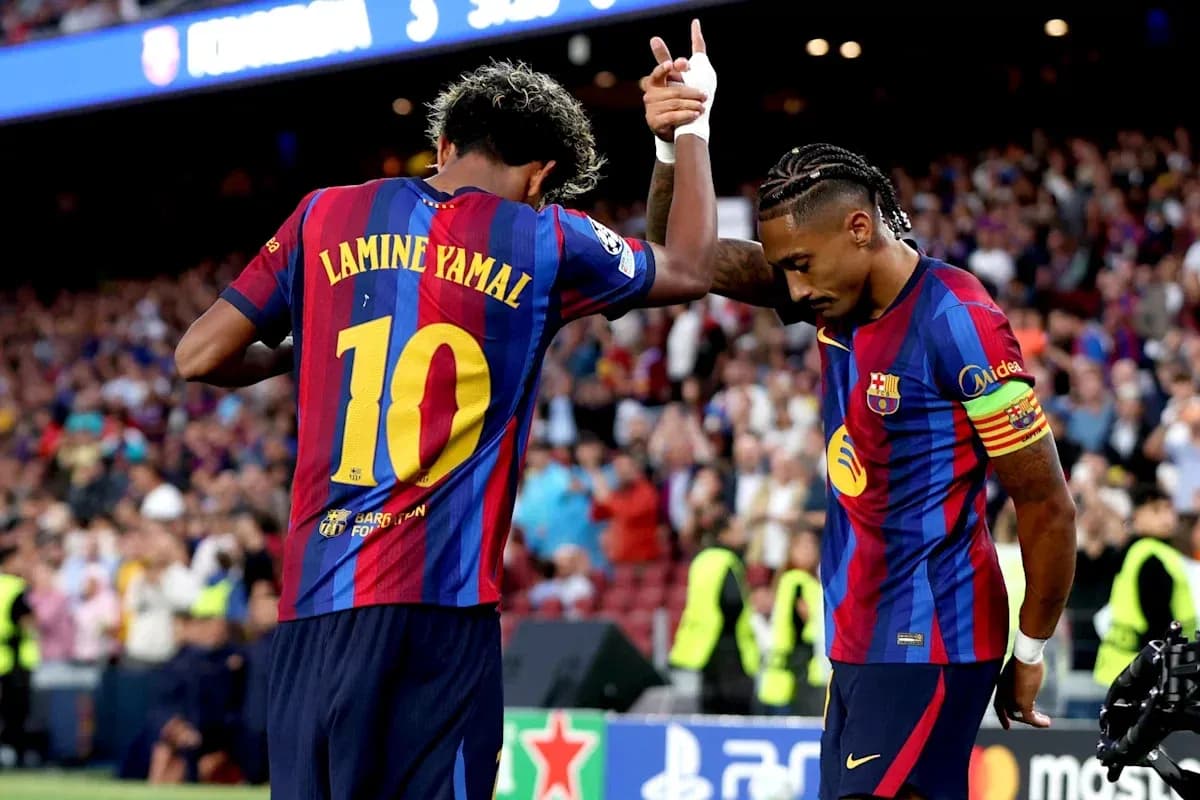
Raphinha struck twice. Karim Adeyemi, Lamine Yamal and Gabriel Jesus added one each. The scoreline told the story. The manner of it told something more: this is a team that wants to dominate Europe again, not just take part.
Raphinha leads the charge
From the first whistle, Barcelona attacked with a kind of joyful aggression. The rain slicked the pitch, the ball zipped, and Raphinha seemed to move faster than everyone else.
His first goal set the tone, a sharp finish that rewarded Barça’s early pressure. Feyenoord tried to play out, tried to breathe, but every misplaced touch invited another wave of blaugrana shirts.
The Brazilian’s second arrived as the pressure finally told. By then, Feyenoord’s back line looked stretched and unsure, dragged wide by movement and undone by quick combinations in and around the box. Raphinha didn’t just finish; he dictated the tempo of Barça’s attacks, cutting inside, drifting wide, constantly asking questions.
Afterward, he brushed off talk of individual glory, insisting he talks “about Barcelona” rather than the Ballon d’Or. On this evidence, his football is doing enough talking.
Lamine Yamal, again
If Raphinha drove the performance, Lamine Yamal lit it up.
The teenager’s goal added another line to a rapidly growing story. He found the net again on the biggest stage, in a competition where reputations are made and careers are defined. There was no sense of awe, no hesitation, only the calm of a player who already looks at home in Europe.
Hansi Flick did not hide his admiration. The coach, delighted but still demanding, went as far as to say Lamine Yamal “deserves the Ballon d’Or.” It was a bold statement, but it matched the mood in the stadium. Every time the youngster received the ball, there was a surge of anticipation, a feeling that something was about to happen.
Barça’s attack no longer leans on a single star. It rotates around several. Lamine is already one of them.
Adeyemi strikes, Jesus arrives
Just as Feyenoord tried to regroup, Karim Adeyemi cut through them. His goal underlined how many weapons Barça now possess in transition. One pass, one burst of pace, and the Dutch champions were opened up again.
Then came a moment with its own weight: Gabriel Jesus scoring his first goal for FC Barcelona.
The Brazilian’s finish did more than add gloss to the scoreline. It opened his account in the Champions League for his new club, a landmark that every striker needs. Goals change how a forward walks, how he moves, how he demands the ball. This one, on a night when everything flowed, could loosen whatever was left of the tension.
For a team chasing trophies on multiple fronts, seeing both Adeyemi and Jesus on the scoresheet is no small detail. Depth wins seasons.
Milestones at the back: Garcia and Kounde
All the attacking fireworks unfolded in front of a goalkeeper hitting his own landmark. Joan Garcia, now firmly Barça’s first choice, reached 50 appearances for the club. It is a round number that feels like a starting point rather than a conclusion, a sign that the position is finally settled after years of debate.
In front of him, Jules Kounde quietly matched a piece of club history. The French defender drew level with Eric Abidal as the Frenchman with the most appearances for FC Barcelona: 193 games. Different eras, different teams, same durability.
These numbers matter inside a dressing room. They speak of trust, consistency and the kind of continuity that big clubs often lack when the pressure rises.
Pedri’s landmark in the middle
In midfield, another figure crossed an important threshold. Pedri, still only in the early chapters of his career, played his 250th match in the blaugrana shirt.
Two hundred and fifty games for a club of this size, at his age, says everything about how central he has become. He knits moves together, dictates rhythm, and offers the kind of passing angles that turn possession into dominance.
On a night when the forwards took the headlines, Pedri’s presence in the middle remained the steady heartbeat.
Flick pleased, but pushing for more
Hansi Flick walked away “very, very happy with the team,” and who could blame him? Five goals, one conceded, a statement win to open the Champions League. The football was aggressive, fluid, and ruthless.
Yet even in the glow of a 5–1, the German’s message stayed sharp: now comes the analysis, the search for what can be improved. That balance between joy and demand is what separates a good European night from the start of something more serious.
Barcelona have their perfect start. The rain has washed away any early doubts. The question now is simple: can they make nights like this the norm rather than the exception in this Champions League campaign?