.svg&w=384&q=75 "logo")
Argentine Football to Pause in 10th Minute for Messi Tribute
The ball will roll this weekend in Argentina, but for one minute in every stadium, it will stop for the man who defined an era.
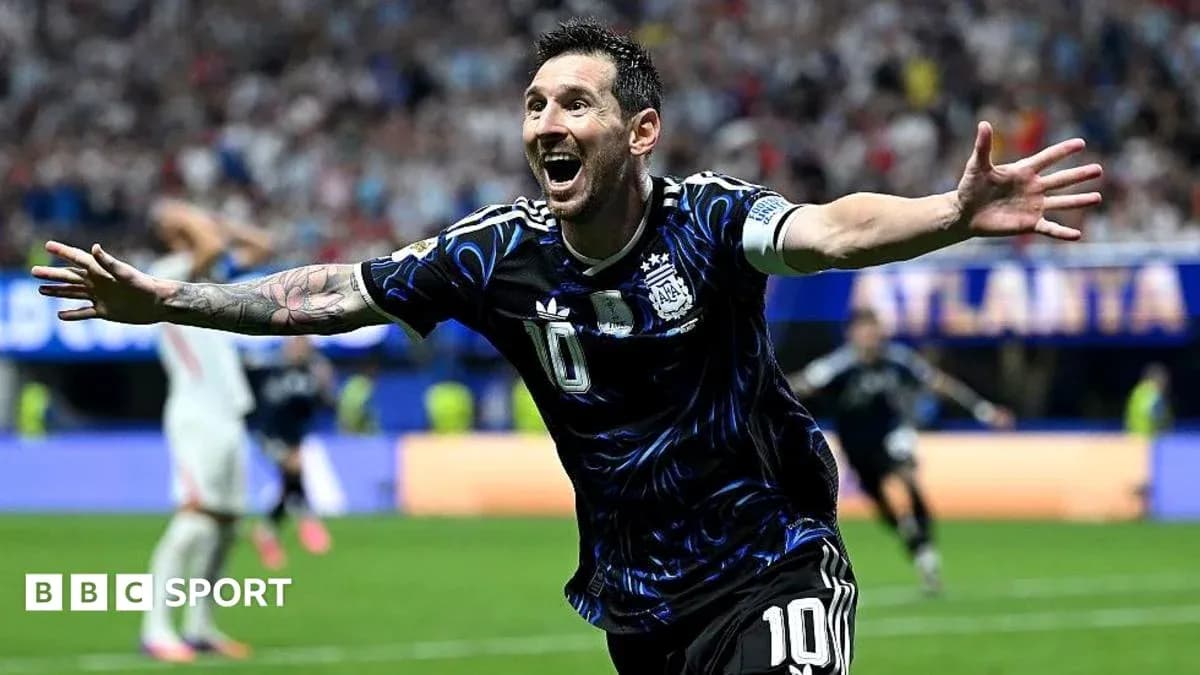
In a gesture as symbolic as the number on his back, the Argentine league will pause all matches in the 10th minute to pay tribute to Lionel Messi, following his retirement from international football. Players will stand, referees will blow their whistles, and the stands will rise into a full minute of applause for the greatest player the country has ever produced.
He is 39 now, the eternal No. 10 who finally drew a line under his Argentina career on Monday. The timing feels surreal. For many, Messi has been there for as long as they have loved the game. Yet his last act in the Albiceleste shirt came in heartbreak: the 2026 World Cup final defeat to Spain in July, four years after he carried Argentina to the summit of the sport in Qatar.
The Argentine Football Association set the tone with a formal but emotional announcement: at the 10th minute of play in all matches, referees will stop the game for “a general minute of applause” in “tribute and homage” to Messi’s career with the national team. The message ended with a simple invitation: “We look forward to seeing you on the fields – join us in this recognition!”
This is not a farewell to a fringe figure. This is the game in a football-obsessed nation pausing to acknowledge a man who has rewritten almost every record it holds dear.
Messi leaves the international stage as Argentina’s most-capped player, with 207 appearances. He first walked away once before, after the Copa America final defeat to Chile in 2016, when he missed in the shootout and Argentina lost a fourth major final in nine painful years. Back then, his retirement felt like a cry of frustration. He returned, and everything changed.
From that low point came the greatest high. Messi went on to lift the World Cup and two Copa America titles with his country, scoring a record 125 goals in the process. The image of him in Lusail, drenched in gold and blue, holding the World Cup aloft in 2022, will live far longer than any statistic.
Yet the numbers still tell a staggering story. He is the second-highest scorer in World Cup history with 21 goals, sitting just behind France’s Kylian Mbappé on 22. Across all internationals, his 125 goals place him second only to Cristiano Ronaldo’s 146. For a player once accused of saving his best for club football, the international ledger is emphatic.
It all began quietly enough. A 63rd-minute substitute in a friendly against Hungary in 2005. A teenager from Rosario, already shaped by Barcelona’s La Masia academy, stepping into a shirt that weighed more than most. He had left Argentina at 13 and, remarkably, never played senior club football in his homeland. Yet no one has worn its colours more often.
The context around his final decision adds a layer of rawness. In August, Messi admitted he was considering his future in football after the death of his father, Jorge, who passed away at 68 following a long illness. When the retirement from the national team came, Messi spoke of being “even more convinced than before” that it was the right call in the wake of that loss. For once, the choice felt less like football and more like life.
He is not done with the game. Not yet. Messi will continue with Inter Miami in Major League Soccer, tied to a contract that runs through the end of the 2028 season. The goals, the passes, the flashes of genius will now belong to club football alone.
But in Argentina this weekend, the 10th minute will belong to something else entirely. It will belong to memory: of a slight left-footer who carried a nation’s expectations, stumbled, got back up, and finally delivered everything it had ever asked of him.