.svg&w=384&q=75 "logo")
Monza Weekend Sparks Controversy in Formula 1
The Italian Grand Prix weekend at Monza was supposed to be about speed, slipstreams and tifosi. Instead, it turned into a courtroom double feature for Formula 1’s rulebook.
First, the sport finally closed the book on the chaotic Monaco Grand Prix from early June. Then Audi lit the fuse on a fresh controversy in Italy.
Monaco: Gasly’s Podium Vanishes – Again
Almost three months after the chequered flag fell in Monte Carlo, the stewards’ saga over pit-lane speed measurements reached its final, brutal conclusion.
Pierre Gasly, the Alpine driver who had already lived through a rollercoaster of emotions over his third place, lost his podium for a second time. Initially classified third in Monaco, he was dropped by a penalty, reinstated after an early protest, and now – at Monza of all places – stripped of the result once more.
Isack Hadjar, representing Red Bull Racing, inherits third place in the final classification. For Gasly, it’s another twist in a story that should have been settled long ago. For the paddock, it raises an uncomfortable question: how many times can a result be rewritten before the sport’s credibility starts to fray?
Audi Targets Monza Result
No sooner had Monaco been put to bed than a new dispute surfaced.
After Sunday’s race at Monza, Audi announced that it is considering a protest against the Italian Grand Prix result. The German-Swiss outfit lodged its intention to appeal within the one-hour post-race window, keeping the door open to a formal challenge in the coming days.
This time, the controversy is not about a penalty given. It is about a penalty not given.
At the centre of it all: Yuki Tsunoda.
Racing for Racing Bulls in place of Liam Lawson – who himself was standing in for Isack Hadjar at Red Bull Racing – Tsunoda finished tenth, taking the final point on offer. Just behind him, in 11th and 12th, came Audi’s Gabriel Bortoleto and Nico Hülkenberg.
One point. One car. One incident.
The Restart Confusion
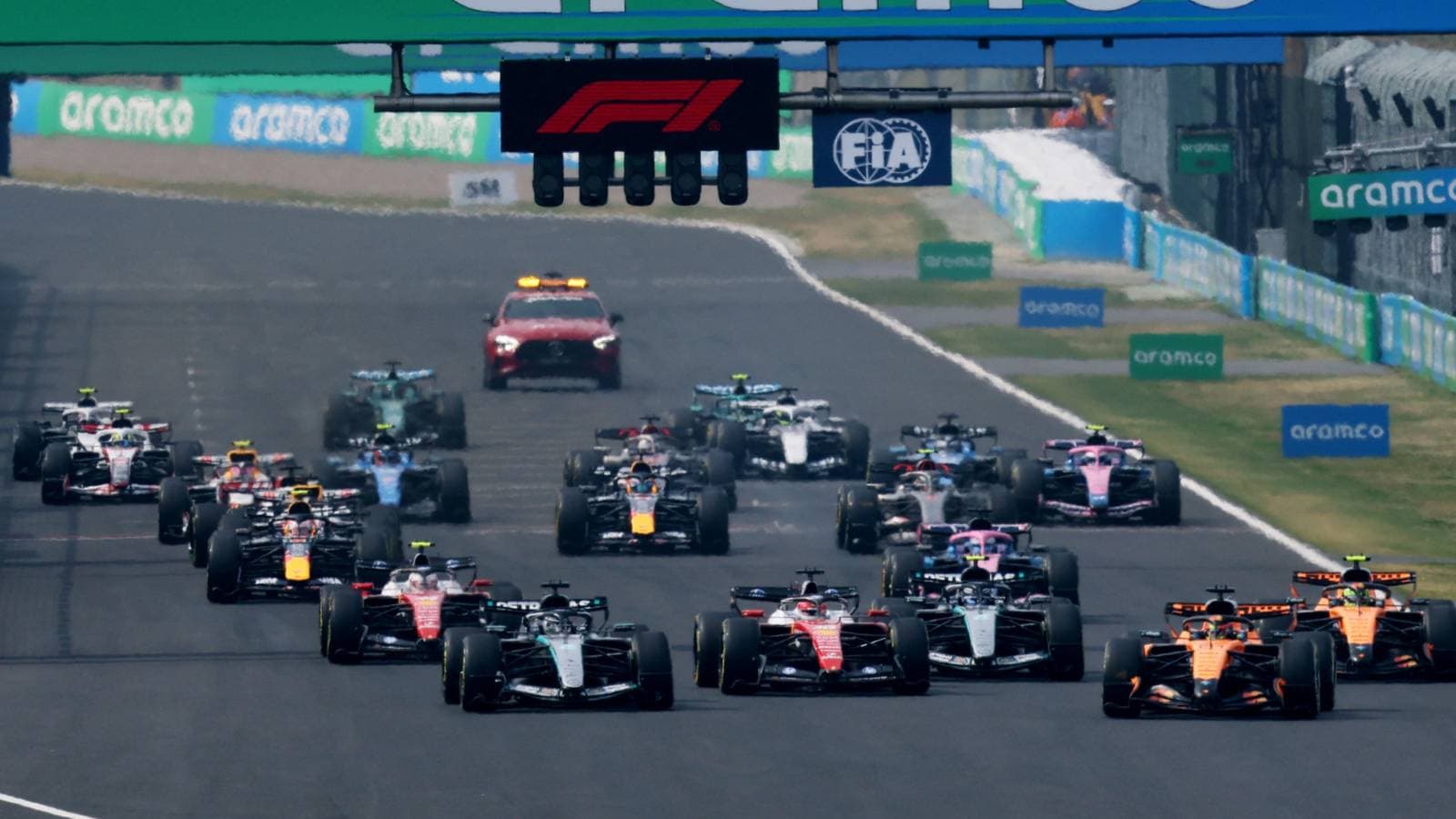
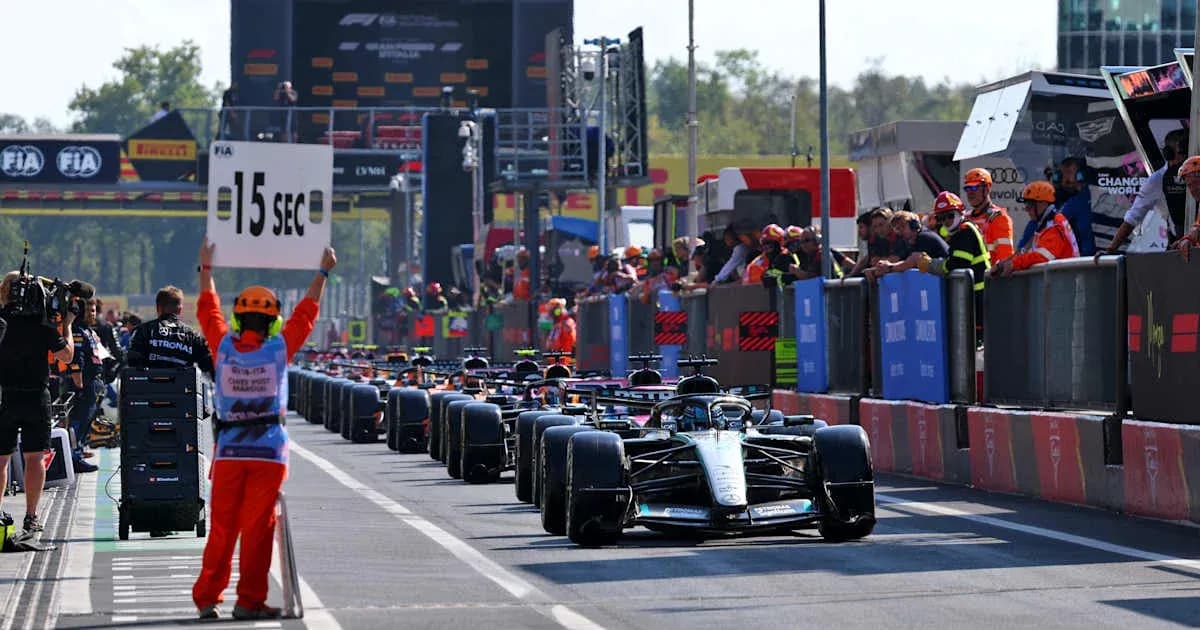
The flashpoint arrived at the restart after Charles Leclerc’s crash brought out a red flag.
On his way to the grid, Tsunoda lined up on the wrong side. His slot was on the right, but he initially positioned himself on the left. He then cut across late and ended up slightly crooked in his proper starting box.
Race director Rui Marques did not like what he saw. The start procedure was aborted, and the field was sent on another formation lap.
That detail is crucial. Under the regulations, if a driver is deemed responsible for triggering an extra formation lap, that driver must start from the pit lane. Tsunoda did not. He took up his grid slot at the second restart and went on to claim tenth place.
The stewards did open an investigation for a possible breach of starting procedure. Yet they chose not to punish him.
Their reasoning, in brief: Tsunoda and his team were not aware that he was being treated as the cause of the additional formation lap, and he was not officially recorded as being in an incorrect starting position. The extra lap, they argued, had been ordered in good faith and for safety reasons. On that basis, no stop-and-go penalty was applied.
For Audi, that explanation is not enough.
What Audi Wants – And What Could Change
By filing notice of a potential appeal, Audi has bought itself 96 hours from Sunday evening to decide whether to push the matter formally or let it drop.
If the team proceeds and the protest succeeds, the consequences are clear. A stop-and-go penalty, when applied retrospectively, typically translates into a 30-second time addition. That would drop Tsunoda out of the points and move both Audi cars up one place.
Bortoleto would climb from 11th to 10th and finally see a point next to his name. Hülkenberg would be promoted as well. A small shift on paper, but a significant one for a team still fighting for every scrap of reward in a tight midfield.
Monza has already rewritten Monaco. Now the question hangs over the paddock: will the Italian Grand Prix itself be rewritten next?