.svg&w=384&q=75 "logo")
Manchester United’s Goals Flow, But Defensive Issues Persist
Manchester United have rediscovered the taste for goals. Seven in their last two Premier League games against Ipswich Town and Everton hint at an attack beginning to click under Michael Carrick.
But the story of their season so far is being written at the other end of the pitch.
Three league games, six goals conceded. Two shipped in each. For a club that once built its aura on control and authority, that pattern is starting to feel less like a blip and more like a warning.
A Fast Start Up Front, A Slow One at the Back
The campaign opened with a jolt: a 2–0 defeat at Hull City that exposed fragility from set pieces and left Carrick with more questions than answers. United responded with a 5–2 dismantling of Ipswich, a scoreline that soothed the mood but did little to disguise the fact that Ipswich still found a way through twice.
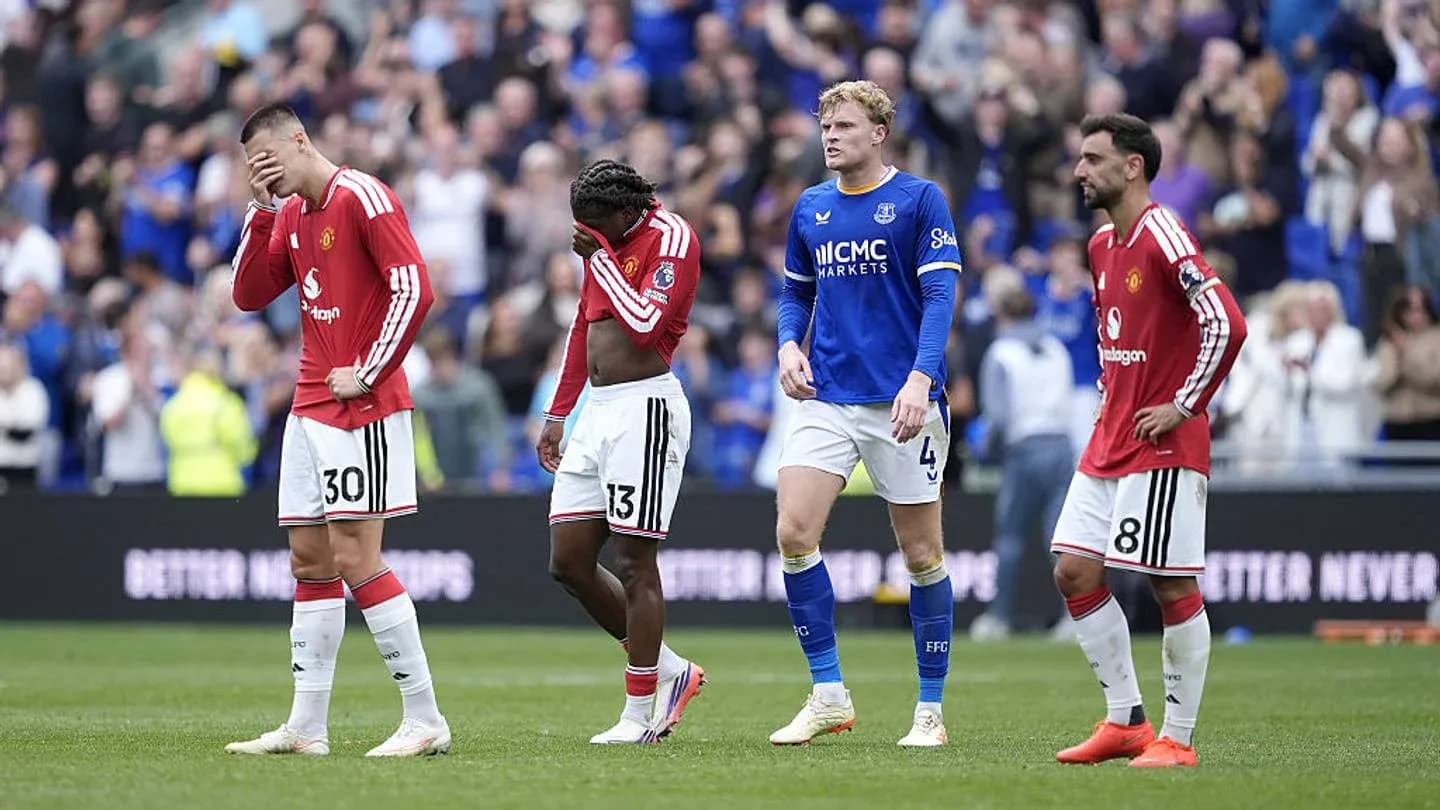
Then came Everton. United led. They attacked. They looked, for long spells, like a side ready to impose themselves. And still, in the 96th minute, they were punished, a 2–2 draw feeling like a defeat as Goodison Park erupted and United’s players stared at the turf.
The pattern is stark. This is only the second time in Premier League history that United have conceded at least two goals in each of their first three games of a season. The last time was 2020–21, when Ole Gunnar Solskjær’s side leaked 11 goals across a chaotic opening: a 3–1 home defeat to Crystal Palace, a wild 3–2 win at Brighton & Hove Albion, and that infamous 6–1 collapse against Tottenham Hotspur at Old Trafford.
That season eventually settled into something more coherent. Right now, Carrick is still searching for that same turning point.
Echoes From a Different Era
To find the previous instance before 2020–21, you have to go back more than half a century.
In 1972–73, United, just four years removed from lifting the European Cup in 1968 but only two years away from relegation, stumbled into the season with three straight defeats. Ipswich Town beat them 2–1. Liverpool then won 2–0. Everton repeated the scoreline.
Those results framed a club in transition and turmoil. It was the final season for Bobby Charlton and Denis Law, legends nearing the end of their time at Old Trafford, and the beginning of the decline for George Best. Manager Frank O’Farrell did not survive until Christmas; he was sacked four months into the campaign.
The current landscape is not that bleak, but the historical echo is uncomfortable. United’s defensive looseness used to be a feature of another age, when English football embraced attacking abandon and 3-2-5 formations were standard fare.
Back then, under Matt Busby, United could concede freely early on and still find their way to glory. In 1964–65, they let in at least two goals in each of their first three league games — a 2–2 draw with West Brom, a 3–1 defeat at West Ham, and a 2–2 draw at Leicester — and still finished the season as champions.
Those days belonged to a different tactical universe. Today, such generosity at the back rarely ends with a trophy parade.
Carrick’s Diagnosis: “Little Moments”
Carrick isn’t hiding from the numbers, nor is he pretending the issue lies in a single weakness.
Against Hull, set pieces were the obvious fault line. Against Ipswich and Everton, it was more about lapses in concentration and space offered up on the edge of the area. United have been punished by what their manager called “little moments we can deal with a bit better.”
The problem is cumulative. Each concession forces the forwards to dig them out again. And again.
Last season laid that imbalance bare. United scored 69 league goals, almost matching Arsenal’s 71. The difference came in their own penalty area. While Arsenal conceded just 27 times, United let in 50. The gap on the table? Fourteen points.
You can live with the occasional long-range strike flying into the top corner. You cannot live with the habit of giving teams the chance to take those shots in the first place.
“The mentality is there,” Carrick insisted after the Everton draw. He acknowledged the quality of the Toffees’ strikes from distance, but refused to shrug them off as pure misfortune. United, he said, “can’t ignore it,” stressing that they must concede fewer goals to give themselves a better chance of winning games and that there are “things we need to get better at as a team.”
Between History and Ambition
United’s early-season record reads like a split personality:
- 2026–27: Hull 2–0 Man Utd; Man Utd 5–2 Ipswich; Everton 2–2 Man Utd
- 2020–21: Man Utd 1–3 Palace; Brighton 2–3 Man Utd; Man Utd 1–6 Tottenham
- 1972–73: Man Utd 1–2 Ipswich; Liverpool 2–0 Man Utd; Everton 2–0 Man Utd
- 1969–70: Palace 2–2 Man Utd; Everton 2–0 Man Utd; Southampton 4–1 Man Utd
- 1964–65: Man Utd 2–2 West Brom; West Ham 3–1 Man Utd; Leicester 2–2 Man Utd
The names change. The eras shift. The same truth remains: when United start by leaking goals, the season tends to tilt one way or the other very quickly.
Carrick knows the old line as well as anyone who has played at the top: goals win games, but defense wins championships. His attack looks lively enough to trouble anyone. His back line, right now, looks like it needs protecting — structurally, mentally, and in key situations when the pressure rises.
United have shown they can hurt teams. The question that will define their season is simpler, sharper, and far more demanding:
Can they finally stop hurting themselves?