Harry Kane's Quest for the Ballon d'Or: A Chance for English Football
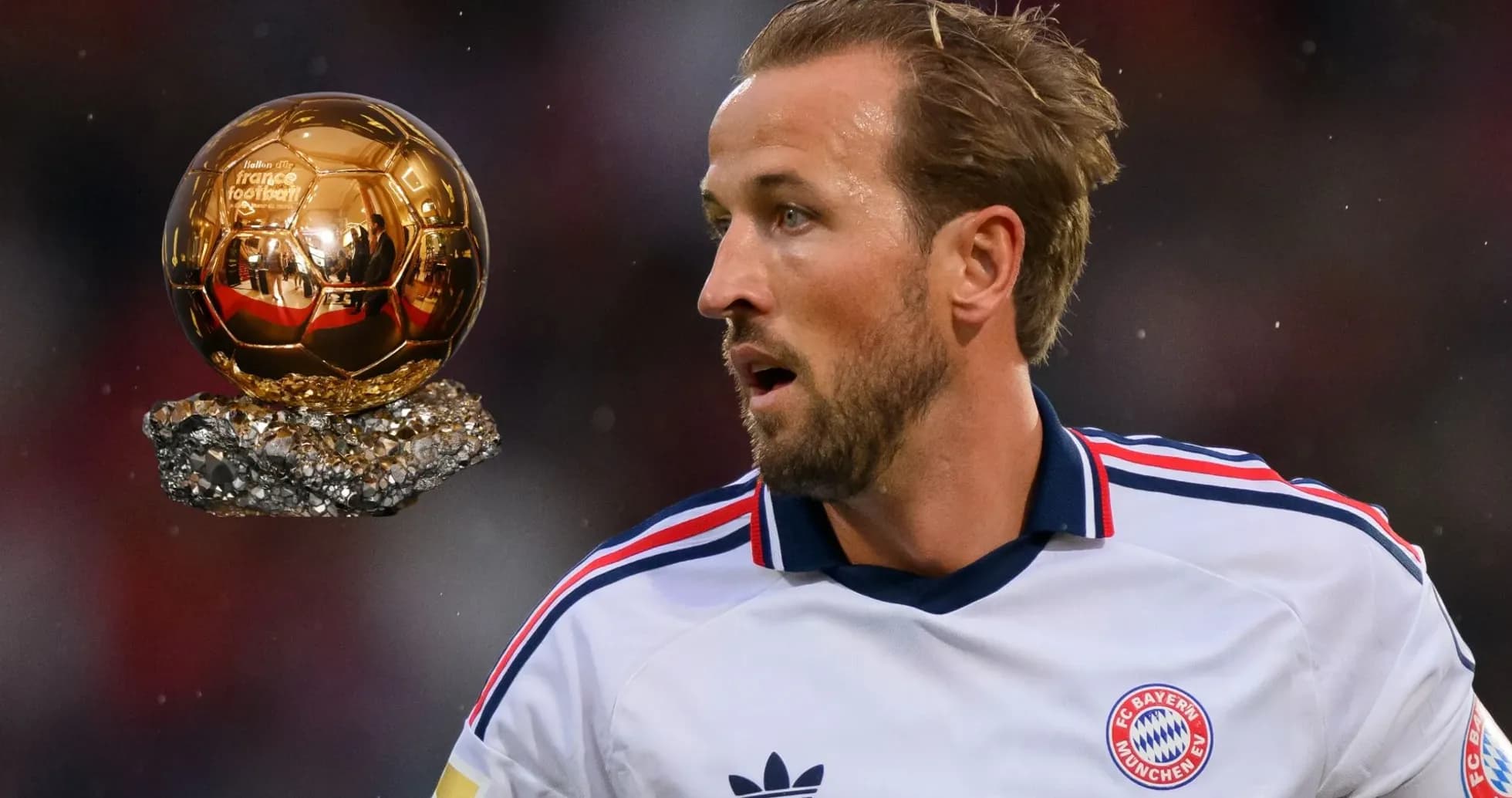
Harry Kane stands on the brink of a prize that has eluded English football for a generation. Twenty-five years after Michael Owen was crowned Ballon d’Or winner, the Bayern Munich striker has muscled his way to the front of the queue to be named the world’s best.
For a country that helped shape the modern game, England’s relationship with the Golden Ball has always been strangely sparse. Legends have come close, then watched the trophy slip away. Billy Wright, Duncan Edwards, Johnny Haynes, Jimmy Greaves, Bobby Moore, Gary Lineker, Alan Shearer, David Beckham, Frank Lampard, Steven Gerrard, Jude Bellingham – all good enough to sit at the top table, none quite able to leave with the crown.
For years there was an immovable barrier. Two of them, in fact.
Lionel Messi and Cristiano Ronaldo turned the Ballon d’Or into a private duel, hoarding 13 trophies between them across a 15-year stretch. Messi, the Argentine phenomenon, pushed the boundaries of what was thought possible, collecting eight awards and reshaping the record books. Ronaldo, relentless and ruthless, kept pace as long as anyone could.
That era has finally loosened its grip. The last two polls have hinted at a changing of the guard, with Rodri and Ousmane Dembele prominent as new forces at the top of the game, their cases built on World Cup and Champions League triumphs in 2026. Both are in the running again. Both have medals that speak loudly for them. Yet the sense this year is of a race without a clear, Messi-or-Ronaldo-style monarch.
Into that space strides Kane.
Kylian Mbappe is there, as always, his name almost a permanent fixture in these conversations. Lamine Yamal, the teenage prodigy, has already turned potential into end product on the biggest stages. Michael Olise and Khvicha Kvaratskhelia have forced their way into the debate as well. But no one can match Kane’s raw numbers.
Sixty-one goals for Bayern last season. Twelve more for England. Seventy-three in total for club and country. A second Bundesliga title in his back pocket. These are not just big numbers; they are historic ones. Only Messi, with a season-best 82, has ever gone higher. Ronaldo never reached 73 in a single campaign, topping out at 69.
Even Kane admits the figures look “silly” – the sort of return once thought reserved for the two GOATs alone.
For Owen, the last Englishman to lift the Ballon d’Or and now an ambassador for Casino.org, the wait has already gone on long enough. Speaking to GOAL, he reflected on the rarity of English success in the award’s 75-year history.
“There’s only four of us that have won it in its history,” he said. “What is the history? 75 years or something? So, we’re talking every 20 years, just under 20 years is the average anyway. So, we’re pushing that average at the moment, because it’s 25 years since I won it.
“Obviously, Harry’s got a good shot at it. I do think it’s quite an open year, but I do think Harry Kane’s got a great chance of winning it. It’d be a fabulous achievement if he did.”
The roll of honour he would join is short but glittering. Stanley Matthews, the inaugural winner in 1956. Bobby Charlton, a World Cup winner and the face of England’s greatest footballing triumph. Kevin Keegan, who went back-to-back in 1978 and 1979. Then Owen in 2001, the last time an English player ruled the world.
Kane knows exactly what it would mean to sit alongside those names. Speaking to TNT Sports, he allowed himself a rare moment of reflection.
“Not that long ago, I was that fan wanting to become a professional footballer, and I am here now and winning awards and the Ballon d’Or is the same,” he said.
“Of course, now it is out of my hands, it is down to the voters and the people who decide it. The season I had was my best season by far, and we’ll have to wait and see. It is a weird one because I am already focused on this season now, and the next season. Can I be better? Can I improve? But I also want to appreciate what I did.”
That tension – between ambition and appreciation, between the next challenge and the last masterpiece – runs through his words. Kane is in the thick of his prime, yet speaking like a player who understands he has produced something that will sit apart from the rest of his career.
He also recognises that the Ballon d’Or is never just about data. It is about taste, perception, the endless arguments that fuel the sport.
“The thing with football opinions – there are so many opinions, so many arguments for different players, and people love this player because ‘he’s fast’ and ‘he’s got great IQ’ and ‘his finishing is great’,” he said. “So I think that is what makes football special, all those debates, and the Ballon d’Or is definitely one of them. I’m happy that I am in contention, so we will have to wait and see.”
The numbers say one thing. The trophies, the narrative, the big moments say another. Rodri and Dembele can point to the game’s biggest prizes in 2026. Mbappe and the rising generation bring star power and spectacle. Kane offers a season of staggering consistency and volume, the kind of output that drags a player into the centre of the conversation whether voters like it or not.
After a quarter of a century, the stage is set again. On October 26, at the London Palladium Theatre, the Ballon d’Or will be placed in new hands.
The question now is whether those hands belong to Harry Kane – and whether English football is finally ready to see one of its own back on top of the world.