Fouzi Lekjaa's Stand on AFCON Final Dispute and World Cup Ambitions
Fouzi Lekjaa is not blinking.
With the Court of Arbitration for Sport (CAS) set to hear Morocco’s appeal on 8 October over the contentious 2025 Africa Cup of Nations final against Senegal, the president of the Royal Moroccan Football Federation has nailed his colours to the mast: Morocco will fight this on the law, and on the law alone.
In a detailed interview with Jeune Afrique, relayed by Al-Shorouk, Lekjaa laid out Rabat’s stance on a dispute that has spilled well beyond a single match and into the wider politics of African and global football. He also cast an eye towards another stage entirely: the 2030 World Cup and Morocco’s push to host its final.
Standing ground over the AFCON final
Lekjaa’s message on the AFCON crisis is blunt. Morocco, he insists, is not bargaining, not trading favours, not linking this case to any other diplomatic or sporting consideration. The federation’s position, he says, rests squarely on “the rules of competition and fair play”.
At the heart of the Moroccan complaint lies Senegal’s conduct during the final. According to Lekjaa, the Moroccan federation believes the Senegalese players and coaching staff breached regulations when they left the pitch during the match. For him, that is not a minor incident or a footnote. It strikes at the integrity of international competition.
He underlined that point by highlighting what came next: FIFA later amended certain laws to toughen the penalties in such scenarios. For Lekjaa, that subsequent tightening of the rulebook only underlines how serious such behaviour is and why it cannot be brushed aside as gamesmanship or emotion.
The message is clear: Morocco sees itself not just as a party in a dispute, but as a guardian of the regulations. Lekjaa repeated that his federation will keep turning to “the competent bodies” to defend its rights and to ensure the same rules apply to everyone, regardless of the badge on their chest.
CAS hearing just one stop on a longer road
Anyone expecting 8 October to deliver a clean, final verdict may be in for disappointment. Lekjaa moved quickly to cool that idea.
He described the upcoming CAS hearing as a stage, not a destination. A step in what could become a drawn-out legal journey, not the final whistle. He openly raised the possibility of further hearings as the file is studied in depth, hinting at a process that could stretch on before a definitive ruling emerges.
Morocco, he signalled, is prepared for that. The federation is braced for a long legal battle, anchored in what it believes is a solid reading of the regulations that govern both continental and international competitions. The fight, in Rabat’s eyes, is about more than one trophy; it is about codifying respect for those rules in the years ahead.
Morocco’s eye on the 2030 World Cup final
From the courtroom to the global stage, Lekjaa then turned to another front: the 2030 World Cup, which Morocco will co-host with Spain and Portugal.
Here, the tone shifted from defensive to ambitious.
He made it clear that Morocco intends to follow every procedure laid down by FIFA. Inspection visits, technical reports, the selection process for host cities and stadiums — the Moroccan bid, he insisted, will respect the framework set by the governing body.
At the same time, Lekjaa was unapologetic about Morocco’s desire to go all the way and host the final itself. As the African representative in the joint bid, he argued, Morocco has every right to defend its chances of staging the showpiece match.
The ambition, he stressed, does not clash with the rules. It lives within them. Morocco wants the biggest game on earth, but it wants it through the official channels, not outside them.
Backing Infantino, pushing for stronger governance
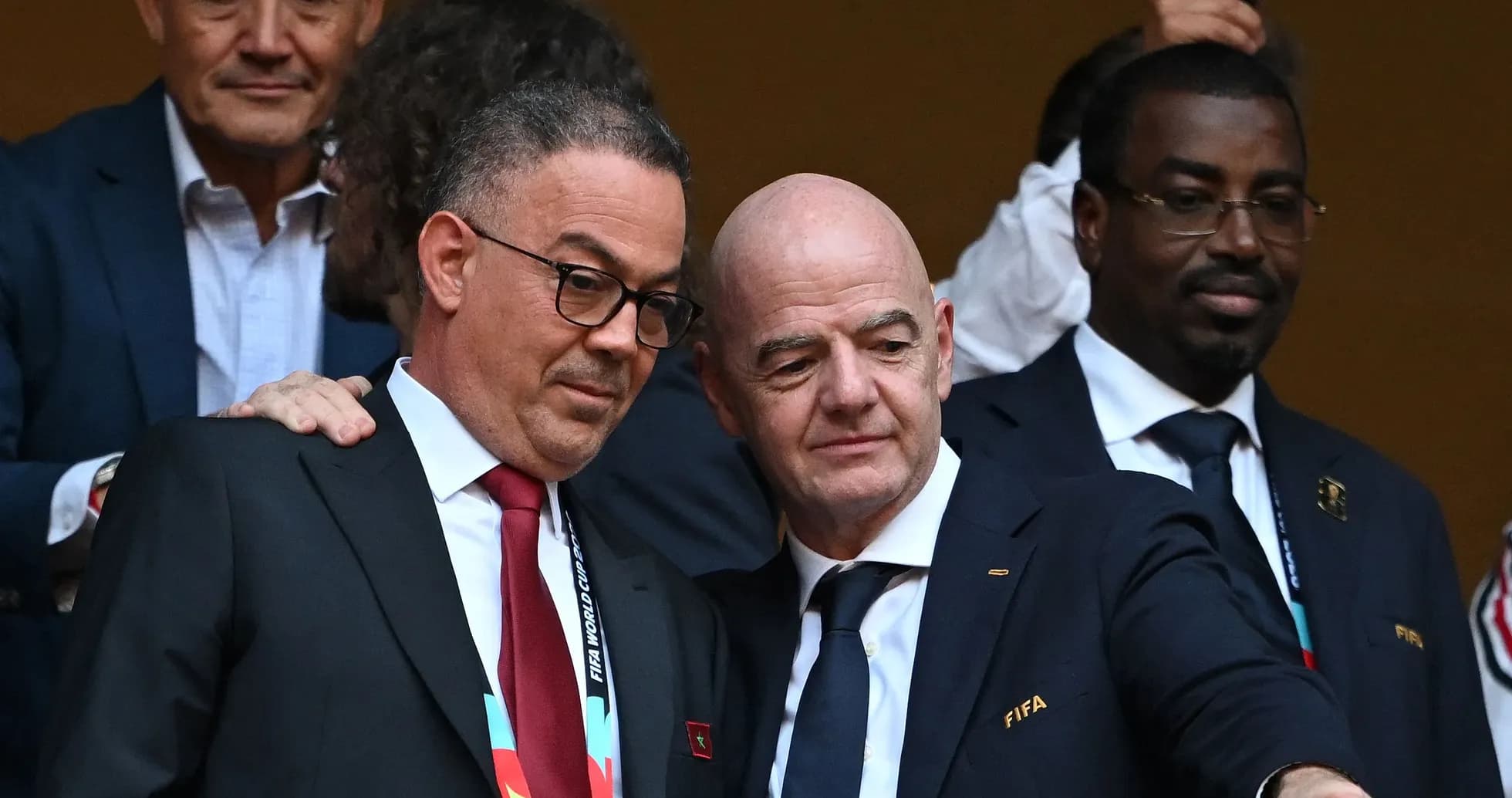
Lekjaa also addressed his relationship with FIFA president Gianni Infantino, a subject that often stirs debate in African football circles.
His support, he said, is rooted in a belief in football’s power to unite peoples and bring nations closer together. That backing, however, does not mean a blank cheque for the way world football is run.
Lekjaa was keen to draw a line: support for Infantino does not cancel the need to improve governance at FIFA. On the contrary, he called for stronger balance, greater transparency and more robust governance mechanisms in the management of the global game.
He framed his vision as one built on principles, not personalities. Institutions over individuals. A system strong enough to balance competing interests and power blocs within international football, rather than one that swings with the fortunes of whoever happens to be in office.
From the AFCON courtroom battle to the race for the 2030 World Cup final, one thread runs through Lekjaa’s stance: Morocco wants its say in how football is run — and it plans to claim that space by leaning on the rulebook, not stepping around it.